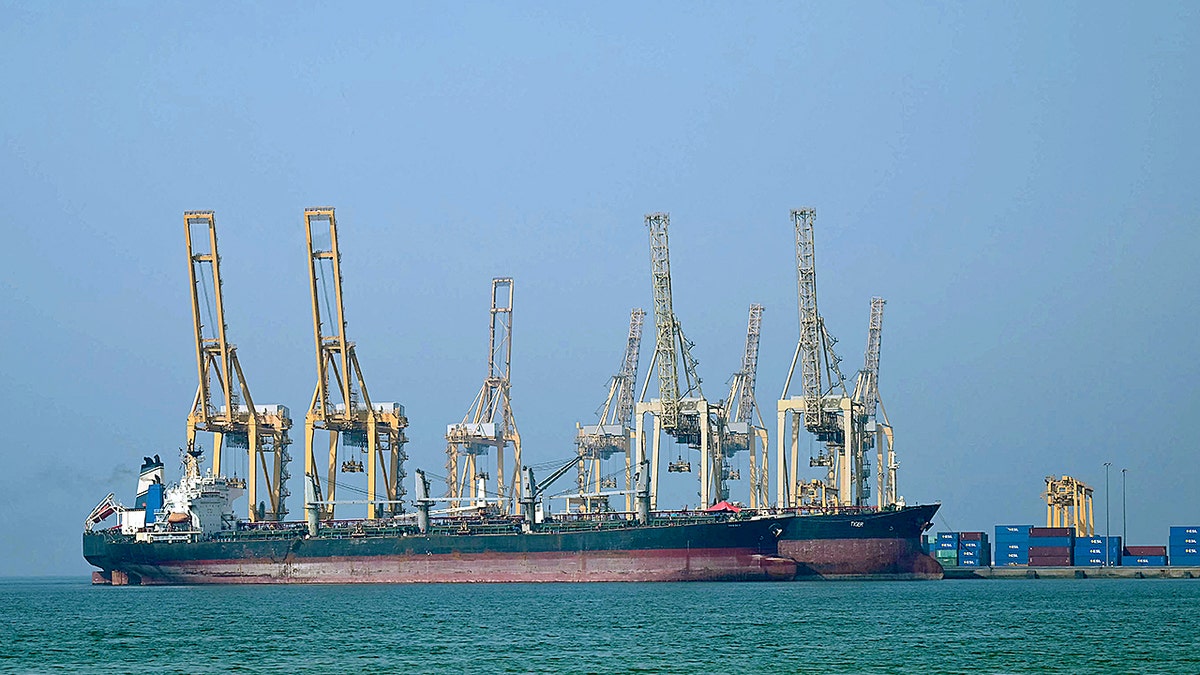
President Donald Trump’s negotiations over the Strait of Hormuz have set off impactful changes in the global energy landscape. While the Middle East remains in headlines, one significant shift occurred in the gas terminals of Rotterdam, Wilhelmshaven, and Dunkirk. Europe’s energy system is becoming increasingly aligned with American interests.
Europe’s Energy Shock
In February 2022, Russia’s invasion of Ukraine shocked Europe with an energy crisis. At that time, about 40% to 45% of Europe’s gas imports came from Russia. The need for a change was clear: no single supplier should dominate, and no pipeline dependence should exist. Europe needed to diversify its energy sources.
Breaking Ties with Russia
Europe implemented significant changes. Russian pipeline gas imports plummeted from 137 billion cubic meters in 2021 to a projected 18 billion by 2025, an 87% decrease. Russia’s share of EU gas imports dropped from 45% to 12%.
In December 2025, the European Parliament voted decisively, 500 to 120, to sever Russian energy ties. A complete ban on Russian LNG and pipeline gas would be enacted by 2026 and 2027, respectively, with hefty penalties for any breaches.
Europe’s New Energy Plan
Europe wasn’t merely reducing reliance on Russian gas; it was also strategizing for replacements. The new plan included connections with Norway, Algeria, and Azerbaijan for pipelines, as well as Qatar and the Gulf for LNG. Renewable energy would gradually reduce dependency. American LNG became a crucial component of this diversified energy strategy.
German Chancellor Friedrich Merz played a vital role. He traveled to the Gulf to diversify supply chains and build partnerships beyond Russia. However, the ensuing conflict between the U.S. and Iran disrupted these efforts.
Hormuz Conflict and Its Repercussions
U.S.-Israeli strikes on Iran escalated tensions, leading to the Strait of Hormuz’s closure. This narrow passage is crucial for global oil and LNG flows, including Qatar’s exports. Shipping disruptions drove European gas prices up 25% in a day, with oil surging to $126 per barrel.
Merz had been negotiating with Qatar, but logistical challenges remained. Qatari officials couldn’t control the situation as the strait’s closure limited their capacity to export.
American LNG Takes Center Stage
Trump’s strategies might seem erratic, but leveraging Hormuz as a critical point in negotiations made European reliance on American LNG necessary. By late 2025, before the Iran conflict escalated, the U.S. supplied 56% of EU LNG imports, a figure that climbed to 63% by early 2026. European buyers, facing limited alternatives and high prices, secured new American supply contracts.
Long-term Commitments to American Energy
By 2030, projections indicated that the EU would import 115 billion cubic meters of U.S. LNG annually, accounting for 80% of all EU LNG imports. Germany, once reliant on Russian gas, now turned mostly to American LNG.
These agreements, made in wartime conditions, lacked exit clauses. Europe’s energy realignment now firmly points to the United States as a sustainable solution.
President Trump’s agreements with Iran may resolve the immediate conflict, but the structural realignment of Europe’s energy resources is set for the foreseeable future.
Leave a Reply