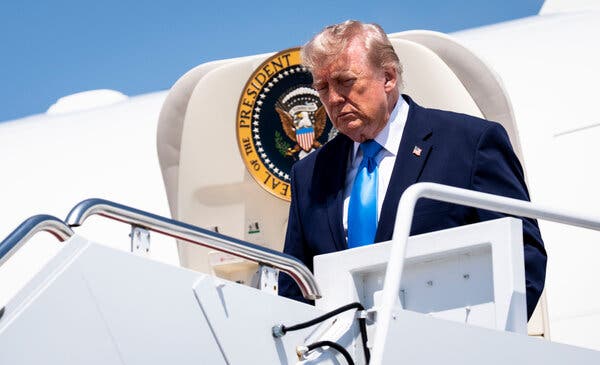
President Trump aimed to coerce Tehran into accepting U.S. terms for a peace agreement through a blend of threats and focused military actions. However, this pressure campaign has not significantly altered Iran’s stance on its nuclear program. The emerging deal may lead to a potential reopening of the Strait of Hormuz, a crucial route for oil and gas transporting. Iran has kept it blocked since the onset of the U.S.-Israeli attacks in late February.
The cease-fire announced by Trump in April included conditions meant to allow free passage through the strait, with the expectation that easing tensions there could stabilize gas prices and reduce domestic opposition to the conflict. Despite these plans, Iran has maintained control over the strait. In response, the U.S. military initiated a naval blockade of Iranian ports beginning April 13. Over 100 ships have been redirected as part of this strategy.
Trump also introduced ‘Project Freedom,’ an endeavor aimed at rescuing vessels stuck due to the Iranian blockade, and two ships did manage to escape under this initiative. However, he paused the project shortly after its commencement, waiting for support from European allies, which did not materialize.
The American public remains largely disapproving of the war with Iran, attributing it to rising oil and gas prices and the strain on Arab allies of the U.S., who have faced Iran’s counterattacks.
On social media, Trump continued to issue threats and express that time was running out for Iran. Requests from Gulf Arab leaders to delay further military actions amid ongoing negotiations led to Trump postponing another planned offensive. Iran’s leadership perceives its enduring resistance against U.S. attempts to destabilize the Islamic Republic as a victory, relying on their influence over global energy markets to withstand pressure.
Leave a Reply