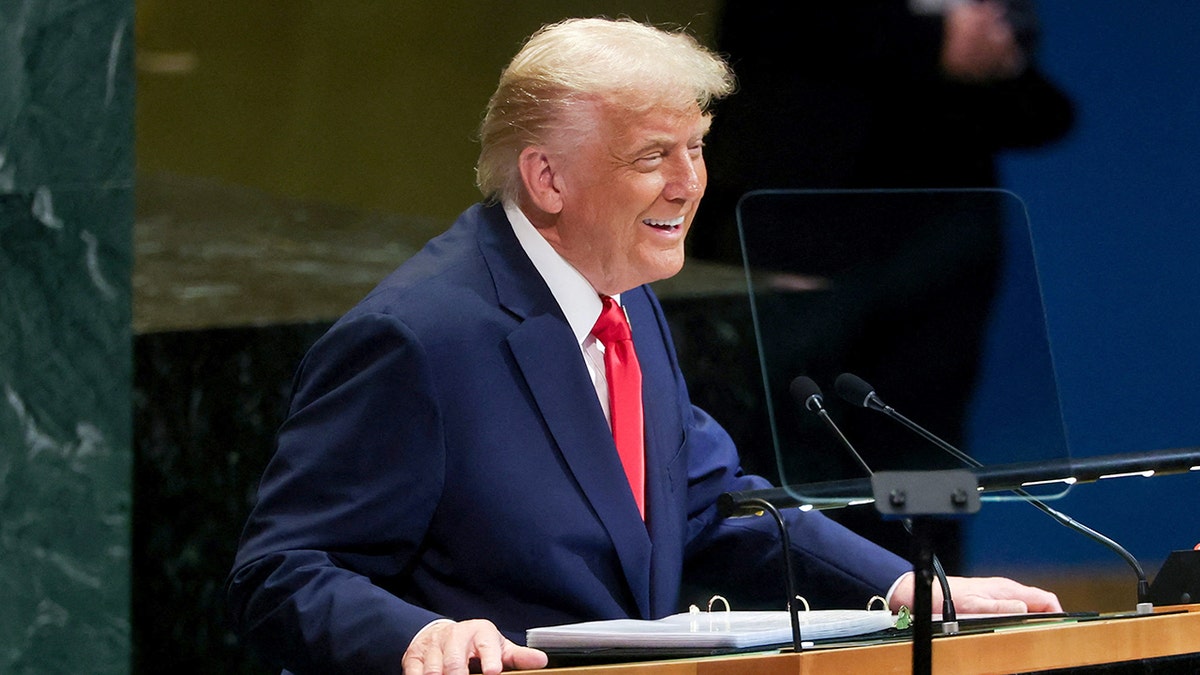
President Donald Trump and Iranian President Masoud Pezeshkian are expected in New York City for the United Nations General Assembly (UNGA) this week. Former White House officials describe this gathering as a “dramatic” diplomatic event, given the limitations placed on Tehran’s delegation by U.S. regulations amidst rising tensions in the Middle East.
Iranian President Pezeshkian is scheduled to address the assembly on Wednesday, according to reports from Reuters and Iran’s semi-official Mehr news agency. Meanwhile, President Trump will speak on Tuesday.
Theo Wold, a former acting assistant attorney general and White House domestic policy adviser, highlighted the significance of the event, emphasizing the limitations faced by the Iranian delegation. “The Iranians will have less access to international media and limited opportunities to challenge the Trump administration,” he stated. Despite these restrictions, Iran’s representatives are permitted to participate in discussions at the U.N. forum before departing.
This gathering coincides with President Trump’s considerations of renewed strikes on Iran amidst an ongoing seven-month conflict. Tehran, on the other hand, has set seven conditions for potential talks with the U.S., according to Mohsen Rezaei, Secretary of Iran’s Supreme National Security Council.
Iran warned against any significant attacks by the U.S. and its allies, citing intelligence reports anticipating such moves. While the U.S. approved visas for Iran’s delegation, including Pezeshkian and Foreign Minister Abbas Araghchi, strict movement restrictions are imposed while they are in Manhattan.
Under a 1947 U.N. agreement, the U.S. as host country must facilitate the entry and transit of foreign representatives to U.N. headquarters. Despite this, as U.S. State Department spokesperson Tommy Pigott noted, Iranian officials were restricted from shopping sprees while ordinary Iranians face severe economic hardships.
Pezeshkian accused the U.S. of a “grave betrayal” at the assembly meeting, but former White House adviser Wold clarified that the U.S. is not required to grant unrestricted access beyond diplomatic duties. The Iranian delegation’s movements are restricted to their New York accommodation and U.N. headquarters.
Washington’s stance reflects a focus on official discussions rather than shopping opportunities, as Wold explained, hinting at prohibitions on transactions with big-box retailers like Sam’s Club and Walmart.
Iran’s foreign ministry spokesperson stated New York holds “no charm” for their delegation, accusing the U.S. of hindrances but asserting their attendance as a legal right.
Wold also criticized the U.N. for hosting state representatives from hostile regimes, raising security concerns, particularly given the U.S.’s ongoing conflict with Iran, which has resulted in American casualties.
Amidst this backdrop, Wold suggested UNGA might provide a platform for potential diplomatic openings, aligning with President Trump’s scheduled bilateral meetings with Gulf Cooperation Council leaders to address regional security challenges.
Wold expressed hope for substantive discussions, noting potential private talks with Iran to explore agreement possibilities on halting hostilities.
President Trump enters the summit as a seasoned leader, prepared to handle these diplomatic challenges, according to Wold.
Emma Bussey, a breaking news writer for Fox News Digital, contributed to this report, drawing on her experience at The Telegraph covering various beats, including foreign, politics, news, sports, and culture.
Leave a Reply