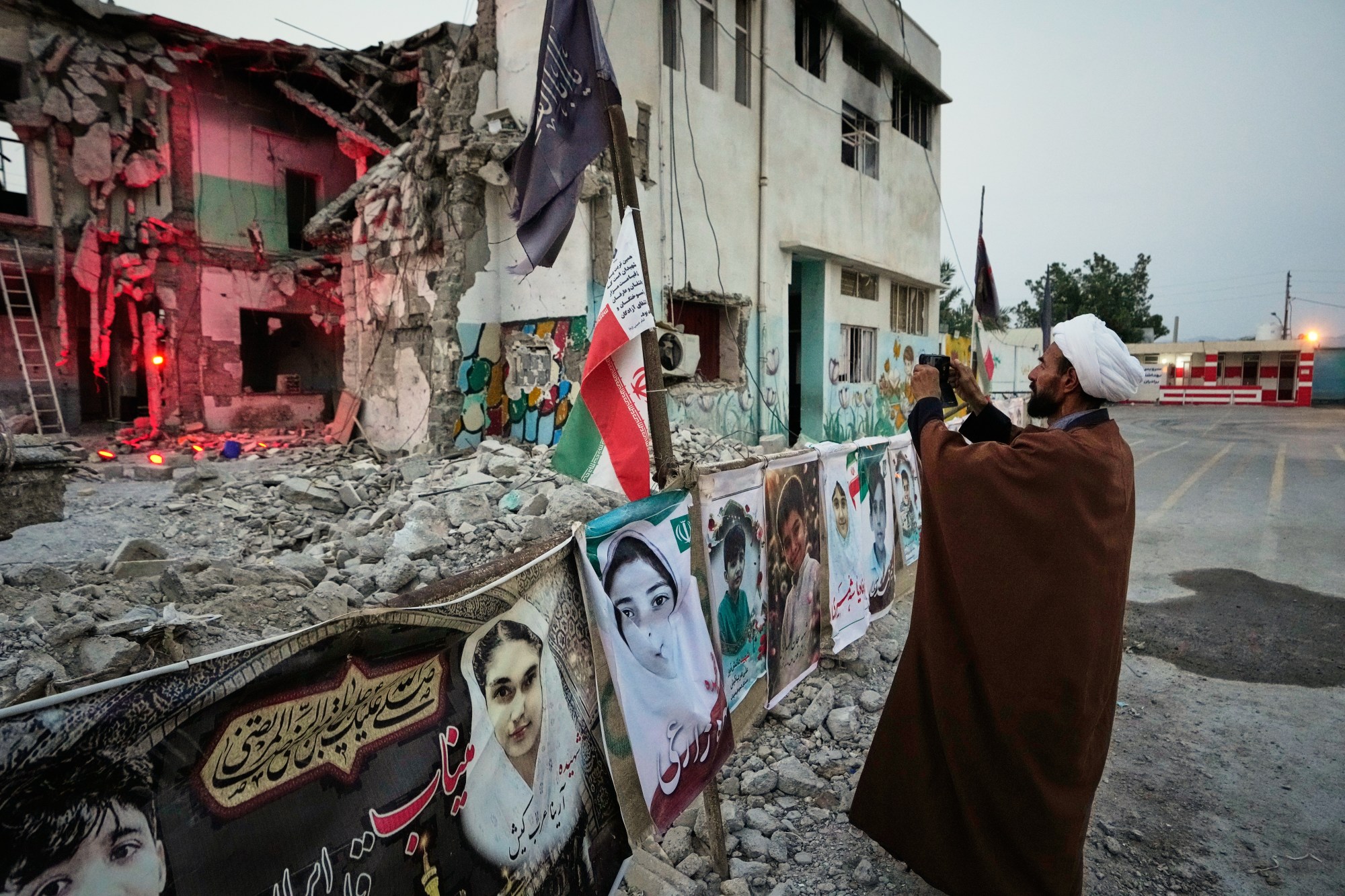
A cleric takes a photograph at the shattered Shajareh Tayyebeh school in Minab, southern Iran, which became a memorial following a U.S. airstrike on February 28, 2026. This attack killed 157 people, including children and teachers. While President Trump addressed the United Nations General Assembly, threatening to “annihilate” Iran, the U.N. Human Rights Council revealed findings that the U.S. committed war crimes on the day Trump started the conflict by bombing the girls’ school.
Trump’s speech at the U.N. largely disregarded the organization’s principles, mocking international law and devaluing human dignity and justice. He emphasized that strength defined America’s power. This mindset echoed the Gilded Age in America, when corrupt officials collaborated with wealthy figures to exploit public funds.
U.N. Secretary-General Antonio Guterres posed a critical question: should power follow the rule of law or force, and should cooperation guide actions instead of coercion?
The International Criminal Court is urged to consider indicting Trump for war crimes, including actions leading to civilian casualties during invasions of countries like Venezuela. Despite knowing about the U.N.’s report on the U.S. military’s atrocity, many of the countries in the General Assembly did not confront the allegations clearly. The horrific bombing’s details often remain hidden within scant media coverage and sparse official statements, leaving the victims’ stories untold.
The U.N. report offers visual evidence, featuring photographs and videos showing the circumstances at the school. These include murals meant for children, school signs, and areas for play. Satellite images depict children gathered in the courtyard. Before the strike, classrooms held educational materials, children’s artwork, and learning tools. Survivors recounted that the school was hit twice. First, the lower floor was targeted, prompting the staff to relocate children to a prayer room upstairs. The second strike decimated the upper floor, leaving no survivors.
Among the dead were 123 children, all 13 years old or younger, 26 female educators, seven parents, a school bus driver, and a pharmacy technician. The report concluded that the school was intentionally targeted, not accidentally struck.
Videos from the aftermath show devastating scenes: a man holding a child’s severed arm, bloodied backpacks, and school books among dismembered and lifeless bodies. Several families experienced the loss of multiple children.
The U.S. has not accepted responsibility, with Trump at times attributing the attack to Tehran. The International Criminal Court has a history of indictments involving leaders such as Vladimir Putin and Benjamin Netanyahu for such crimes. Trump and his administration members face potential indictments for similar charges.
Bennett L. Gershman, a law professor at Pace University and author of “Prosecutorial Misconduct,” sees accountability for war crimes as crucial.
Leave a Reply