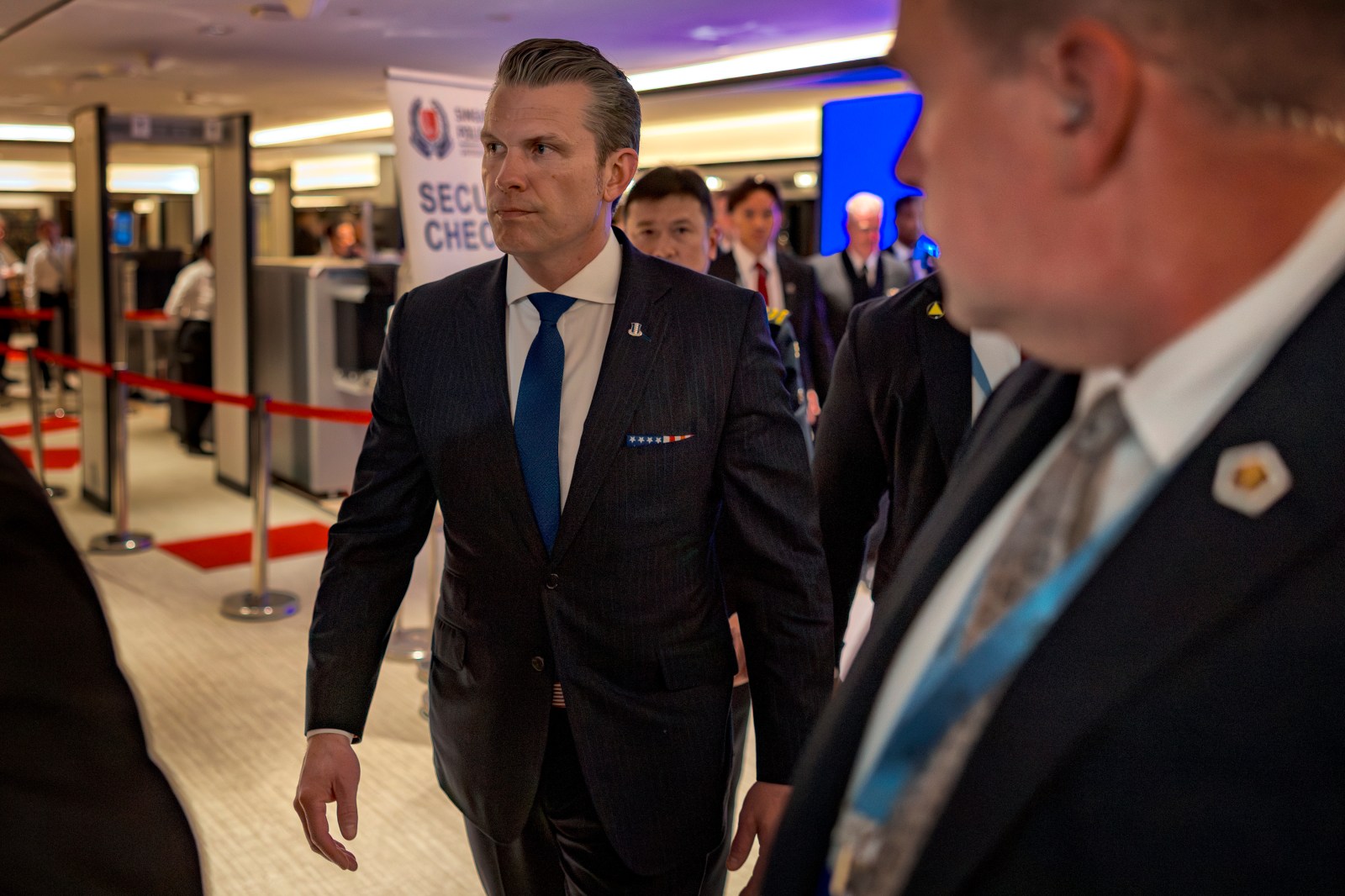
U.S. Secretary of Defense Pete Hegseth addressed the situation in Taiwan at a defense summit in Singapore with careful consideration, aligning with President Donald Trump’s approach to managing tensions with China. An analyst from a Chinese state-affiliated think tank shared this perspective with Newsweek, noting that the speech took place just two weeks after Hegseth accompanied Trump on a state visit to China, the first by a U.S. president in nearly a decade. Both nations aimed to reset their relationship, which had faced strains over trade, technology supply chains, and the status of Taiwan.
President Xi Jinping’s Warning
China views Taiwan as a breakaway province that must eventually be reunified, even by force if necessary. During their discussions, Trump and Chinese President Xi Jinping focused extensively on Taiwan. Xi issued a stern warning, stating that mishandling the issue could lead to perilous consequences. Following the visit, Trump announced a pause on a potential $14 billion arms package, describing it as a valuable negotiating tool. Newsweek sought a reaction from Taiwan’s foreign ministry regarding these developments.
Hegseth’s Careful Remarks on Taiwan
Hegseth, while emphasizing regional security to allies and partners, displayed a more measured approach compared to his previous bold address at the same forum. While acknowledging regional concerns, he praised the improved relations between China and the U.S. under Trump’s leadership. Hegseth refrained from directly mentioning Taiwan but warned of potential Chinese military action. He emphasized the U.S. strategy of deterrence in the region, focusing on making conflict unappealing through tactics like the “denial along the First Island Chain.” This chain of islands, stretching from Japan to Borneo, plays a crucial role in countering Chinese military actions.
The Arms Deal Sensitive to Taiwan
During the state visit to China, Hegseth gained insight into the sensitivity of the Taiwan issue, particularly as both sides explored a thaw in relations, according to Da Wei, director of the Center for International Security and Strategy at Beijing’s Tsinghua University. The arms deal, still undecided, remains a delicate matter. If Trump approves the package, it might complicate Xi’s planned visit to the U.S. in September, as significant political resources have been committed to the Taiwan issue. Da noted that understanding China’s stance and the efforts made by Xi is crucial in handling U.S.-China relations.
Addressing concerns during the subsequent Q&A session, Hegseth dismissed worries over the U.S. defense industry’s ability to replenish munitions following a recent conflict with Iran. He clarified that the delay in the $14 billion weapons package for Taiwan was unrelated, asserting that the U.S. maintains sufficient stockpiles globally. This reassurance underscored the capability to meet replenishment needs when necessary.
U.S. Continues as Taiwan’s Primary Arms Supplier
The U.S. remains Taiwan’s main arms provider under the Taiwan Relations Act of 1979. Washington had previously indicated a gradual reduction in arms sales to Taiwan, tying it to the threat level faced by the island without specifying a timeline. Some observers in Washington warn that conditioning arms sales has emboldened Beijing to exert additional pressure on Taiwan, seeking further concessions from the U.S. Others note that past administrations have strategically managed the timing of arms sale announcements to avoid escalating tensions with Beijing during sensitive periods.
Leave a Reply