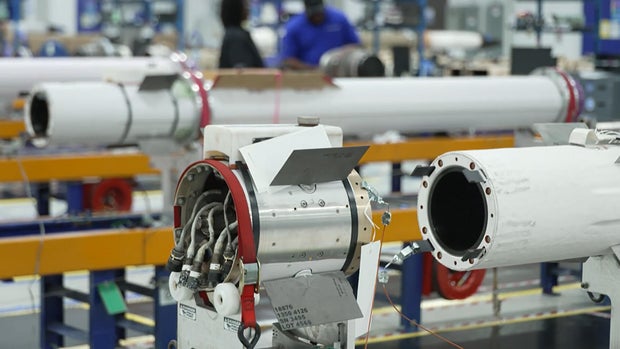
At Lockheed Martin’s Camden, Arkansas facility, the latest model of the Patriot air defense missile is under production. Tim Cahill, head of the missile division, highlights its ability to intercept ballistic missiles effectively. This state-of-the-art weapon costs about $4 million each, and the company is producing 750 annually. However, this output is insufficient to replace the approximately 1,500 missiles used in the conflict with Iran.
Mark Cancian from the Center for Strategic and International Studies has estimated that the cost of munitions deployed against Iran reaches around $25 billion. He emphasizes the importance of using high-end systems like the Patriot to defend against ballistic missile threats.
“If they fire a ballistic missile, we have to use one of our high-end systems to defend,” Cancian noted.
The ongoing conflict has exposed significant shortages in sophisticated weaponry, a situation brought to light following increased U.S. military aid to Ukraine post-2022. According to Cancian, the war with Ukraine underscored the lack of sufficient inventory and production capabilities for prolonged engagements.
In the case of a war against China, Cancian warns the U.S. might maintain its munitions supply for a month but face challenges beyond that. Despite Pentagon denials of shortages, Defense Secretary Pete Hegseth is pushing for increased weapon production, termed as “wartime footing” by Cahill.
Lockheed Martin plans to boost annual Patriot production to 2,000, enhancing automation on the assembly line. Assembling a Patriot missile currently takes six weeks, with production hindered by reliance on 500 to 1,000 suppliers, posing potential supply chain bottlenecks.
L3Harris, located nearby, manufactures Patriot rocket motors under strict safety regulations, with production times prolonged by curing processes akin to kiln-heating. The company plans a new plant to improve production speed, though completion is 16 months away.
A shift towards innovative supply solutions comes with CoAspire, a Manassas, Virginia-based company creating affordable cruise missiles. These, built with commercially available components and costing a few hundred thousand dollars each, offer a cheaper alternative to other technologies.
The Pentagon’s procurement plans include these low-cost missiles, recognizing their strategic potential against sophisticated defense systems like those of China. Despite these efforts, Cancian estimates that replenishing U.S. stockpiles post-Iran war could take one to five years, with war planners seeking more substantial reserves for potential future conflicts.
Leave a Reply