The Trump administration is currently navigating complex legal strategies concerning Venezuela’s leadership. A federal judge scheduled a trial for former Venezuelan president Nicolás Maduro and his wife, Cilia Flores, on June 1, 2027. Both face charges related to drug trafficking and have pleaded not guilty. They have been detained in a Brooklyn jail following a U.S. raid on their residence in Caracas.
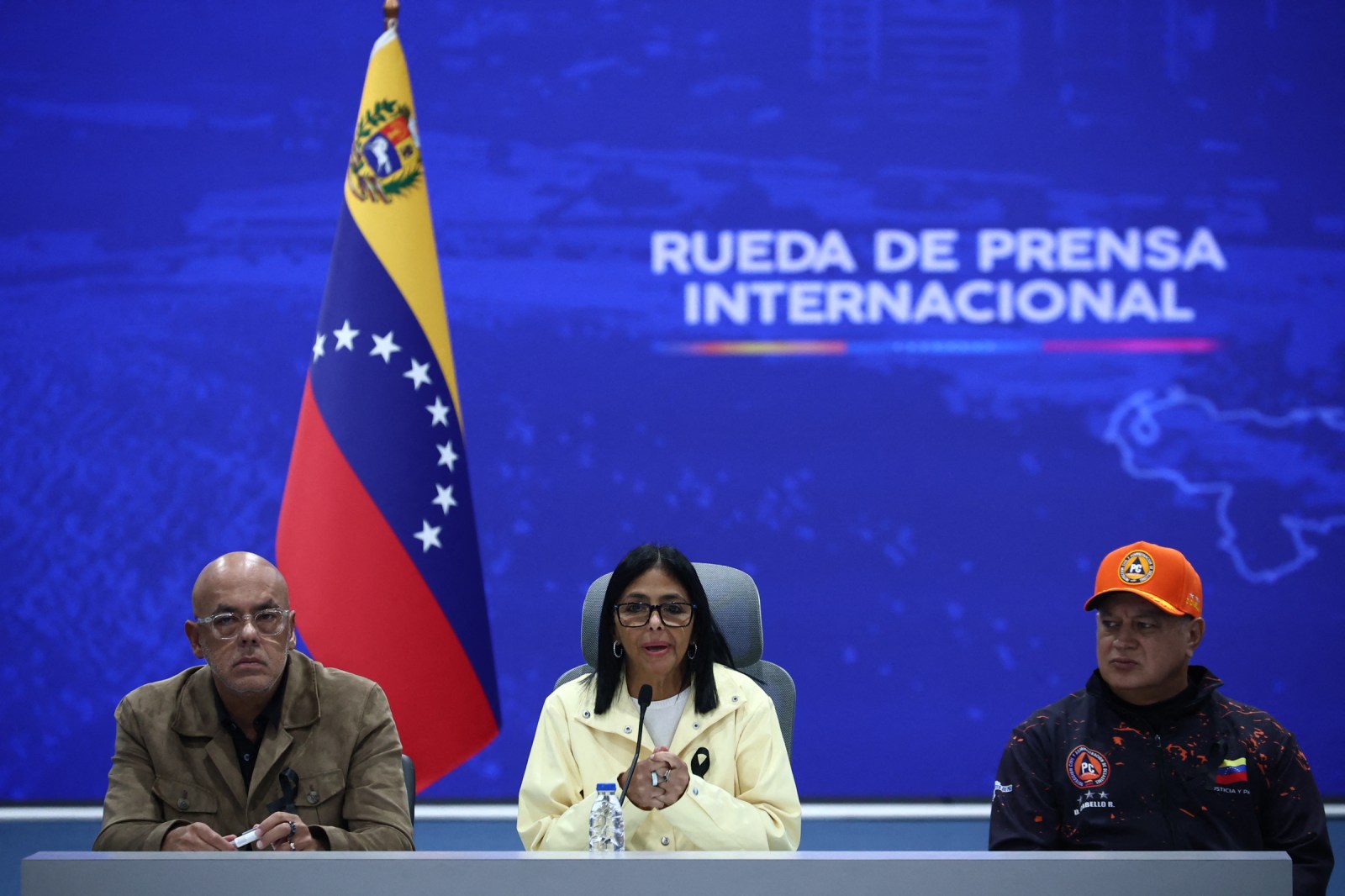
In contrast, the administration has informed a Florida federal court that Delcy Rodríguez, recognized by Washington as Venezuela’s acting president, should be immune from a $314 million civil judgment. This judgment pertains to the torture of three Americans previously held in Venezuela. The Justice Department’s rationale is based on U.S. recognition of Rodríguez as the current head of state, granting her immunity in American courts.
Different Legal Approaches and Political Implications
The contrasting legal actions reflect an evolving U.S. policy toward Venezuela. Celebrating Maduro’s ousting as a foreign policy win, the Trump administration shields the succeeding government, even if its officials share accusations of repression similar to Maduro’s tenure.
According to Benjamin Gedan from the Stimson Center, Trump’s interests align with rising oil production and opportunities for American businesses in the energy sector, coupled with support for Delcy Rodríguez. Secretary of State Marco Rubio, however, maintains a focus on political transition, attempting to facilitate negotiations between the Venezuelan government and opposition.
This situation has sidelined opposition leader María Corina Machado, the 2025 Nobel Peace Prize recipient, who analysts suggest was discouraged from returning to Venezuela. Laura Dib from the Washington Office on Latin America notes the questionable legal framework behind Rodríguez’s current role, pointing out the absence of scheduled elections despite the capture of Maduro, raising concerns over legitimacy.
Comparisons to Iran and Broader Consequences
President Trump has often cited Venezuela as a model for rapid regime change, contrasting with the ongoing conflict in Iran. However, analysts, including Ronal Rodríguez from the Venezuela Observatory, question the success narrative, suggesting it’s a political strategy rather than reflective of ground realities. They argue the administration underestimates both Maduro and Rodríguez while each side seeks to benefit from the other strategically.
Economic Interests and Humanitarian Concerns
Economically, the U.S. is interested in Venezuela’s vast oil reserves, with officials having eased sanctions to boost American corporate investment in the region. Dib warns that operational challenges remain for businesses in Venezuela due to bureaucratic and legal system corruption.
Post-earthquake recovery efforts illustrate further complications. Independent reports show limited state response, leading to heightened expectations for U.S. involvement in aiding recovery. Rising frustrations could affect public perception of current Venezuelan governance, altering stability narratives previously adopted by the administration.
Ronal Rodríguez highlights these events as shifting dynamics, challenging the administration’s depiction of a stable progression in Venezuela.
Leave a Reply