Notable Additions to World Heritage
The Associated Press reported on Sunday that several significant sites were added to the World Heritage List following a U.N. committee meeting in South Korea. Among the newly designated sites are the D-Day landing beaches in northern France and the iconic Mount Olympus in Greece.
The session in Busan, which runs through Wednesday, also saw the inclusion of the ancient Japanese capitals of Asuka and Fujiwara. South Sudan’s Boma-Badingilo Migratory Landscape, known for hosting one of the world’s largest land mammal migrations, was added as the country’s first World Heritage Site.
Historic Normandy Beaches
France’s designation covers the five Normandy landing beaches: Omaha, Utah, Sword, Gold, and Juno, alongside Pointe du Hoc. On June 6, 1944, more than 150,000 Allied troops landed on these beaches, marking a pivotal moment in the campaign to liberate Western Europe from Nazi occupation during World War II.
The International Council on Monuments and Sites (ICOMOS) highlighted extensive remnants such as German fortifications and bomb-scarred landscapes. These sites mark an event that enabled the return of freedom and peace in Europe. ICOMOS called for enhanced monitoring and preservation due to threats like tourism, climate change, and potential wind farm developments.
“It’s probably the greatest amphibious landing there’s ever been. It ought to be remembered for that alone,” historian David Edgerton stated.
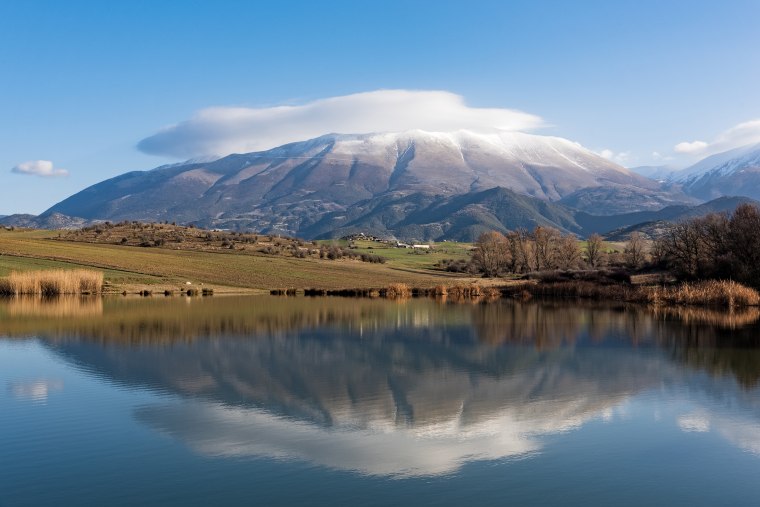
Mount Olympus Recognized
Mount Olympus, Greece’s highest mountain, gained World Heritage status as a mixed cultural and natural heritage site. The mountain is mythically renowned as the home of the 12 Olympian gods and harbors rich biodiversity.
Evangelos Geroliolios, mayor of Dion-Olympus, emphasized the obligation to protect the environment. Greece’s delegate to UNESCO, Georgios Koumoutsakos, reaffirmed commitment to safeguarding Mount Olympus for future generations.
“As Greek mythology wisely reminds us, it is always best to remain on good terms with gods,” commented Koumoutsakos.
Japanese Historical Capitals
In Japan, the Asuka-Fujiwara sites in Nara prefecture were recognized. These sites contain 19 archaeological locations from the 6th- to 8th-century capitals, where Japan’s first centralized state was established. Remnants of royal palaces, government offices, Buddhist temples, and tombs are preserved here.
Japanese Vice Culture Minister Shigeki Kobayashi expressed gratitude for the designation and Japanese Prime Minister Sanae Takaichi hoped the recognition would aid tourism. These sites highlight Japan’s ancient state formation influenced by China and Korea.
Yoshiyuki Aihara, a Nara University professor, noted ongoing excavation work revealing ruins that ordinary visitors might find challenging to comprehend.
South Sudan’s Ecological Site
South Sudan’s Boma-Badingilo site is characterized by extensive wetlands, flood plains, and savannas. This unique landscape hosts an estimated 6 million animals, including white-eared kob, tiang, and Mongalla gazelles, which migrate due to environmental changes.
The area supports elephants, lions, cheetahs, and other wildlife while providing for ethnic communities involved in herding, farming, and fishing.
Leave a Reply