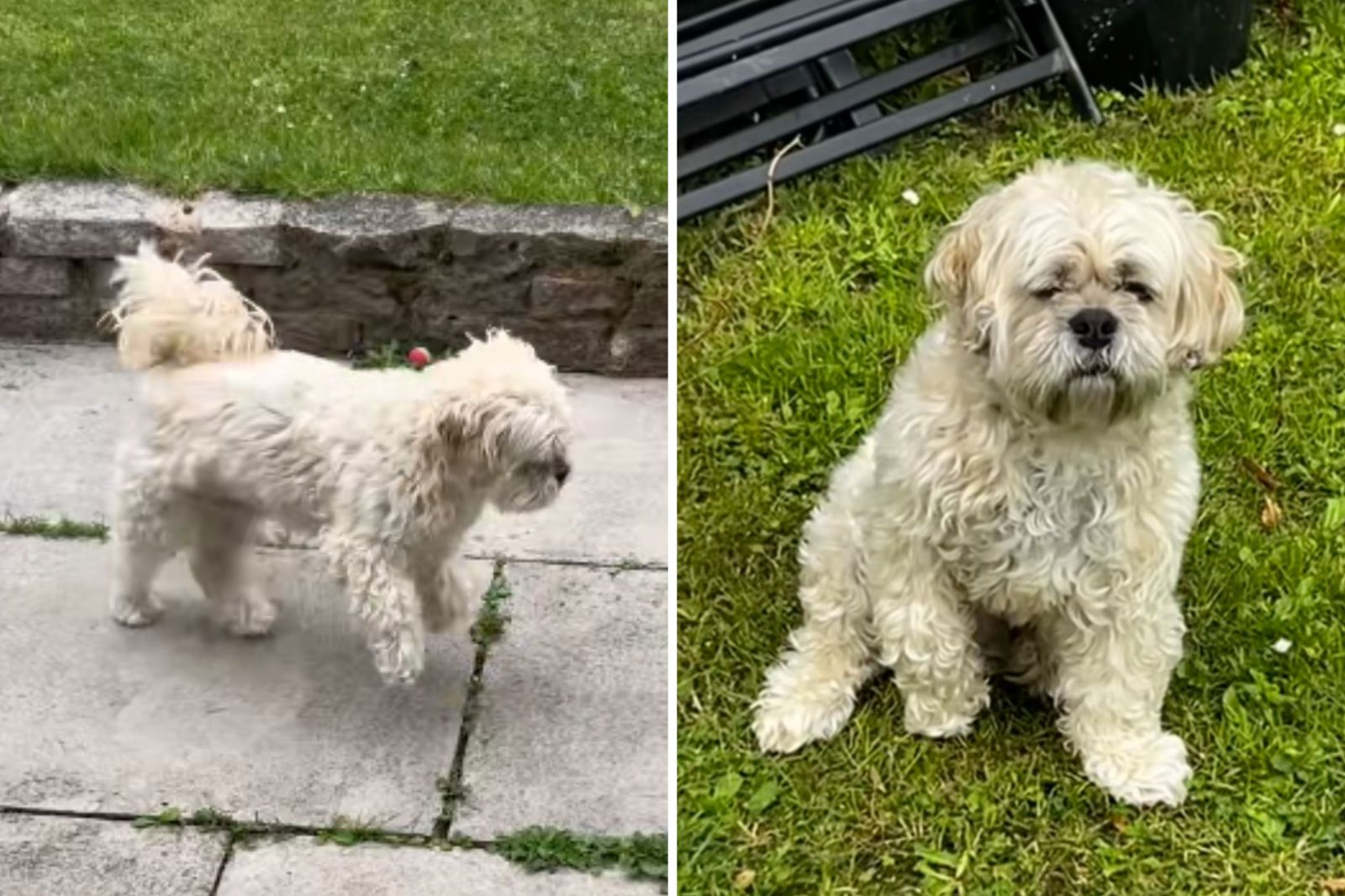
It started as a medical scare and concluded with relief and a hint of embarrassment for Daniella Williams and her family. Their 8-year-old dog, Henry, provided what Williams described as an ‘Oscar-worthy’ act of apparent injury.
The incident began when Henry, a Zuchon—a Shih Tzu and Bichon Frise mix—developed a noticeable limp just after 7 p.m. Daniella was in the shower, and her partner was putting their daughter to bed. Henry ascended the stairs, avoiding pressure on his front leg. Daniella shared with Newsweek via TikTok, ‘He would just hold it up. He’s had a similar issue before, so I immediately assumed it was the same problem, perhaps a thorn between his paw pads.’
After a careful examination of Henry’s paws, Daniella found no visible injury. Known for his ‘dramatic’ behavior, Henry was monitored throughout the night. Daniella’s partner even slept in the spare room to closely check on the pup.
With Henry still limping the next morning, the family’s concern led them to schedule an emergency vet visit. However, as Daniella indicated in a June 16 TikTok on her account, @doggrooming_bydaniella, the urgent worry was seemingly without cause.
Henry’s ‘recovery’ started at the vet’s clinic. He limped in, but once he heard the practitioner’s summons, he dashed into the examination room, seeming entirely well.
Daniella explained the situation to the vet, who examined Henry’s bones and paw pads without finding any tenderness. The absence of a reaction to pressure led to a surprising revelation: Henry was perfectly fine.
To further assess, the vet watched as Henry moved outside, showcasing a normal gait, tail wagging, and even playful antics with the veterinarian. While the vet dismissed the spectacle, remarking it ‘happens all the time,’ Daniella was left with a sense of chagrin regarding her dog’s quick recovery.
Why Do Dogs ‘Fake’ Injuries?
Henry’s abrupt improvement might seem odd, but specialists note dogs can discern that certain conduct garners human focus.
An article from Dogster, reviewed by veterinarians, counters the notion that dogs intentionally mislead people. Instead, they might replicate behaviors if those actions had previously resulted in affection or positive feedback. Dogs are notably observant, linking their behaviors with human reactions.
A dog that previously limped due to an actual injury might resume the action upon realizing it prompts additional attention. However, experts stress the importance of never presuming a limp is merely attention-seeking. A limp can indicate discomfort, injury, or health concerns, warranting an evaluation by a vet for persistent signs.
Leave a Reply