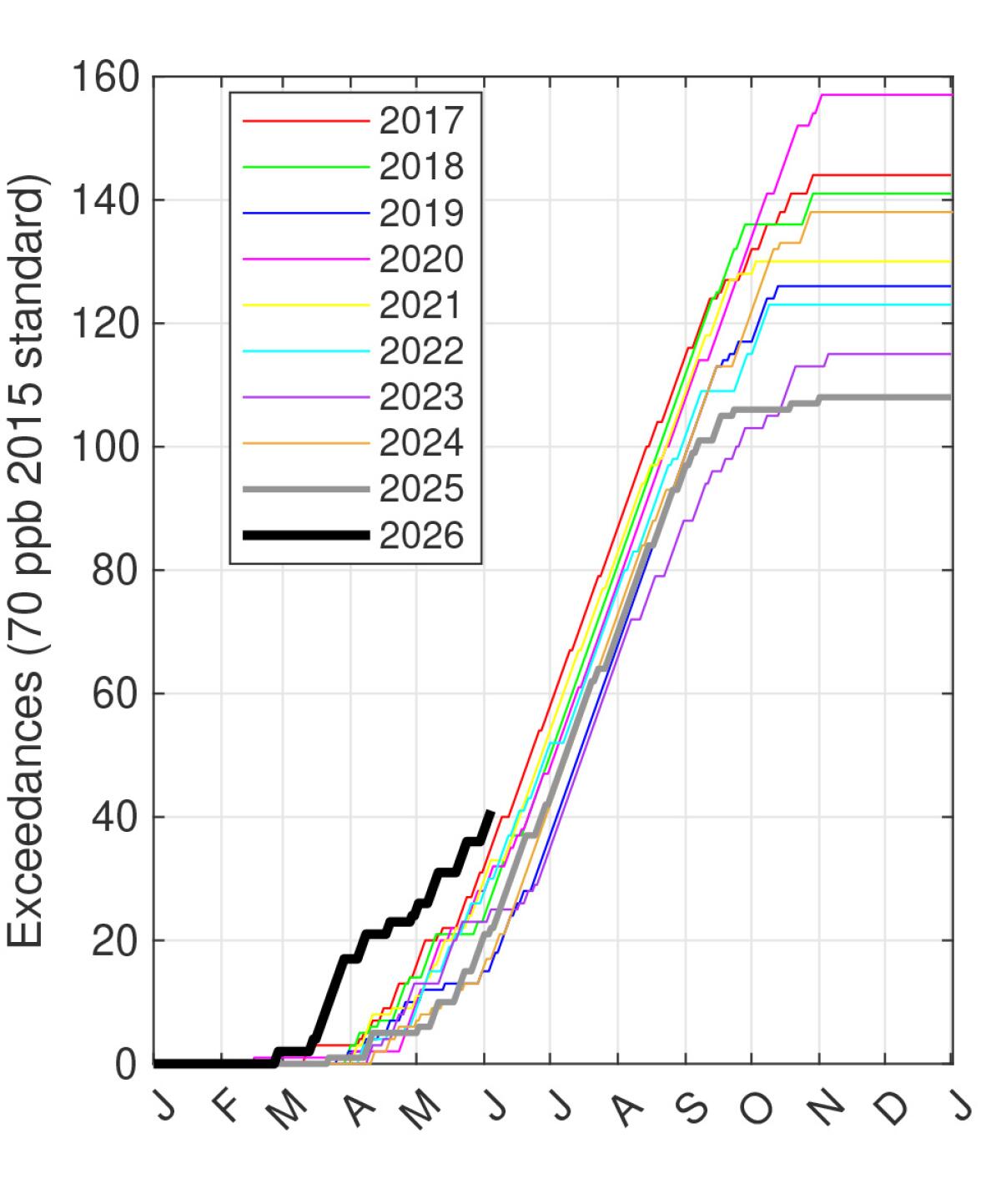
During the first half of 2026, Southern California experienced its smoggiest period in more than ten years. Statewide air monitoring data reveals that the region endured the highest number of unhealthful air days.
The South Coast air basin, encompassing Los Angeles, Orange, Riverside, and San Bernardino counties, recorded 39 days of elevated ozone levels exceeding federal standards. In 2017, known for its hot and hazy conditions, there were 36 unhealthful air days by June 4, ultimately reaching 145 days.
Approximately 18 million residents in the area were exposed to harmful ozone levels. Ozone, a corrosive gas, exacerbates asthma and other respiratory illnesses. This pattern defies expectations, as smog typically intensifies in summer. When heat combines with sunlight, it transforms pollution into ozone.
If we have this many violations by this time, this could be a really awful year for air quality.
Adrian Martinez, director of Earthjustice’s Right to Zero campaign, warns about a potentially severe year for air quality. The region already faces significant smog pollution during summer.
Particularly affected areas include valleys. On April 18, an air monitor in Reseda, San Fernando Valley, recorded the second-highest ozone level spike in a decade.
The South Coast Air Quality Management District attributes high ozone levels to early heat waves. Officials noted no significant rise in pollutant emissions, primarily from automotive exhaust, contributing to ozone formation. Local temperatures exceeded normal ranges, peaking in the mid-80s and high 90s from January to April. March was California’s warmest on record. Riverside, for instance, experienced an unprecedented 13 days over 90 degrees.
It was really that heat wave — conditions we typically see in July or August, we saw them in March.
Sarah Rees, air district deputy executive officer, highlighted the unusual heat contributing to increased ozone levels.
Air district officials advise residents to check pollution levels online or through their app. They recommend minimizing outdoor activity during high smog days. Scott Epstein, planning and rules manager for the air district, emphasized the invisible nature of ozone pollution compared to wildfire smoke.
Southern California’s vulnerability to smog results from gas-powered vehicles’ emissions. The region’s sunshine catalyzes smog formation, with mountains trapping pollutants over populated areas.
For decades, air regulators have implemented rules to combat pollution. California pioneered tailpipe emission standards in 1966 and introduced catalytic converters in 1975. Despite significant reductions in pollution, the area still falls short of federal ozone standards.
At a recent air district meeting, board members remembered William Burke, former chair, for his influential efforts in reducing smog-forming pollution. Under Burke’s leadership, numerous rules cut smog levels by hundreds of tons daily. Residents from the Inland Empire, severely affected by smog, expressed gratitude for these efforts while advocating for further progress.
Erik Morden, a local resident, recalled past pollution levels and acknowledged improvements. However, he urged continued efforts to address remaining challenges.
We’ve got a lot of heat, we’ve got a lot of pollution. Our contention is, this agency can’t control the weather. But the one thing it can control is the pollution.
Martinez of Earthjustice emphasized the need for regulatory actions, such as incentivizing zero-emission technologies, to address current pollution challenges.
Leave a Reply