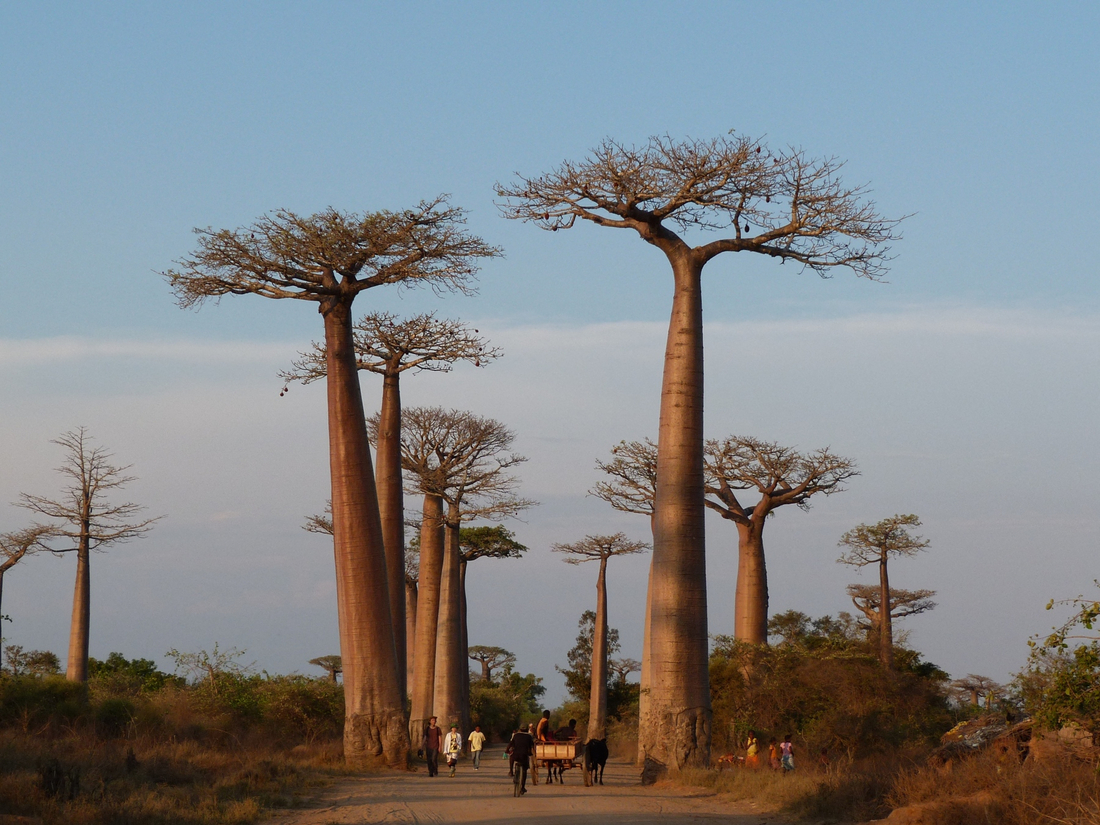
Baobab trees, often referred to as the “tree of life,” captivate with their robust trunks and crowns of branches. Blossoms that only open at twilight add to their unique allure. These trees, technically succulents, inspired Rafiki’s home in The Lion King.
Eight distinct species of baobabs exist. They are well-suited to arid climates and offer food, water, and shelter, playing a crucial role in their ecosystems. These trees also hold significance in the cultures and diets of surrounding communities.
Their origins, however, sparked debate. Theories pointed to sub-Saharan Africa, western Australia’s Kimberley region, and Madagascar’s dry forests as potential birthplaces. To solve this puzzle, a global research team led by the Wuhan Botanical Garden set out to trace the trees’ roots using genomic data from all eight baobab species. Advances in genetic technology have made sequencing both faster and more affordable.
By combining genetic findings with ecological studies, the team identified Madagascar as the probable point of origin. They propose that ocean currents transported the baobab fruit to Africa and Australia. In these new environments, the tree adapted, leading to the emergence of new species.
“When I touched the bark of the baobab, I decided to know the evolutionary history of these special trees,” said Wan Jun-Nan, the first author of the study.
The results were published in the journal Nature. Wan Jun-Nan, inspired by baobabs since reading The Little Prince, shared his passion, especially after his visit to Madagascar.
Yet, the future of baobabs remains uncertain. Three species from Madagascar face extinction. Adansonia perrieri is critically endangered, while Adansonia grandidieri and Adansonia suarezensis are endangered. The factors threatening these trees include deforestation and rising sea levels, which restrict their habitats. Additionally, the decline of pollinator populations, such as fruit bats and hawks, poses risks.
Wan hopes that the genetic insights from the study will guide ecologists in forming effective conservation strategies. The study’s findings aim to support efforts in protecting these iconic trees for the future.
Leave a Reply