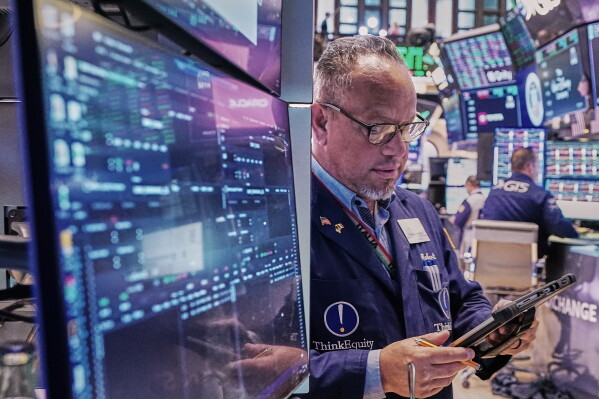
On Friday, Wall Street pushed deeper into record levels, buoyed by major stock indexes continuing their recent rally. The S&P 500 ticked up 0.2%, marking its seventh consecutive gain and ninth winning week in a row, marking the longest such streak since 2023. For the fourth consecutive day, the index hit a new all-time high.
The Dow Jones Industrial Average climbed 0.7%, and the Nasdaq composite rose 0.2%. Both also set new records after achieving record highs earlier in the week. The surge in big technology stocks has largely driven this record-breaking ascent. Due to their high stock values, these tech giants wield significant influence on market directions. In May, S&P 500 technology stocks surged over 15%, even as most sectors in the benchmark index declined.
“The rally has been largely tech-led and supported by resilient earnings, but the key question is whether it can be sustained,” noted Angelo Kourkafas, senior global strategist at Edward Jones, in a research note.
Tech stocks continued to buoy the market on Friday. Microsoft gained 5.4%, and Broadcom increased 4.7%. Dell Technologies led the S&P 500, surging 32.8% following earnings that far exceeded expectations. The company also raised its forecast, citing strong demand for AI computing.
Meanwhile, most other sectors in the S&P 500 lost ground on Friday. Paramount Skydance declined 1.9%, Amazon.com fell 1.2%, and Costco Wholesale dropped 3.9%.
Wall Street’s rise persisted despite concerns over the U.S.’s conflict with Iran potentially worsening inflation and threatening growth. Reports suggested the U.S. and Iran may extend a ceasefire, which helped ease oil price pressures. Brent crude oil, set for August delivery, decreased 1.7% to $91.12 per barrel but remained higher than late February’s $70 per barrel before the conflict. U.S. crude oil for July delivery also slipped 1.7% to $87.36 per barrel.
Treasury yields remained stable, with the 10-year Treasury yield slightly dropping to 4.44% from 4.45% on Thursday.
Despite the easing in oil prices, high prices continue to concern Wall Street. The conflict has disrupted oil shipments through the Strait of Hormuz, impacting global oil and gas supply and contributing to rising costs. This has fueled inflation, affecting consumers and businesses. Prices were already on the rise before the conflict due to tariffs.
Recent reports highlighted inflation’s impact. In April, the Federal Reserve’s preferred inflation measure reached its highest level in three years. Consumer confidence is dipping as inflation pressures grow.
Wall Street’s inflation concerns have been tempered by strong corporate profit reports. S&P 500 companies showed a 28% overall profit growth for the most recent quarter, according to FactSet. Most S&P 500 firms have reported their latest results, potentially shifting investor focus back to inflation, consumer behavior, and the Fed’s decisions on interest rates.
The Federal Reserve has kept its benchmark rate steady, monitoring rising inflation closely. The Fed is expected to maintain rates through its upcoming meetings, according to CME’s FedWatch tool. Lowering rates could reduce borrowing costs and stimulate the economy, but it risks exacerbating inflation during a period of already high prices.
Despite Middle East conflict-driven market volatility, stocks gained in May. The S&P 500 closed the month with a 5.1% gain, up 10.7% for the year. On Friday, the S&P 500 rose 16.43 points to 7,580.06, the Dow increased 363.49 points to 51,032.46, and the Nasdaq added 55.15 points to reach 26,972.62. Markets across Europe and Asia mostly reported gains.
Leave a Reply