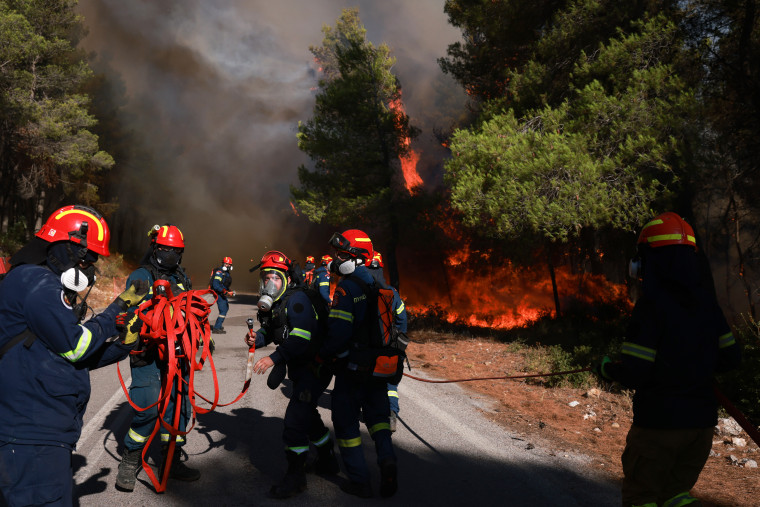
On August 2, 2026, firefighters in Greece struggled to contain a massive wildfire northwest of Athens. Over 100 homes have been destroyed, and a new fire on the island of Kefalonia led to evacuations. This summer, wildfires have erupted across Europe, fueled by record-breaking heatwaves and drought, conditions worsened by climate change.
In France and Spain, fires eased slightly over the weekend, but Greece saw new outbreaks following a period of calm. Porto Germeno faced gale-force winds, but these have weakened. The fire spread south, reaching Veniza and a military firing range, activating unexploded ordnance. Nearly 500 Greek firefighters, aided by teams from France and Romania, have been deployed to combat the blaze.
In the village of Agios Konstantinos, residents fought to stop the fire’s advance. Tasos Tzempelikos, 61, explained, “The fire has been burning since last night; it’s certain they can’t have forces everywhere. As residents, we’re doing everything we can.” The blaze threatens to reach Megara, with Protothema reporting over 38 square miles of land destroyed.
On Kefalonia, the Pastra area fire forced evacuations overnight. In France, wildfires in the Gironde and Var regions showed signs of subsiding. Authorities reported minor flare-ups in Gironde and confirmed the Var department fire hadn’t expanded overnight.
Central Spain’s wildfires are mostly contained after ravaging tens of thousands of hectares, though re-ignitions persist. In Caceres province, a forest fire prompted 800 evacuations on Saturday; residents returned Sunday but remained indoors as the fire was active.
European countries face additional challenges with drought and falling water levels. Major rivers like the Rhine and Danube, which saw record low levels in Hungary, Serbia, and Romania, have been significantly affected. Hungary’s Prime Minister Péter Magyar announced a critical five-day period as the Danube’s dryness forced the country’s lone nuclear power plant to shut its doors for the first time in four decades amidst another looming heatwave.
The lowered water levels have disrupted shipping and tourism, prompting water-use restrictions across more than 100 cities and villages in Hungary. Serbia’s Danube levels dropped to their lowest since 1985, reducing the country’s largest hydropower plant’s daily output to 20%, as reported by the energy minister.
Leave a Reply