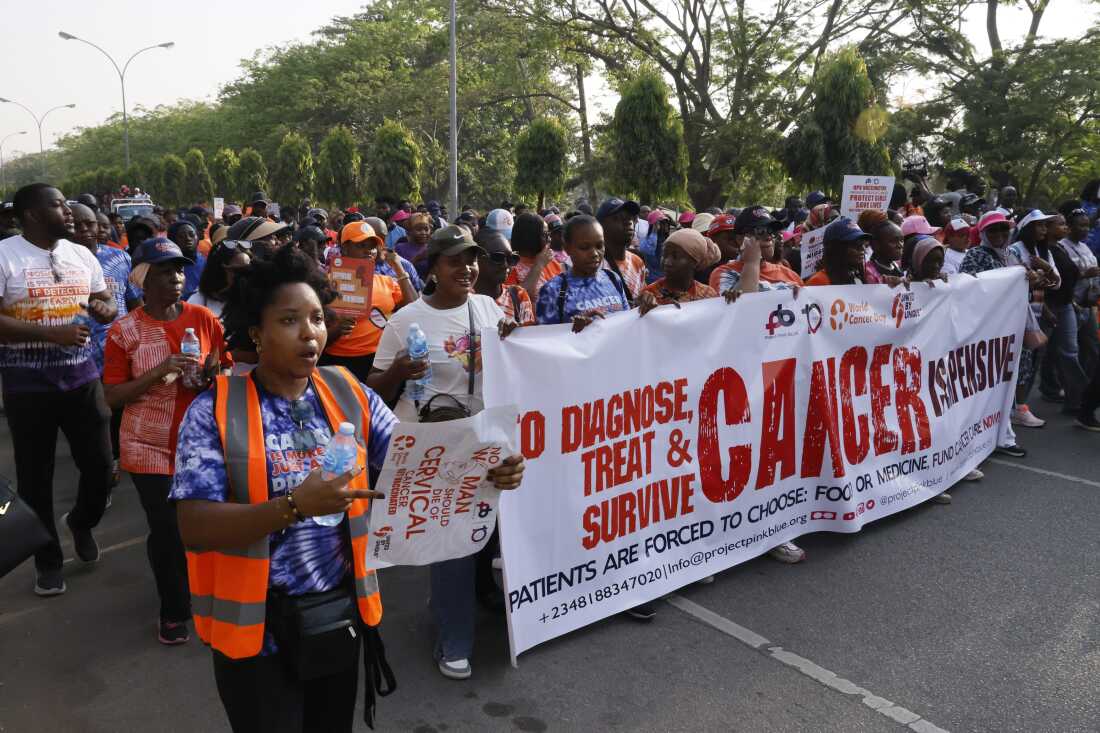
On February 7, hundreds gathered in Abuja, Nigeria’s capital, to commemorate World Cancer Day. They marched to raise awareness about cancer and the significance of early diagnosis. The World Health Organization reports a rapid increase in cancer cases in Nigeria.
When Titilayo detected a lump in her breast, she felt as though her life was ending. Living in a small city in southern Nigeria, she waited weeks for a biopsy sent to Abuja to confirm malignancy. Her doctor recommended a mastectomy and chemotherapy, but Titilayo faced challenges in accessing treatment. Chemotherapy drugs were often unavailable locally, requiring her to travel to other states. Despite financial and logistical hurdles, Titilayo resolved to pursue treatment for her three young daughters. Her story echoes the global burden of cancer.
One in five people worldwide will face cancer. Treatment and survival rates improve in wealthy nations, but in regions like sub-Saharan Africa, WHO projects cancer cases to more than double by 2050. Dr. Basira Hanafi Lawal, a radiation oncologist in Abuja, notes the rise in cases and attributes it to factors such as aging populations and lifestyle changes. She observes an increase in early-stage cancer patients due to awareness and screening, yet many still seek help at advanced stages.
Colon cancer, once associated with older individuals, now affects younger people. This trend is seen globally. For instance, Lawal recalls diagnosing a 19-year-old with colon cancer. Finding oncology care in Nigeria remains challenging, with only 80 oncologists serving a population of 242 million, compared to 27,500 in the U.S. The scarcity of radiotherapy centers further limits access.
In Nigeria, cancer patients bear over 80% of care costs. Health insurance often excludes comprehensive cancer coverage, leading families to resort to crowdfunding. Advocacy groups like that of Abigail Simon-Hart highlight how many present late or lack money for treatment. Regina Fisayo Akinola, a breast cancer survivor, emphasizes early detection through mammograms. She benefited from family support but acknowledges others face abandonment.
Ethel Olomu, a survivor from southern Nigeria, expresses how systemic failures contribute to cancer deaths. WHO data shows only 28% of Nigerian women diagnosed with breast cancer survive five years post-diagnosis, against a global rate of 78%. Survivors like Olomu often deal with social rejection during and after treatment. She created the Engraced Life Foundation to support survivors and foster change in cancer care.
The Nigerian government aims to reduce cancer cases by 30% by 2030. Initiatives include the Cancer Health Fund for low-income patients and collaborations to enhance cancer treatment access. Prevention is also prioritized, such as HPV vaccinations to combat cervical cancer. Kenya’s success informed Nigeria’s recent inclusion of the HPV vaccine in its routine program. Efforts in Cote d’Ivoire to promote prostate cancer screenings also illustrate public awareness initiatives.
Titilayo remains hopeful, urging others to seek early detection and treatment. Her survival is testament to resilience in face of adversity. She hopes to encourage others in her community to recognize their life’s value beyond cancer’s challenges.
Leave a Reply