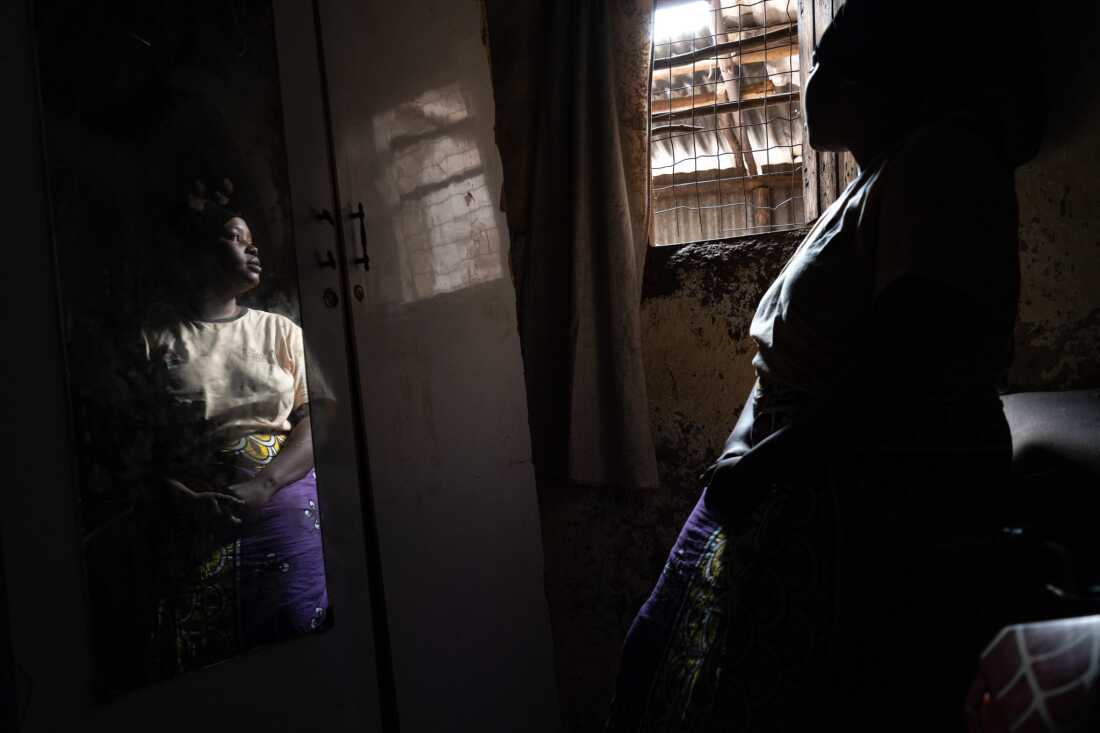
Zubedah Hassan, 32, lives in Kibera and works as a champion for the Stop Sex for Water program. Her role involves encouraging women and girls to speak out if they face sexual violence from water vendors or are subjected to inappropriate behavior in public bathrooms. Hassan identifies poverty as a core issue affecting access to clean water. She explains, “A girl tries to save money on water by doing favors for a vendor.” Another significant challenge is drought, causing schoolchildren to wake up early to seek water, facing sexual assault along their routes.
Saly Amutwayi starts her day unlocking her small hair salon in Kibera, Africa’s largest slum near Nairobi, Kenya’s capital. Before clients arrive, she talks quietly with her friend Mariam Hassan. Like many women there, their daily routine includes collecting water, a task that can take hours and is fraught with risk. Both have experienced sexual violence while fetching water. As Amutwayi points out, “When there is no water, everything becomes dangerous.”
In Kenya, informal settlements like Kibera lack legal land titles and formal infrastructure, leaving residents reliant on private vendors who control water access and prices. Activists stress that this dependency fosters conditions ripe for sexual harassment and coercion, including “sextortion”, where women are pressured to exchange sex for water.
Parliamentary Action
After over a decade of advocacy by Kenyan water-sector groups, the issue was finally addressed in Parliament in 2024, marking a significant step for addressing long-ignored gender-based violence. Despite Kenya’s constitutional guarantee for access to clean and safe water, Kibera residents rarely benefit from public water pipes. Instead, they purchase water by the jerrycan from kiosks, street carts, or storage tanks, with prices often fluctuating.
Billy Misuga, 25, works at a government-sponsored water kiosk in Kibera. He observes the struggle for water and notes, “I let them fill even if they don’t pay.” Crowded conditions worsen during droughts, making water more scarce and increasing harassment risks. During one such shortage, Amutwayi couldn’t afford the water price, leading to a near-assault that neighbors intervened to stop.
Pressures and Risks
The fear of sexual violence significantly affects daily life. Hassan describes the acute fear stemming from her own experience, influencing her decisions for her daughter. Local groups, such as the Kenya Water and Sanitation Civil Society Network (KEWASNET), run programs to tackle water-related sexual violence, encouraging women to seek justice and document abuses.
Joan Kones from KEWASNET highlights that “sextortion thrives where services are scarce and accountability is weak.” The pressure of exchanging sex for water becomes particularly acute during drought, exacerbating already challenging circumstances.
Reporting and Support
Despite advocacy, many survivors do not report incidents to police. Fear of retaliation and skepticism about effective action prevent many from speaking up. Malesi Shivaji, CEO of KEWASNET, acknowledges the cultural normalization of these crimes, which silences victims.
Community health promoters, like Judith Shitabule, emphasize educating women on their rights, although “saying no is very hard when your family needs water.” Posters and educational campaigns in Kibera aim to change these dynamics despite systemic pressures.
Cartels and Corruption
The water distribution in Kibera is dominated by cartels, as described by Wycliffe Otiala, a cartel leader. He explains the illicit control over water supply — paying off municipal workers to sidestep official channels — maintaining their grip and further marginalizing residents.
Kenyans find the police force one of the most corrupt institutions, complicating legal recourse for victims of water-related sexual violence. Surveys underscore widespread dissatisfaction with authorities, highlighting a disconnect that entrenches cartel power.
Marginalized Groups
Transgender individuals face unique challenges accessing water and sanitation facilities in Kibera. One transgender man, fearing for his safety, recounts the harassment and denial of services he routinely faces based on his identity.
His experience mirrors broader discrimination against transgender individuals documented by various human rights organizations. The struggle to access basic needs highlights the intersectionality of violence and scarcity within Kibera.
Hope for Future Generations
Despite the challenges, residents express hope for change, particularly through education. Hassan emphasizes raising her daughter differently, while Amutwayi dreams of a future where hours spent collecting water are no longer fraught with danger.
The investigation highlights the critical impact of water scarcity on women across Kenya, part of a larger project, “Pipe Dreams.” This effort involved collaboration among numerous researchers, focusing on environmental and social issues worldwide.
Leave a Reply