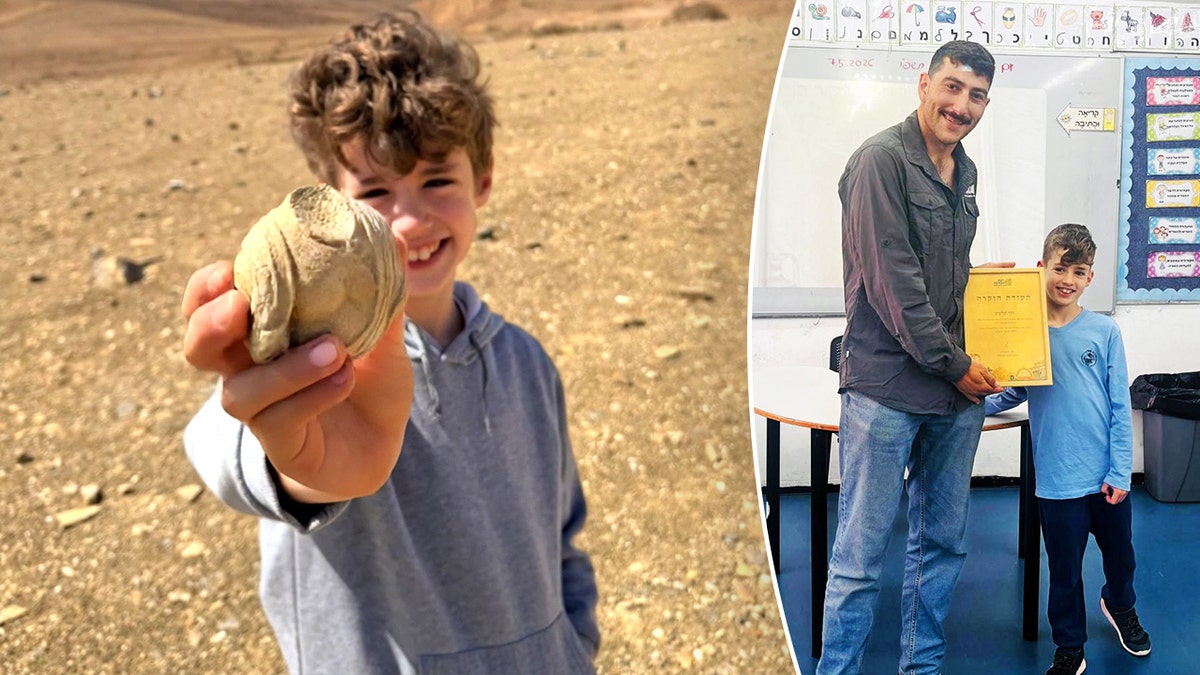
A visit to the Ramon Crater in the Negev Desert of southern Israel led to an unexpected historical find. Dor Wolynitz, an 8-year-old from Rehovot, Israel, discovered a 1,700-year-old Roman statuette fragment, sparking interest from the Israel Antiquities Authority (IAA).
Unveiling Ancient History
The discovery occurred during a family retreat organized by a paratrooper reserve unit. Wolynitz was intent on finding items to present during his school’s show-and-tell. He spotted an intriguing stone with stripes, picking it up and presenting it to Akiva Goldenhersh—an archaeologist and family friend.
The fragment portrayed “part of a human figure with carefully sculpted folds of fabric,” according to Goldenhersh, a supervisor with the IAA’s Antiquities Theft Prevention Unit.
Identifying the Artifact
Goldenhersh initially thought the item was a fossil. However, upon noticing the expertly sculpted folds in the garment, he realized it could be a Roman-era piece. Made from a phosphorite-type mineral native to the Negev, the statuette was locally produced.
Possible Identities
The depicted figure might represent the Roman god Jupiter or a Nabatean god known as Zeus-Dushara. Discovering surface finds like this, rather than during controlled excavations, is rare. The artifact’s location on the ancient spice route—a significant trade path during the Roman and Nabatean periods—underscores the cultural intersections of the time.
Preserving Cultural Legacy
Wolynitz handed the fragment to Israel’s National Treasures Department, earning a certificate for “good citizenship.” Desert conditions sometimes preserve artifacts, revealing them unexpectedly.
Goldenhersh praised the responsible conduct of Wolynitz and his family, highlighting their exemplary citizenship and commitment to cultural preservation.
Leave a Reply