The World Health Organization (WHO) announced that the risk from the Ebola outbreak in the Democratic Republic of Congo (DRC) remains high at the national and regional levels, though considered low globally. Ongoing investigations aim to determine the outbreak’s origins, already indicating it likely began months ago in the DRC’s eastern regions.
Ebola Situation Overview
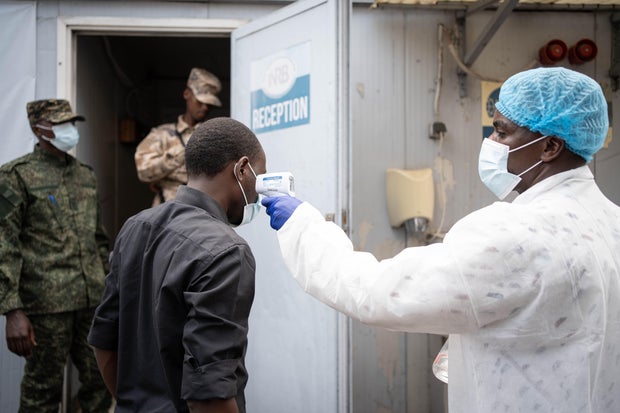
WHO Director-General Tedros Adhanom Ghebreyesus stated that 51 Ebola cases have been confirmed in the DRC, specifically in Ituri and North Kivu provinces. However, the epidemic’s full scope is recognized to be larger. A recent press conference in Geneva addressed the situation. A medical worker in Goma, DRC, checks locals for Ebola symptoms on May 19, 2026.
Tedros also noted that Uganda reported two cases, including a fatality, in Kampala. An American in the DRC tested positive and was transferred to Germany for treatment. Peter Stafford, an American doctor, evacuated with medical support to Germany. The missionary group Serge provided updates on his condition.
Concerns Over Spread
Tedros highlighted concerns over the potential spread. Current numbers include nearly 600 suspected cases and 139 suspected fatalities. The possibility of these increasing is high, attributed to the virus circulating before detection.
International Health Response
On Sunday, the WHO declared a public health emergency of international concern, a step below a pandemic classification. This triggered global emergency responses. Chaired by Lucille Blumberg, the WHO emergency committee assessed the outbreak. They agreed the current situation does not meet the pandemic threshold.
Anais Legand, a WHO expert on viral hemorrhagic fevers, emphasized measures to interrupt Ebola transmission through contact tracing and case management.
Response to U.S. Criticism
U.S. criticisms, notably by Secretary of State Marco Rubio, suggested a delayed WHO response. President Trump’s prior withdrawal from WHO over COVID-19 responses is part of this context. Health experts warned the U.S. withdrawal might hinder global disease management.
Tedros responded to Rubio by clarifying WHO’s supportive, not leading, role in country-specific outbreak actions. This response is aligned with the International Health Regulations (IHR).
Leave a Reply