Energy experts acknowledge the increasing need for additional power sources due to the rising demand for electricity. New technology and infrastructure are being explored to meet these demands.
Significant Investments in Infrastructure
Calvin Butler, CEO of Exelon, highlighted the industry’s substantial investments, stating, “We are investing approximately $1.1 trillion in infrastructure over the next five years to meet demand.” Exelon is a major electric utility holding company in the U.S. It manages electric grid infrastructure for powering homes and businesses.
Butler further explained, “We’re a transmission and distribution company. Our role is to operate a safe, reliable grid. We don’t control generation.” Supply costs have significantly increased by 645% since 2024 in the PJM region.
Data Centers’ Escalating Energy Consumption
Data centers used about 1.5% of global electricity in 2024. Their energy consumption is on the rise, expected to become the fifth-largest energy consumer worldwide. Current usage is comparable to the consumption of Japan and Russia.
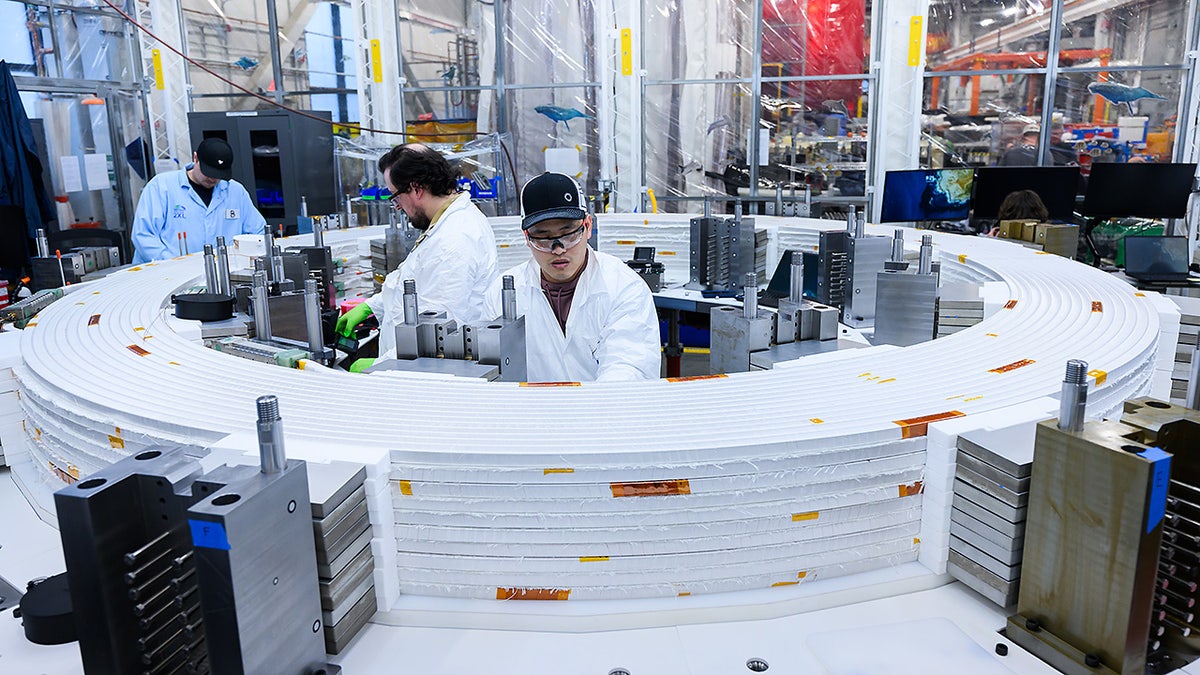
The increasing demand from industries like artificial intelligence (AI) requires creative solutions. Commonwealth Fusion Systems in Massachusetts is developing fusion technology for constant, reliable power. This method, utilizing the power of the sun and stars, involves combining light nuclei like hydrogen to release energy as heat, which can be converted to electricity.
Advances and Challenges in Fusion Energy
Brandon Sorbom, co-founder of Commonwealth Fusion Systems, remarked that fusion could provide substantial energy. Their ARC fusion power plant aims to produce 50 times the consumed power, with each location potentially powering a small city for a year using minimal fuel.
Although promising, fusion technology faces uncertainties. MIT estimates fusion might generate 10% to 50% of electricity by 2100. The integration of these complex systems presents significant challenges.
Strategic Relocation of Data Centers
Some companies relocate data centers to regions with less power demand. The Nordics are an attractive area due to abundant green energy, favorable regulations, and stable populations. Philippe Sachs of Nscale noted the advantages of the Arctic Circle for data centers due to lower industrial demand.
EcoDataCenter, based in Sweden, emphasizes efficient operations, utilizing server heat to warm homes. Norway’s cooler climate and low energy prices further enhance its appeal for data centers.
Despite high construction costs in Nordic capitals, companies continue to invest. Turner & Townsend identified these regions among the top for expensive construction.
Challenges exist, particularly for newcomers in the Nordic data center market, mainly concerning the harsh weather and seasonal changes.
The Global Drive for Energy Solutions
Despite the hurdles, companies worldwide strive to meet rising power needs. Sorbom noted, “There’s a strong correlation between energy usage and quality of life. It’s crucial to produce energy cleanly and safely.”
Leave a Reply