The U.S. military is seeking clear guidance from the Pentagon following President Donald Trump’s inconsistent stance on troop presence in Europe. These shifts have complicated military operations and might cost millions of taxpayer dollars. Two defense officials shared this information with The Associated Press.
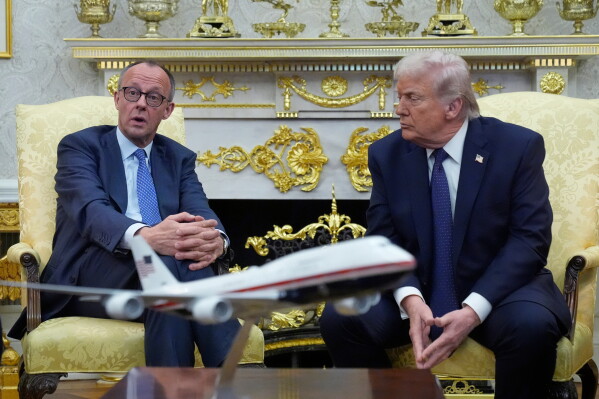
Initially, President Trump suggested deploying 5,000 troops to Poland after previously ordering a similar number withdrawn from Europe. This decision came on the heels of tensions with Germany’s Chancellor Friedrich Merz over the Iran conflict. The Trump administration asserts that troop withdrawal plans have been ongoing, with coordination alongside allies.
On social media, Trump announced the troop deployment to Poland, coinciding with the Pentagon’s cancellation of a scheduled troop rotation. The equipment meant for this deployment was en route, resulting in a $32 million cost, as reported by the U.S. Transportation Command. The military is now working to align policies with Trump’s latest directives.
European allies are unsettled by these developments, fearing the implications for their security relationship with Russia. The uncertainty impacts American troops who face cancelations and redirections. This is particularly pressing given the Army’s current budget constraints.
Impact on Troops and Equipment
The planned deployment involved 4,000 soldiers from the 2nd Armored Brigade Combat Team, 1st Cavalry Division, stationed in Fort Hood, Texas. At the start of May, the rotation was canceled. Troops were informed last-minute not to proceed to Poland, while approximately 1,000 stationed ahead await orders on returning.
The military anticipates utilizing existing European units for the deployment to Poland rather than sending additional forces from the U.S. The U.S. Transportation Command had arranged for a ship to transport equipment, incurring $32 million in costs. The redirection of these resources represents an unanticipated financial burden.
Financial and Strategic Challenges
The adjustments raise financial questions for the Pentagon, particularly regarding undisclosed associated costs. These decisions affect troop readiness, as training for specific missions now might not align with current deployments.
John Deni, a former military adviser, notes the added fees embedded in canceled transportation contracts. Joe Costa, formerly with the Pentagon, suggests the costs of sudden redeployments could be significant.
Potential strategies involve moving units from Germany to Poland, although such redeployments would demand time and money. The challenges extend beyond logistics, affecting the soldiers and their families, who plan for these moves well in advance.
Army’s Financial Strain
These troop decisions occur during a period of financial pressure for the U.S. Army. General Christopher LaNeve addressed Congress about the Army’s budget shortfall, reported between $2 billion to $6 billion.
The financial gap has already led to reduced nationwide soldier training programs. The Army is prioritizing vital missions, such as the National Guard deployment in Washington and activities along the U.S.-Mexico border. Partial reimbursement is expected from the Department of Homeland Security for some operations.
Army Secretary Dan Driscoll expressed optimism about reimbursement processes. However, the Army has yet to receive such payments. Officials maintain operations continue effectively, with a focus on crucial functions.
Leave a Reply