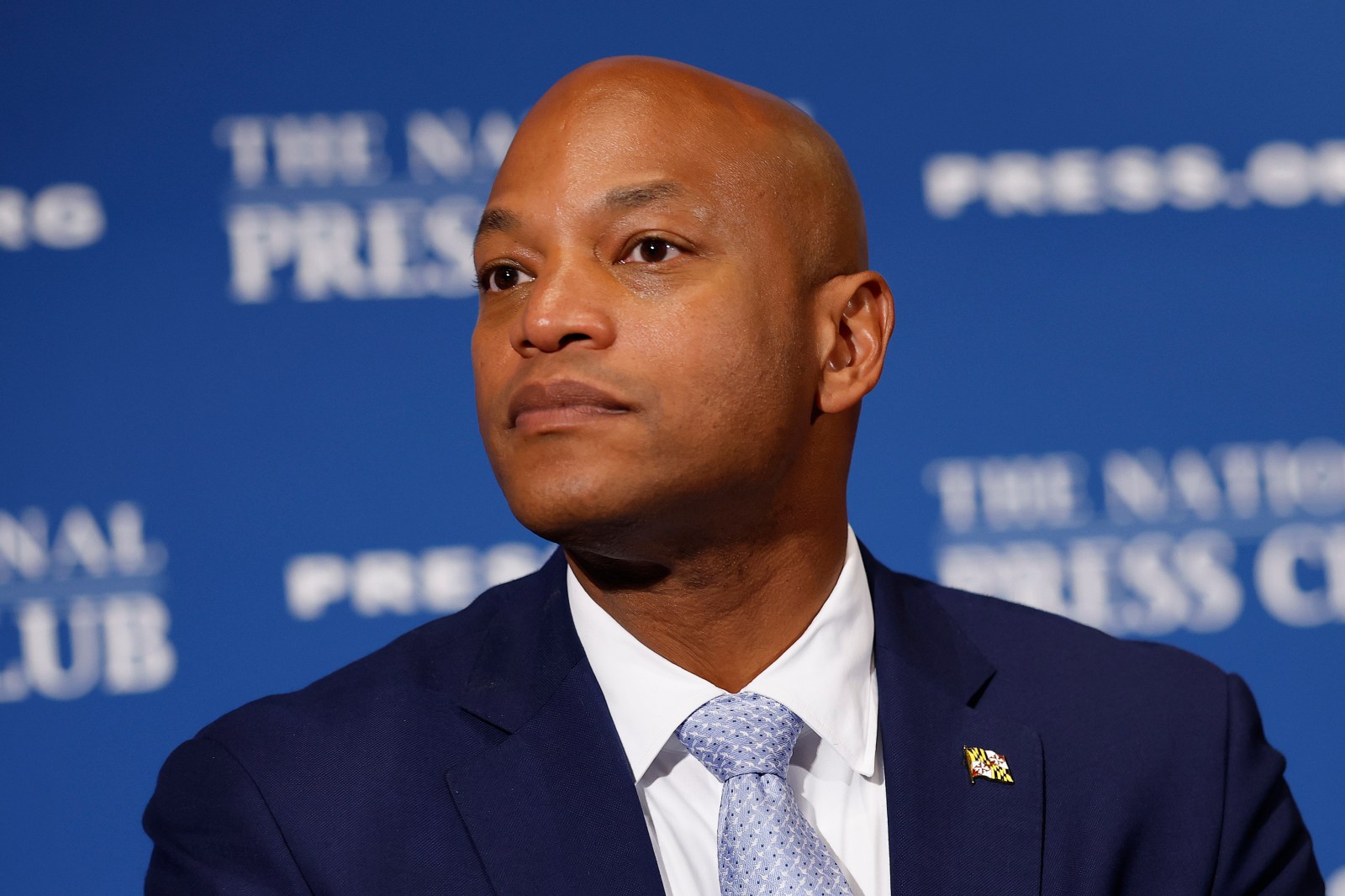
Maryland Governor Wes Moore won his 2022 election comfortably, and as the 2026 election approaches, he remains the favorite for reelection. However, recent polls show a dip in his approval ratings due to growing voter concerns about taxes and affordability. This scenario offers a glimpse of hope for the Republicans, who aspire to challenge an incumbent governor in Maryland for the first time in nearly 80 years.
After a crowded GOP primary, Republicans rally around Dan Cox as their candidate. Cox recently won the Republican primary with 44.7% of the vote, defeating Ed Hale, who garnered 36.3%.
Moore’s Approval Ratings and Polls
Wes Moore has been a popular figure historically since taking office in January 2023, following his decisive victory over Cox in 2022. According to a January 2026 Gonzales poll, Moore had a 51.7% approval rate while 41% disapproved. Approximately half of the voters expressed willingness to reelect him if the election were imminent, against 28% who preferred a Republican challenger.
Moore’s approval ratings fell below 50% for the first time in April. A UMBC Institute of Politics poll found 48% approval for Moore’s performance, with around 60% of respondents stating the state was moving in the wrong direction. Mileah Kromer, director of the poll, noted that voters typically hold governors accountable for economic conditions, despite individual limitations.
These figures indicate that Moore remains strong politically, yet his approval has notably declined from previous peaks in the mid-60s. This downward trend corresponds with lower public perceptions of economic conditions in Maryland. Predictions from Polymarket suggest a 94% chance for Democrats to keep winning the election, with Republicans holding a 6% probability, showing expectations for Moore’s victory.
Who Is Dan Cox? Republican Candidate for Governor
Dan Cox is a former Maryland state delegate and was the Republican nominee for governor in 2022. He is now up for a November rematch against Moore after losing the 2022 election by over 30 percentage points. Cox is known for his strong support of President Donald Trump and affiliation with the MAGA movement.
Despite facing criticism, Cox has solid backing among conservatives, making him one of the prominent Republicans in this race. He criticized Democratic attempts to sway the primary, labeling them as unwarranted interference. Trump’s endorsement of Cox as “MAGA all the way” in 2022 added to his recognition, though Trump did not endorse anyone in this year’s Maryland Republican primary.
Democratic Influence on Republican Primary
In past cycles, Democratic groups have elevated far-right Republicans during primaries, assuming they would be easier to defeat in general elections compared to moderates. Maryland Democrats employ this strategy again, enhancing Cox’s profile among Republican voters by advertising his ties to Trump and the MAGA movement.
Moore’s campaign aired ads on Fox News emphasizing Cox’s connection with Trump, echoing similar tactics from four years ago that promoted Cox as a staunch conservative before the Republican primary. The strategy assumes Cox’s weaker candidacy compared to a moderate Republican.
Republicans accuse Moore and Democrats of meddling by highlighting Cox while critiquing Ed Hale as an unreliable former Democrat. Republican spokesperson Tyrone Keys believes Moore prefers facing Cox again, stressing Hale’s potential strength as a competitor.
Ultimately, voters chose Cox to challenge Moore in the general election once more.
Voter Registration and Party Dynamics
Moore benefits politically from Maryland’s party composition. Newsweek’s voter registration data shows 2.2 million registered Democrats versus 1.02 million registered Republicans, demonstrating a two-to-one advantage for Democrats.
Despite the mathematical challenges, GOP registration grew by 1.5% post-2022 election, while Democratic registration reduced by 1.9%. Maryland’s partisan landscape explains why Democrats have dominated statewide offices for decades. Republicans often struggle in federal races even with notable candidates like Larry Hogan, who lost a 2024 Senate bid despite being a moderate ex-governor with successful gubernatorial terms.
Challenges for Republicans in Maryland
Success for Republicans demands robust GOP voter turnouts, strong performance among independents, and sufficient crossover votes from disgruntled Democrats. Economic issues could help Republicans challenge Moore’s policy efficacy.
Earlier polling indicated that 58% felt overtaxed. Among them, a hypothetical Republican candidate led Moore by double digits, highlighting potential vulnerabilities.
Past Republican Governorship in Maryland
Hogan, from January 2015 to January 2023, was Maryland’s last Republican governor. His 2014 moderate-focused campaign and re-election emphasized fiscal management and cross-party collaboration.
Hogan’s 2014 victory capitalized on discontent with tax hikes from the preceding Democratic administration. His reelection against Democrat Ben Jealous reflected broad voter appeal.
Though Hogan’s initial gubernatorial triumph occurred in an open race, challenging incumbents like Moore demands more. Historical difficulty in defeating incumbent governors is evident, with the last such event dating to 1950 when Republican Theodore McKeldin ousted a Democrat.
Republicans eyeing Hogan’s legacy face obstacles. Hogan’s moderate approach often conflicted with the national party. Growing political polarization complicates crossover appeal, presenting challenges to replicating Hogan’s success.
Moore’s comparison to Hogan offers strategic insights as voters could favor Republicans during Democratic leadership dissatisfaction, although winning such races requires uniquely popular candidates extending beyond partisan bases.
Moore’s reelection likelihood pivots on maintaining voter satisfaction with state direction and economic policies. Despite recent poll warnings, Moore retains a substantial lead over generic Republican challengers.
Leave a Reply