Internal disputes on how to celebrate the nation’s birth highlight an ongoing struggle over historical narratives. George Orwell, in 1984, noted, “Who controls the past controls the future. Who controls the present controls the past.” This suggests that altering history can help justify current actions and maintain power.
The current administration has shown great interest in history, notably through legal battles over historical sites. President Donald Trump’s administration, for example, engaged in a legal dispute over slavery-related content in Philadelphia. An executive order aimed at removing content deemed disparaging to America resulted in the National Park Service removing panels at the President’s House Site. These panels detailed the individuals George Washington enslaved.
“It is discouraging to see attempts to alter historical perspectives, yet the administration’s focus on reshaping narratives is evident.”
Philadelphia sued the park service, and a federal judge initially ordered the restoration of these displays. In June, a federal appeals court vacated this order, granting the administration’s actions. This intervention raises questions about the portrayal of history.
Concerns arose regarding potential reforms at the Smithsonian when Trump signed an executive order in March 2025. Titled “Restoring Truth and Sanity to American History,” the order challenged what it termed divisive ideologies at the institution. Vice President JD Vance and Lindsey Halligan were tasked to eliminate perceived improper ideology there.
“The interpretation of ‘improper’ varies, prompting debates on historical perspectives within institutions such as the Smithsonian.”
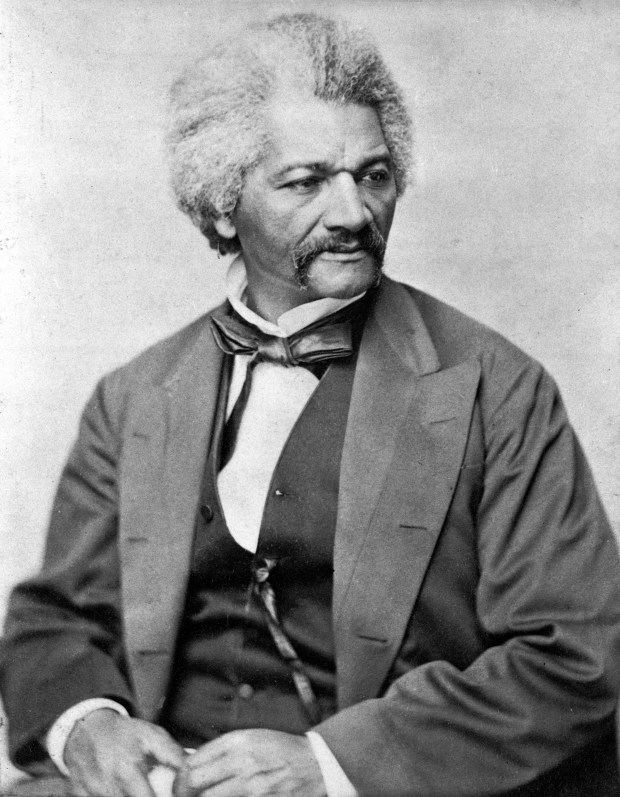
In 1852, abolitionist and former slave Frederick Douglass addressed these themes. While speaking in New York, he highlighted the paradox of celebrating independence in a nation where slavery persisted. Douglass criticized this as hypocrisy, pointing to the injustices faced by enslaved Black Americans. Less than five years later, the Dred Scott v. Sandford Supreme Court decision reflected the era’s beliefs, as Chief Justice Roger B. Taney argued against the rights of Black individuals.
Douglass placed hope in the nation’s founding documents, seeing the U.S. Constitution as a potential “glorious liberty document.” Despite critiques of the Dred Scott decision, Douglass perceived hope in an inevitable clash between the Constitution’s promise and the atrocity of slavery.
As a patriotic American, I embrace the Fourth of July much like Rev. Martin Luther King Jr., viewing it as a moment to aspire for national betterment. Similar sentiments echoed in the recent Supreme Court’s ruling on birthright citizenship, which has roots in the 14th Amendment. While interpretations vary, debates continue on how to realize a more perfect union.
Email Clarence Page at [email protected]. Sign up to receive Clarence Page’s column in your inbox each week. Submit a letter, of no more than 400 words, to the editor here or email [email protected].
Leave a Reply