Dorit Aviv, an assistant professor of architecture at the University of Pennsylvania, suggests that climate solutions for reducing home energy use can be straightforward and sometimes even free. With climate change influencing where and how we live, NPR has dedicated time to exploring solutions for building and living on a hotter planet.
Homes consume large amounts of energy, contributing to over a fourth of the world’s carbon dioxide pollution that heats the planet. One solution is shifting from gas furnaces to efficient heat pumps. However, you don’t necessarily need to buy new appliances to cool or heat your home in a climate-friendly way. Often, improved energy efficiency involves minimizing heat gain in the warm months and reducing heat loss in the cooler months.
Five Solutions for Reducing Home Energy Use
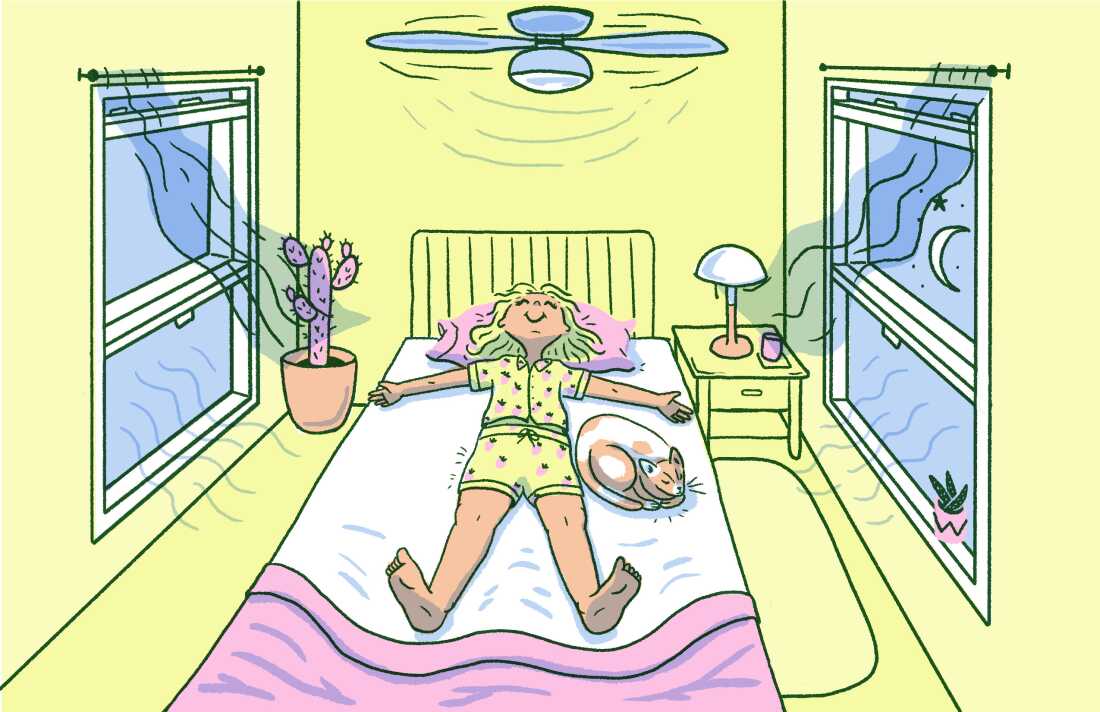
Open a Window
Many people rely heavily on thermostats and air conditioning to manage indoor temperatures. In temperate environments, especially during spring or evenings, rather than using air conditioning—which not only consumes energy but also releases hydrofluorocarbons—consider opening your windows.
Aviv suggests opening two windows to create a cross breeze if possible. Researchers indicate that natural ventilation can deliver significant energy savings, sometimes reducing energy use by as much as 45% depending on local climate conditions.
Utilize Ceiling Fans
Ceiling fans are often overlooked in modern life, dominated by air conditioning. Despite not lowering air temperature directly, ceiling fans circulate air to provide cooling and can be sufficient in certain climates. Fans consume much less energy than air conditioners, with research from Australia suggesting the potential for reducing energy use and greenhouse gas emissions by 76%.
If you have ceiling fans, switch them on and even open a few windows for optimal results.
Make Your Roof Reflective
The roof commonly receives the most sunlight, which translates into heat absorbed within the building. Changing to a “reflective roof” can mitigate this issue, as these roofs are an easy retrofit for homes.
Many roofs have black or dark finishes that absorb heat. A roof coated in white or silvery hues reflects solar energy away from the house, reducing cooling needs and utility expenses. For specific recommendations on reflective paints, consult a professional roofer.
Place Shades Outside
Installing shades on the building’s exterior rather than the interior effectively blocks heat from entering the home. Daniel Barber, professor of architectural theory in the Netherlands, explains that interior blinds trap heat between the glass and the curtain.
Exterior shades keep heat outside, a tradition seen across Mediterranean regions like Egypt, Tunisia, and Southern Europe, where wooden shutters are commonly used to maintain cooler interiors.
Seal Air Leaks
Based on thermodynamics, heat tends to escape through the path of least resistance. To prevent heat loss in cooler months and block heat entry in warmer months, identify and seal air leaks around windows and doors.
Nancy Ma from Worcester Polytechnic Institute suggests window upgrades. Alternatively, “weather stripping”—applying tape or rubber around window frames—effectively seals leaks. This cost-effective measure often costs under $10 and can be found at hardware stores.
This article was edited by Neela Banerjee. Visuals were managed by Beck Harlan. For more insights and updates, follow us on Instagram: @nprlifekit, or contact via voicemail at 202-216-9823 or email [email protected].
Listen to Life Kit on Apple Podcasts and Spotify, and subscribe to our newsletter for more updates.
Leave a Reply