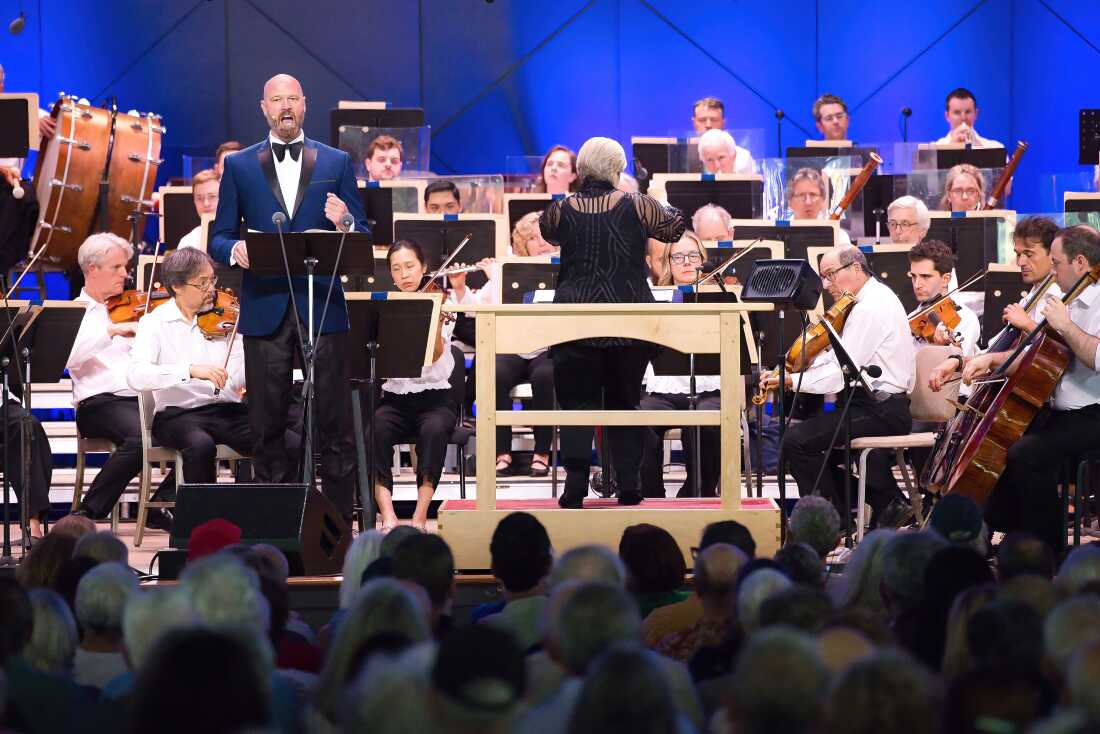
Baritone Zachary James and the Boston Symphony Orchestra, directed by Karen Kamensek, delivered a noteworthy performance of Philip Glass’ Symphony No. 15 ‘Lincoln’ on July 5, 2026, at Tanglewood in Lenox, Massachusetts.
Philip Glass initially planned for this symphony to debut at the Kennedy Center in celebration of the United States’ 250th anniversary. The work pays tribute to Abraham Lincoln, with Glass being a renowned American composer honored with the National Medal of Arts in 2015.
Glass had previously featured Abraham Lincoln in several works, such as The Civil Wars and the opera Appomattox. An animatronic Lincoln, reminiscent of the one at Walt Disney World, also appears in his opera The Perfect American.
Originally, the National Symphony Orchestra was to premiere this piece. However, due to recent political dynamics at the Kennedy Center, Glass pulled out. On social media, he expressed concerns over the politicization of the arts complex, stating: “Symphony No. 15 is a portrait of Abraham Lincoln, and the values of the Kennedy Center today are in direct conflict with the message of the Symphony.”
Thus, the Boston Symphony Orchestra, during its summer season, unveiled the symphony at Tanglewood. The program included John Williams’ suite from Lincoln and Aaron Copland’s Lincoln Portrait
, narrated by Alec Baldwin.
Conducting the symphony, Kamensek, with decades of experience in directing Glass’ compositions, emphasized the composer’s focus on making Lincoln’s words prominent. She noted the relevance of Lincoln’s words to contemporary issues, highlighting their visionary nature.
In his notes, Glass reflected on Lincoln’s efforts to unify the nation during its tumultuous times, deeming these themes appropriate for the country’s milestone birthday.
Baritone Zachary James took on the challenge of portraying Lincoln. He faced the dual demands of delivering both spoken and sung passages. Reflecting on the role, James noted the authenticity and emotional openness of Lincoln. He emphasized Lincoln’s honesty and emotional depth as traits contributing to his greatness.
Kamensek remarked on the symphony’s conclusion. Unlike traditional finales, the piece concludes with quiet, sustained chords. She interpreted these as symbolic pillars of society, representing its moral and ethical foundations. During rehearsals, she encouraged the orchestra to project warmth and clarity with these sounds, inviting the audience to reflect personally.
This resonant performance held special significance during the Independence Day weekend, serving as a reminder of enduring values.
Audio recording of the concert courtesy of the BSO and GBH Music.
Leave a Reply