Virginia’s Recent Legislative Changes
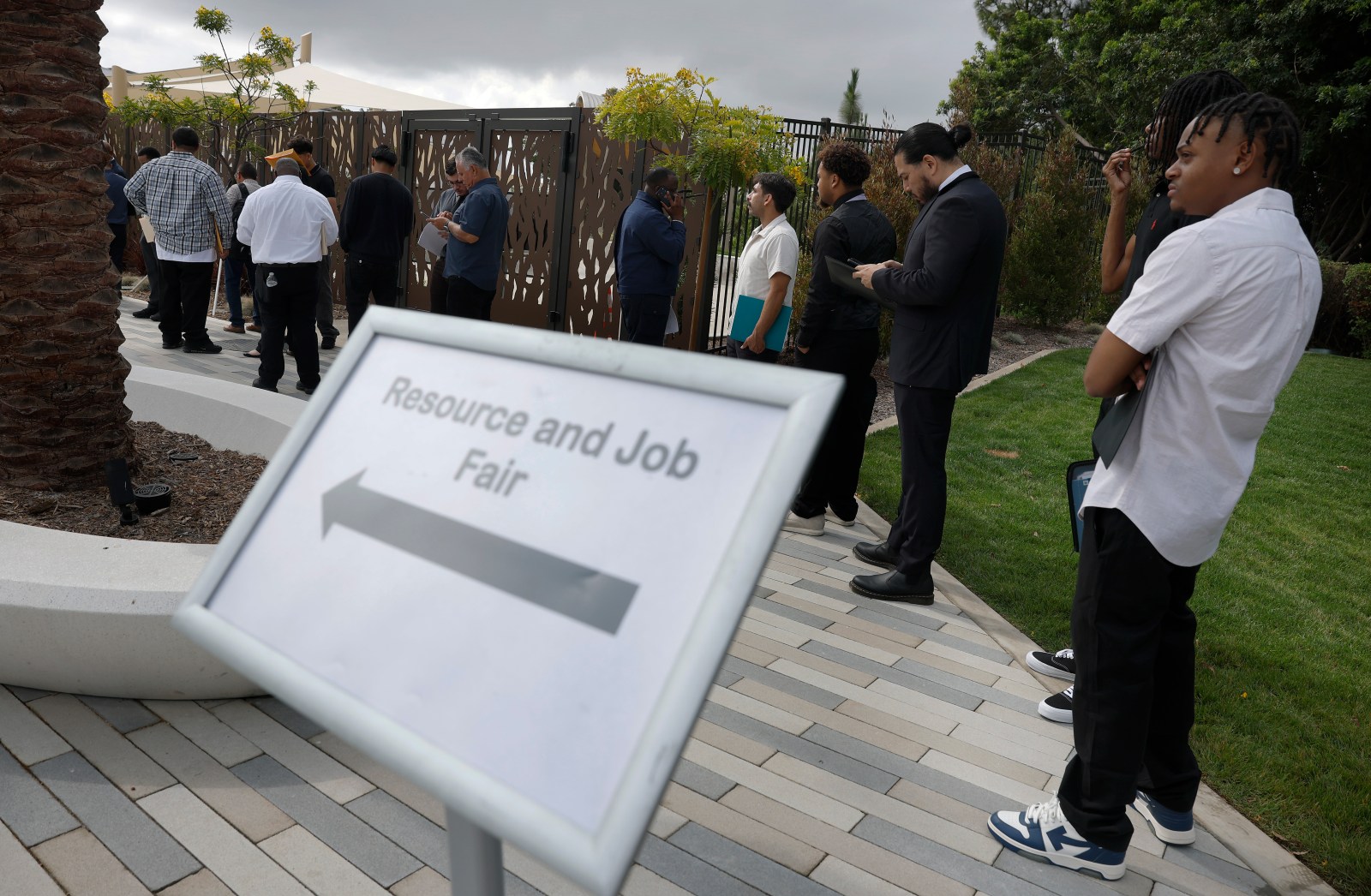
Virginia’s unemployed workers stand to gain significantly from a recent state law designed to provide greater financial relief. Starting July 5, the minimum and maximum weekly unemployment benefits have seen an increase. This legislative action, approved by the General Assembly and signed by Governor Abigail Spanberger, raises the maximum weekly allowance for new claims from $430 to $478, while the minimum jumps from $112 to $160.
Only new claims filed from July 5 onward will benefit from these changes. The Virginia Employment Commission (VEC) highlights that this increase aims to support workers financially during job searches and help stabilize household finances amidst unemployment.
Context of Economic Uncertainty
This change comes as the U.S. labor market holds steady, facing fluctuations mainly due to restructuring in sectors influenced by artificial intelligence, changing consumer demands, and varying government spending. Despite Virginia’s unemployment rate being lower than the national average, state officials acknowledge the need for heightened protections during transitions.
Virginia’s Unemployment Rate Insight
Virginia’s employment situation remains healthier than many states. According to Virginia Works, the state’s seasonally adjusted unemployment rate was steady at 3.8% in May, equating to 4,490,601 people. The labor force participation rate slipped slightly to 63.3%. Nationwide, unemployment was at 4.3% in May, as reported by the Bureau of Labor Statistics.
Virginia has seen an uptick from the extremely low unemployment rates observed in 2023 and early 2024, mirroring a broader national trend of labor market cooling. The state’s diverse economy, heavily invested in sectors such as government, defense contracting, healthcare, education, and technology, continues to offer stability.
Unemployment Rates and Benefits Across the U.S.
While a general unemployment rate between 3% to 4% signals a healthy market, some industries have shown vulnerabilities. Factors like federal workforce reductions, technology sector changes, and slower hiring are partially responsible for modest increases in unemployment over the past year.
Despite Virginia’s low unemployment rates, workers from high-cost areas like Northern Virginia, Richmond, and Virginia Beach face significant financial stress when unemployed. Advocates for the law argue that benefit adjustments were necessary to keep up with inflation.
Eligibility for the new maximum of $478 requires earning at least $18,900.01 across two quarters during the benefit calculation base period.
Comparisons of National Unemployment Support
Virginia’s recent benefit increase improves its national position but lags behind states with the most generous unemployment programs.
According to Newsweek, unemployment benefits vary significantly by state. Some states offer weekly benefits over $1,000, whereas others provide less than $300. Washington state leads with benefits exceeding $1,100 weekly, followed closely by Massachusetts. Other states with significant benefits include Minnesota, New Jersey, and Oregon.
At the opposite end, Mississippi offers the lowest maximum benefit. Florida, Alabama, and Louisiana also feature some of the least generous overall packages when factoring in weekly payments and duration.
Prior to these changes, Virginia’s benefits ranked in the lower half. The new increase raises its standing slightly, but other Northeast and Western states still offer more substantial support.
The variance underscores the decentralized nature of the unemployment insurance system in the U.S. While it is a federal-state partnership, states chiefly dictate formulas and eligibility.
Current National Unemployment Figures
Economists use the unemployment rate to gauge labor market health. The Bureau of Labor Statistics computes it monthly to measure non-employed individuals actively seeking work.
The national unemployment rate stood at 4.3% in May, although higher than past post-pandemic lows, remains well below recessionary thresholds. For instance, unemployment rates soared near 15% during the COVID-19 shutdowns in 2020 and reached 10% amid the Great Recession. Virginia’s 3.8% rate ranks better than this national average.
Layoffs and Labor Market Trends
Despite widespread media coverage on corporate layoffs, actual job-cut announcements nationwide have declined sharply in 2026 compared to 2025.
Challenger, Gray & Christmas detailed that U.S. employers reported 443,604 job cuts in the first half of 2026, a 40% drop from 744,308 in the same 2025 period. June alone saw 45,849 cuts, down 53% from May and 4% less than June 2025.
The data show that although layoffs persist in specific sectors, the broader labor market has avoided widespread declines feared by economists early in the year.
Technology remains the most affected industry, with 139,156 cuts reported through June, reflecting an 83% rise from 2025’s first half. Many of these job reductions are tied to artificial intelligence adoption and organizational restructuring around new technologies.
Outside of tech, employment conditions appear more stable across various industries. The decrease in layoffs across multiple sectors has helped maintain lower overall figures compared to previous years.
Such conditions, combined with local industry adjustments, prompted Virginia lawmakers to expand unemployment benefits. While most workers continue to be employed, those facing job losses may encounter longer transitions and higher living costs than before.
For Virginia residents coping with these challenges, updated unemployment benefits offer increased financial cushioning during new job searches.
Leave a Reply