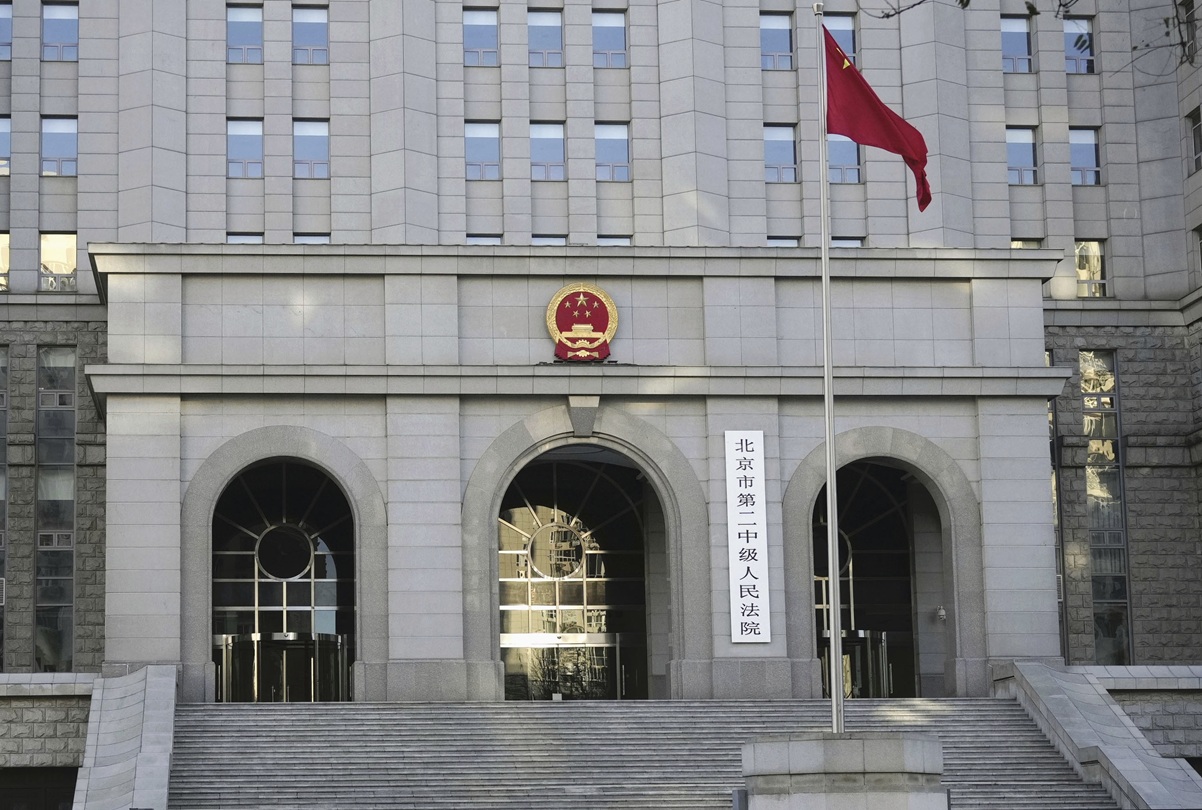
American researcher Youlin Chen is facing a trial in China on espionage charges. Such charges under Chinese law could result in a death penalty. Chen, aged 54, was detained by Chinese authorities nearly two years ago. His wife, Yufang Rong, and advocacy groups highlight this situation, as reported by Reuters.
This is the second noted case this year of a U.S. citizen being arrested on espionage charges. Earlier, Min Zin, a director of a think tank focused on Myanmar, was arrested in Kunming.
The arrests occur during a sensitive period in U.S.-China relations. Both nations are attempting to ease tensions over various issues. President Donald Trump extended an invitation to Chinese President Xi Jinping to visit Washington after Trump’s trip to Beijing.
Newsweek contacted the Chinese Embassy in Washington, D.C., and the U.S. State Department for comments on this matter.
Chen’s Background
Chen, originally from China, became a U.S. citizen in 2011 and resides in Boston, Massachusetts. He is formally listed as “wrongfully detained” by Secretary of State Marco Rubio as of March 19. Chen never had U.S. government security clearance, and the espionage accusations contradict his public and collaborative research work.
Rong, Chen’s wife and a seismologist, stated these accusations are incorrect. Eric Lebson from Global Reach, a hostage advocacy group, shared a statement with Newsweek supporting her claims.
Diplomatic Approaches
The Trump administration opted for quiet diplomacy, aiming to facilitate Chen’s release by not making public statements. Trump discussed Chen’s case with Xi during their Beijing meeting. However, as Chinese officials did not respond to Trump’s request, Rong has chosen to speak out, fearing a pre-decided conviction in a closed-door trial.
Charges of espionage can lead to severe sentences, including life imprisonment or death.
Focus on Chen’s Research
Chen’s detention relates to his research on North Korea’s nuclear tests. His 2020 study for the State Department analyzed seismic records from North Korea’s known nuclear detonations between 2006 and 2017. This included data collected in China.
Chinese authorities have reportedly interrogated Chen over 100 times about his expertise in nuclear matters, according to Rong.
China signed the 1996 Comprehensive Nuclear-Test-Ban Treaty, which bans nuclear explosions in all environments. While not ratified by China, the United States, or Russia, all three countries observe a testing moratorium.
In February, senior U.S. State Department officials accused China of conducting an illicit nuclear test in 2020. This test allegedly used decoupling methods to mask an underground nuclear explosion. A seismic event linked to this was reported at Lop Nur, China’s long-time nuclear testing location in Xinjiang.
Leave a Reply