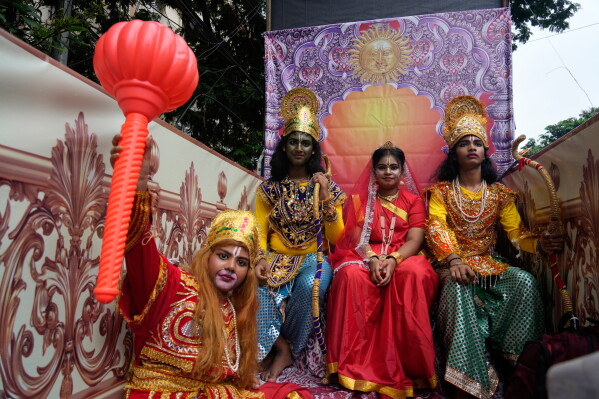
Kyoto, Japan — Katsushi Horikawa experiences a unique connection with the gods as he rides atop the massive floats during the historic procession in Japan’s Gion Matsuri festival. This festival, celebrated throughout July in Kyoto, was established over a millennium ago as a ritual to ward off epidemics.
Horikawa states that the moments on the float bring him nearer to the divine. “I am conscious of them when I’m riding on top,” Horikawa expressed. The festival is more than parades—it’s a religious practice deeply rooted in protection rituals.
The floats, accompanied by dance, music, and song, attract large crowds each year. These floats, some weighing up to 12 tons, are not merely festive decorations. As Fabio Rambelli, a religious studies professor, explains, “They are offerings to the gods.”
The festival began in the 9th century, aimed at appeasing spirits believed to cause epidemics. Kyoto’s Gion District is the namesake of the festival, with “matsuri” meaning festival in Japanese. Central to this tradition is Kyoto’s Yasaka Shrine, a Shinto site dedicated to a deity considered a protector against calamities. Initially a Buddhist temple, the shrine exemplifies the blend of Shinto and Buddhist traditions in Japan.
“Until about 150 years ago it was a Buddhist temple,” Rambelli noted. Gozu Tennō, an ox-headed deity believed to hold sway over epidemics, was central to early versions of the festival, illustrating Japan’s syncretic religious tradition.
“A lot of gods in Japan are a mixture of different traditions,” Rambelli said.
In 1868, Japan distinguished Shinto from Buddhism during the Meiji era, placing Shinto under government control. This separation also supported anti-Buddhist movements, leading to destruction of certain temples and artifacts. Even after Shinto’s separation from state control post-World War II, it still carries various cultural and religious influences.
Andrea De Antoni from the University of Kyoto highlights its global connections, stating, “Kami shares its rules with general ideas of animism that can be found throughout the world.”
Japanese festivals, like Gion Matsuri, are more than just celebrations; they strengthen community bonds while fulfilling sacred purposes. Jacques Garrigues, a resident of Kyoto, noted, “We also come together through a certain sense of religion.”
Among the festival’s enduring customs is selecting a boy as a sacred messenger during the parade. Participants meticulously prepare floats, believing they repel evil spirits.
Atsushi Matono, tasked with placing the shingi on a float, honors the sacred presence. “I always carry out my work with great care and respect,” Matono remarked.
Leave a Reply