Lesley Stahl and 60 Minutes Report on Healing Justice
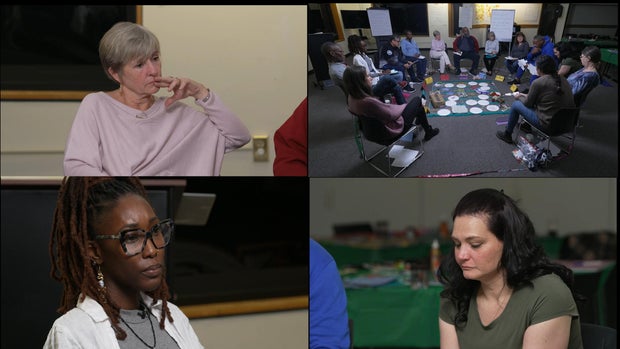
Recently on 60 Minutes, Lesley Stahl and her team explored the work of Healing Justice. This nonprofit gathers diverse groups affected by different judicial errors, like crime survivors, wrongfully convicted individuals, and families. They engage in a three-day retreat aimed at mending the deep wounds left by an imperfect justice system.
Participants engage in writing exercises, group discussions, and art therapy. These activities facilitate open dialogue about their pain and loss, helping them understand their emotions and connect with others who have experienced similar challenges.
“They arrive with emotions impacted by bitterness, guilt, and sadness,” Stahl revealed on 60 Minutes Overtime. “One weekend might not change everything, but it initiates transformation. We observed it happening.”
With consent, 60 Minutes documented the emotional journeys of participants during this transformative event.
The Story of Jennifer Thompson
Healing Justice was founded by Jennifer Thompson, herself a rape survivor caught in a wrongful conviction case. 60 Minutes previously highlighted her experience and the issues with eyewitness identification in the criminal justice system.
Thompson, at 22, faced a horrifying assault that pushed her into navigating the legal system. Inaccurately identifying Ronald Cotton as the attacker led to his wrongful conviction. Cotton served 11 years before DNA evidence exonerated him, identifying Bobby Poole as the true perpetrator.
Shari Finkelstein, 60 Minutes producer, explained how eyewitnesses can often misidentify assailants when the real criminal is absent from lineup options. This misidentification often solidifies as victims repeatedly face the same suspect during various legal procedures.
Bringing Healing Justice to Life
Finkelstein stayed connected with Thompson, following the development of the Healing Justice program closely. Producing a story required easing concerns about filming such a personal and emotional process.
Permission from participants led to filmed interviews before and after retreats, capturing detailed transformations. Filming organized around the retreat allowed authentic insight into individual experiences.
Don Lee and Tom Fahey from 60 Minutes skillfully documented these interactions with multiple cameras, creating comprehensive footage for review and analysis. Editor Dan Glucksman arranged scenes, revealing reactions and interactions among participants.
Individual Transformations: A Case in Point
Participants like Loretta Zilinger White underwent significant emotional shifts during the retreat. Overcoming fixation on an innocent face became possible through emotional engagement and support.
Similarly, Raymond Towler, after 29 years wrongfully imprisoned, confronted the stigma of assumed guilt. Intense conversations, such as those captured late at night, highlighted the retreat’s impact.
The overall retreat culminated in final interviews showcasing participants’ transformations. Stahl noted that individuals like Zilinger White had visible shifts from distress to visible hope and joy.
Finkelstein and Thompson emphasized that while a retreat can catalyze healing, continuous recovery is necessary. Nonetheless, these sessions offer substantial support.
The outlined journey through Healing Justice illustrates the potential for change when individuals come together to confront past injustices and seek peace.
Leave a Reply