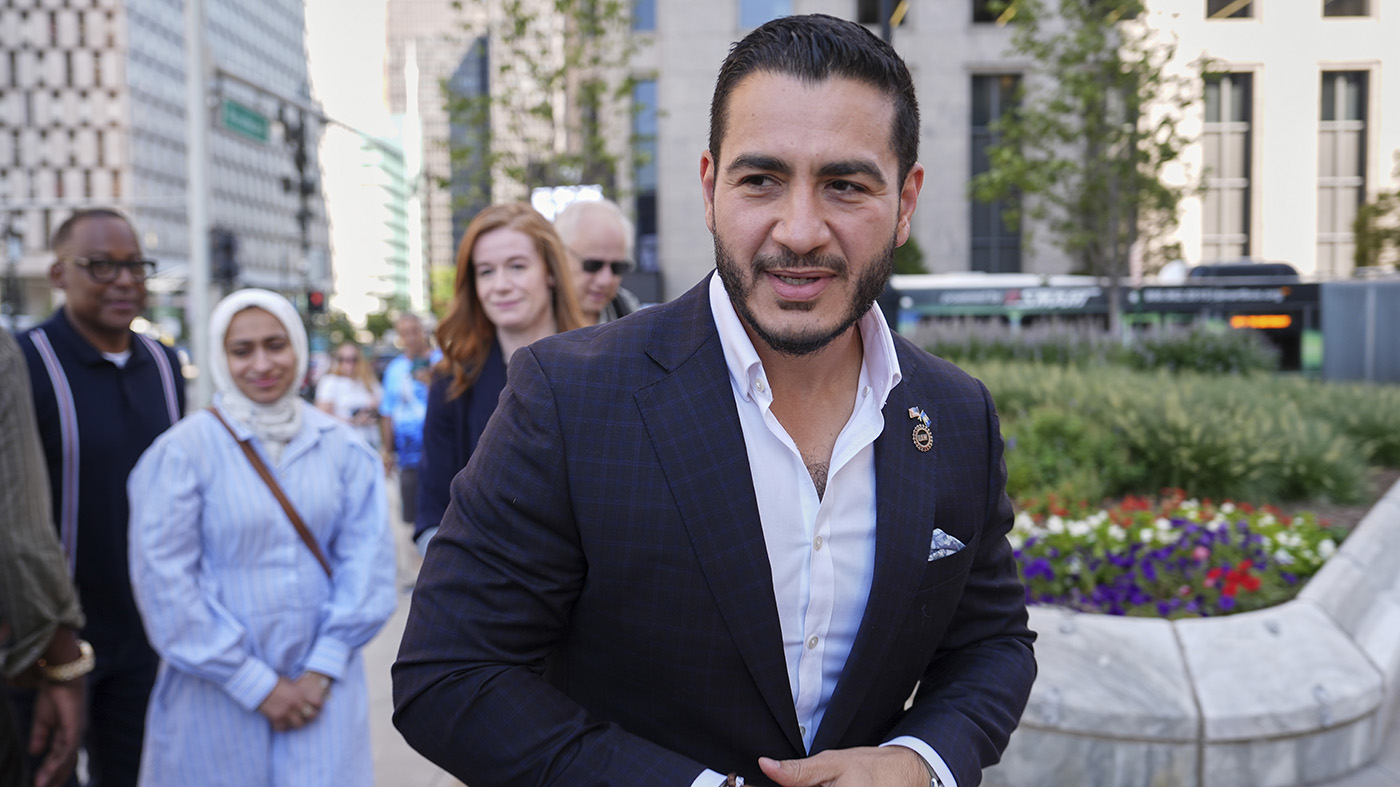
Abdul El-Sayed recently attended a news conference in Detroit after winning the Democratic nomination for the U.S. Senate in Michigan on August 5, 2026. Despite President Trump’s approval rating being a low 34%, the Democratic establishment is pouring resources into attacking fellow Democrats. Jonathan Cowan, leader of the centrist group Third Way, committed $15 million to fight the spread of ‘democratic socialism.’ However, defining democratic socialism remains vague among establishment figures.
Cowan and others often target individuals labeled as democratic socialists but struggle to define the term. Dr. Abdul El-Sayed, for instance, doesn’t identify as a democratic socialist, while figures like New York City Mayor Zohran Mamdani do. The reluctance to define democratic socialism lies in opposing popular economic policies supported by many Democratic voters.
A third of the Democratic base now view themselves as democratic socialists. Centrists who promote ‘popularism’ oppose the party’s shift to the left, an unpopular stance. Groups like Third Way resort to personal attacks rather than addressing core issues.
To regain political ground, the Democratic Party must embrace democratic principles. Listening to voters and understanding their key concerns is essential. Many Democratic leaders have lost credibility due to recent defeats, including figures such as Sen. Chuck Schumer and groups like Third Way.
The strategy of maligning progressive politicians has proved ineffective. El-Sayed, despite a significant spending disadvantage, won his primary against a barrage of attack ads. Mamdani overcame former New York Gov. Andrew Cuomo’s dynasty, despite negative ads.
The focus on progressive vs. centrist divides has been misguided. Success in this cycle relates more to outsider versus establishment dynamics. Progressives prioritize affordability and jobs, avoiding conspiracy theories. Today’s progressives, focused on the economy and jobs, don’t appear radical.
As political analyst David C. Barker notes, candidates like El-Sayed effectively engage swing voters, bridging the gap between exciting the base and appealing broadly. By emphasizing economic issues, they avoid out-of-touch narratives.
Despite immense spending by Beltway groups, candidates like El-Sayed aren’t seen as extremist caricatures. Voters assess Democrats’ commitment to working-class issues, and progressives, including democratic socialists, succeed because they genuinely listen.
Outsider candidates resonate because they honestly tackle complex policy issues rather than offering excuses. Centrist Democrats, however, are criticized for incrementalism and delaying action.
Progressives, prioritizing immediate action, gain support, while centrists appear stalled by waiting for ideal political conditions. Americans, weary of delays, seek change aligned with their values, finding inspiration beyond the center.
Max Burns is the founder and chief strategist of Third Degree Strategies.
Copyright 2026 Nexstar Media Inc. All rights reserved. This material may not be published, broadcast, rewritten, or redistributed.
Leave a Reply