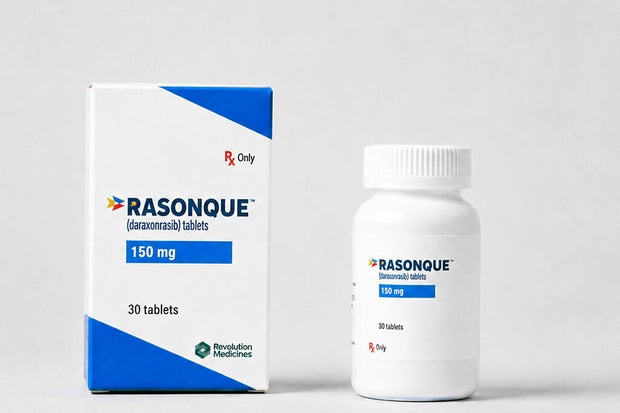
The Food and Drug Administration has approved a groundbreaking new drug for advanced pancreatic cancer. This offers a more effective treatment against a cancer type known for its high mortality rate. FDA officials granted expedited approval to daraxonrasib, the first pill of its kind that blocks a mutated protein responsible for tumor growth in over 90% of pancreatic cancer cases. This approach had been elusive for decades.
The pill, marketed under the brand name Rasonque by Revolution Medicines, will cost around $39,800 for a month’s supply. Patients using the drug doubled their survival time compared to those on chemotherapy, with fewer severe side effects. A study involved 500 patients whose metastatic cancer was unresponsive to previous treatments.

Dr. Céline Gounder, a CBS News medical correspondent, noted that most diagnoses occur at a late stage. “This pill blocks a protein called RAS,” she said. Mutations in RAS drive 90% of pancreatic cancers, previously dubbed ‘undruggable.’ The treatment’s median survival time was 13.2 months versus 6.7 months for those on chemotherapy. Side effects were mainly skin rash, mouth sores, and digestive issues.
Dr. Andrew Coveler from the Fred Hutch Cancer Center remarked, “This medicine is not a cure, but a significant improvement.” Pancreatic cancer remains hard to detect before spreading, making it one of the deadliest forms. The American Cancer Society projects 67,000 new cases this year in the U.S., with over 52,000 deaths. The five-year survival rate is 13%.
Former Senator Ben Sasse of Nebraska, diagnosed with stage-four pancreatic cancer, participated in the daraxonrasib trial. He shared how effective the drug was, reporting a 76% tumor volume reduction and describing it as a “miracle drug.” Given a three-to-four-month life expectancy when diagnosed, he says, “I am on extended time already.”
FDA regulators expedited the drug approval over six months ahead of schedule. Acting Commissioner Kyle Diamantas emphasized their commitment to delivering cures quickly.
Unlike other cancers benefiting from chemotherapy alternatives, pancreatic cancer is hard to target. The new drug focuses on RAS gene mutations, with KRAS mutations particularly fueling cancer growth. Previously considered “undruggable,” the new approach uses molecular glue to bind multiple KRAS subtypes.
Dr. Pashtoon Kasi from City of Hope Orange County believes the drug opens doors for more options. “Downstream there are going to be a lot more trials,” he said. Revolution Medicines is exploring its technology for other cancers, including lung cancer.
Leave a Reply