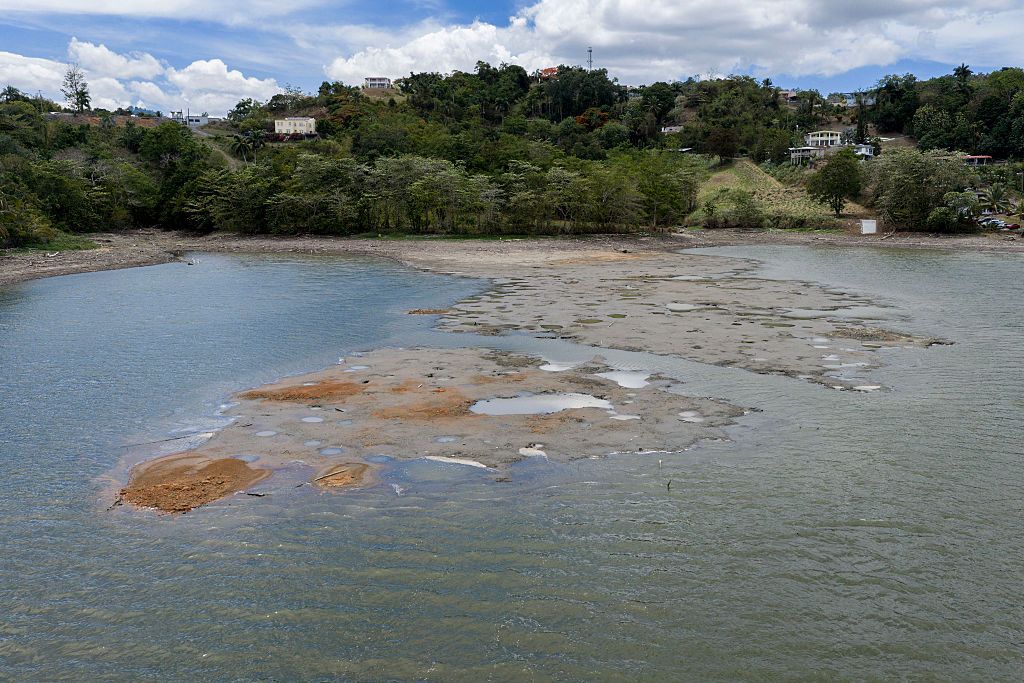
Hundreds of thousands of residents in Puerto Rico are enduring water rationing and disruptions due to drought and aging infrastructure that strain the island’s water system. Nine years after Hurricane Maria exposed critical weaknesses in infrastructure and government response, the current crisis unveils a persistent gap between citizens and institutions responsible for essential services. As shortages and emergency measures unfold, questions regarding accountability and transparency increase, alongside discussions on how residents can effectively demand action before the next crisis.
A White House official informed Newsweek that the situation in Puerto Rico is being closely monitored. Newsweek reached out to the White House and the Puerto Rico Aqueduct and Sewer Authority (PRASA) for comments on infrastructure modernization plans and ongoing drought response efforts. Any responses received will be added accordingly.
The Immediate Causes of Puerto Rico’s Water Crisis
The crisis stems from severe drought coupled with an aging water distribution network that has struggled for decades. July marked the driest month ever reported in San Juan. Widespread drought conditions led to significant declines in reservoir levels, prompting officials to temporarily impose water-rationing measures across different municipalities.
The infrastructure vulnerabilities predate the current drought. A New York City Bar Association’s Puerto Rico Task Force report indicates that water shortages have impacted Puerto Rico repeatedly since before Hurricanes Irma and Maria, magnifying the consequences of every new challenge. PRASA reports losses of up to 65% of produced water due to leaks, pipe failures, and overflows before reaching customers.
A major pipeline failure in June underlined the system’s vulnerability. Though emergency interventions stabilized service temporarily, they did not address larger concerns about maintenance, modernization, and long-term reliability.
Learning From Hurricane Maria: Civic Knowledge Gap
Hurricane Maria, which struck on September 20 nine years ago, inflicted catastrophic damage, collapsing communications networks and triggering a significant humanitarian crisis. The storm exposed major weaknesses in infrastructure, emergency response systems, and agency coordination.
Jennice Fuentes, founder of BoricuActivatEd and former chief of staff for Democratic Representative Luis Gutierrez, challenges the notion that Puerto Ricans lacked the knowledge to navigate government effectively during the crisis. She underscores that the catastrophe highlighted a gap between people’s desire to act and their understanding of governmental processes and rights. After the storm, communities mobilized swiftly, organizing relief efforts; however, citizens struggled to discern who held responsibility for critical decisions.
Fuentes, in various workshops, advises people to learn how government works in order to effectively exert civic power. Understanding government does not prevent disasters, but it places people in a stronger position to demand answers and understand responsibility post-emergency. Her principle is that if one is not actively partaking in decision-making, they might be overlooked.
Current Crisis: Accountability vs. Water Problems
The water crisis underscores many civic challenges mirrored post-Maria, prompting a discussion of issues surrounding accountability beyond infrastructure concerns. Civic engagement expected between disasters is as crucial as efforts deployed during them.
Fuentes stresses that civic knowledge aids communities in understanding responsibility, financial paths, promised actions, and necessary demands. Yet, the emphasis remains on government agencies delivering services rather than shifting the burden onto citizens becoming experts.
The New York City Bar Association’s Task Force echoes accountability worries, attributing challenges to fragmented authority across different agencies, complicating residents’ ability to pinpoint responsible parties.
Engagement Between Emergencies in Puerto Rico
Puerto Rico often rallies responses to disasters like hurricanes, earthquakes, and blackouts, but sustaining engagement beyond immediate emergencies is challenging. Recent improvements in reservoir levels illustrate the temporary nature of crisis responses.
Fuentes observes public participation still heavily driven by crises. Maintaining civic power involves regular engagement and advocacy prior to emergencies, as significant decisions shaping crises occur long before through budgets, contracts, and infrastructure planning.
Puerto Rico’s Relationship with Washington
Fuentes argues that Washington’s engagement with Puerto Rico is often episodic, sparked by disasters or significant political controversies. She advocates for continuous federal involvement instead of transactional attention.
Experiencing Congress firsthand highlighted the power of constituent advocacy, emphasizing understanding government functions and active participation before urgent needs arise.
Vision for Civic Power by 2030
Fuentes envisions widespread civic literacy, empowering Puerto Ricans to understand government representation, institutional power, and public resource allocation.
Improved civic literacy would enhance accountability for infrastructure failures, simplifying the process of identifying where responsibility lies, despite complex governmental systems.
Leave a Reply