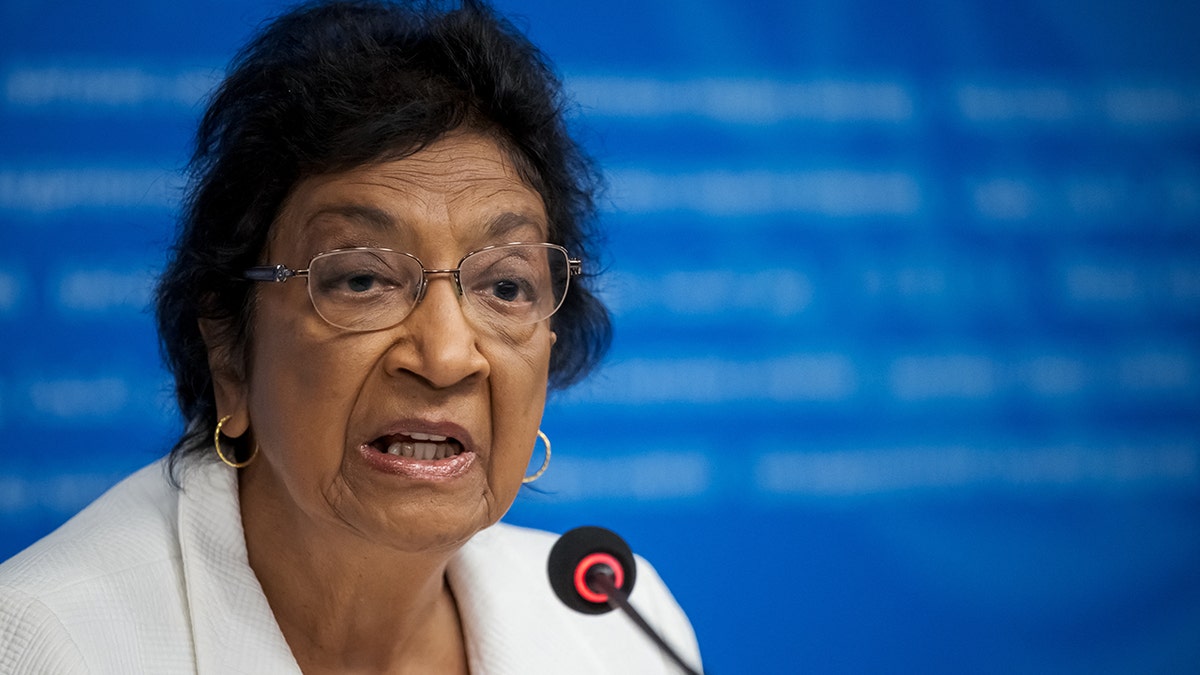
The Nobel Peace Prize was originally intended by Alfred Nobel to honor those who have significantly advanced peace among nations. Yet, it has increasingly been awarded to international activists whose views resonate with a select group of parliamentarians. Navi Pillay’s recent award exemplifies this trend.
Navi Pillay is recognized for her role in the U.N. commission that accused Israel of genocide in Gaza, sparking discussions about the U.N.’s cultural stance towards Israel. Her selection has been interpreted as not as a liability, but as a mark of deep moral engagement.
Controversial Background
Pillay’s history includes instances where freedom of speech appeared secondary. Following the bombing of Denmark’s embassy in Pakistan due to the republication of Muhammad cartoons, she reportedly suggested limiting free speech. Her reaction to Charlie Hebdo echoed similar sentiments, labeling them irresponsible. When faced with threats of violence over speech, Pillay often criticized those exercising this right.
In 2022, Pillay supported Miloon Kothari who had controversial views about Israel. Kothari later apologized, but Pillay faced backlash leading to the cancellation of a Berlin event in her honor.
Past Nobel Decisions
Historical decisions have also faced criticism. Figures like Yasser Arafat, whose political career was marred by violence, received the prize in 1994. Henry Kissinger and Le Duc Tho shared the award in 1973, despite peace not being realized. The 2007 prize went to Al Gore and a climate panel, stretching the original intent of the award. Barack Obama received it in 2009 without significant diplomatic accomplishments.
In 2012, the European Union won, not for peace efforts, but for a broader vision. Such awards raise questions about the distinction between speaking the language of peace and engaging in the more demanding work of achieving peace.
The Abraham Accords
The Abraham Accords are noted for their tangible impact on Middle East peace, normalizing relations between Israel and several Arab states. Despite such achievements, Jared Kushner’s involvement in these accords is unlikely to see recognition from the Nobel Committee due to political biases.
The Current State of the Prize
The Nobel Peace Prize is decided by a small Norwegian committee, often rewarding those aligned with progressive views. The prize’s original purpose, promoting world peace, has become sidelined.
The Stockholm-based Nobel Foundation cannot directly influence the prize because responsibility lies with Norway’s Parliament-appointed committee. Criticism is warranted, urging reconsideration of automatic reverence for the committee’s decisions.
Alfred Nobel envisioned a prize recognizing exceptional peace efforts. The current administration of the prize often aligns more with contemporary causes than Nobel’s original vision.
Daniel Schatz, a political scientist and international affairs expert, critiques the Nobel Committee’s approach. Holding a Ph.D., Schatz is a former visiting scholar at several prestigious universities.
Leave a Reply