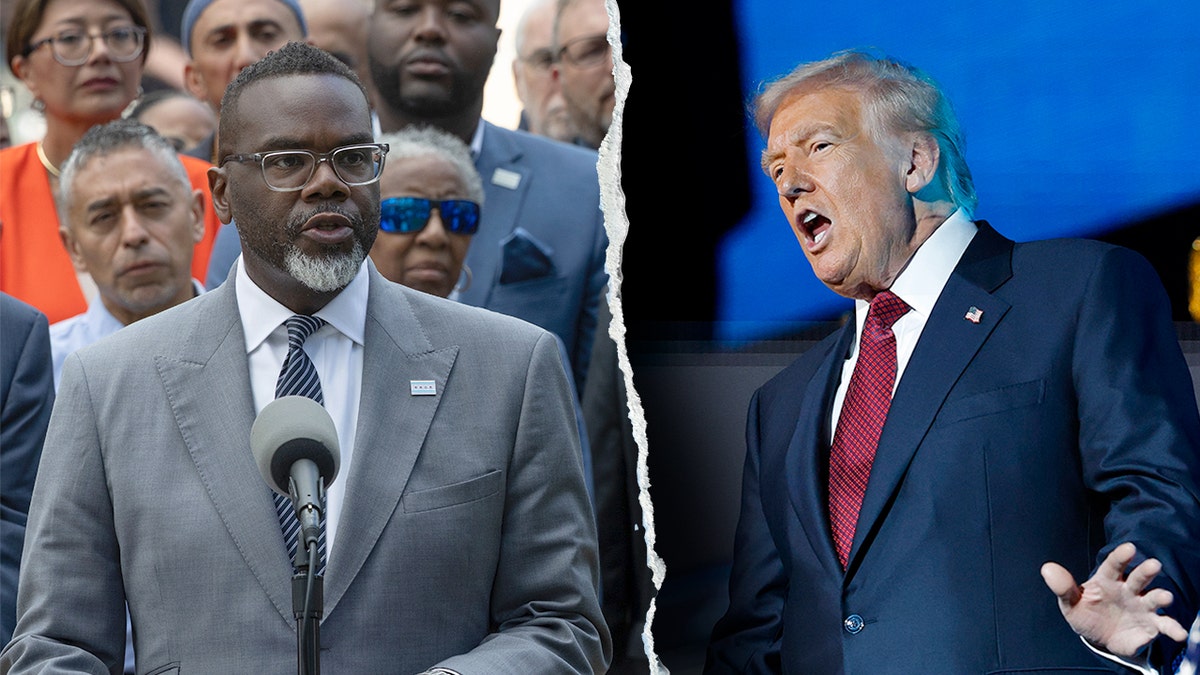
The White House responded to Chicago Mayor Brandon Johnson’s criticism of President Donald Trump on Wednesday after the mayor accused the former president of neglecting issues affecting descendants of enslaved Black Americans while favoring wealthy individuals. Johnson’s comments were made on the “Native Land Pod” podcast, where he talked about crime reduction efforts in Chicago.
During the podcast, Johnson emphasized the need for public safety measures that go beyond policing. He pointed out investments in mental healthcare, promoting detectives, and community violence intervention initiatives. Johnson criticized Trump’s approach, alleging that the president transferred wealth to the ultra-rich while bypassing demands related to education, housing, health care, and employment for those descended from the formerly enslaved.
The podcast also highlighted a Truth Social post by Trump criticizing Illinois leadership for the crime situation. Trump stated that the Federal Government could resolve the situation quickly if local leaders sought assistance. Johnson countered this view by noting Chicago’s success in removing illegal weapons and reducing violence, attributing these improvements to local efforts rather than federal intervention.
The White House dismissed Johnson’s claims and urged the mayor to concentrate on local public safety issues instead of pushing for controversial government actions. A spokesperson stated that government programs distributing funds based on race are illegal and suggested that the city’s leadership prioritize lowering the homicide rate.
According to data from the mayor’s office, violent crime in Chicago saw significant reductions since Johnson’s tenure began in May 2023. Statistics indicate decreases in homicides, shootings, and robberies. Despite not using the term “reparations” in his interview, Johnson’s spokesperson pointed to his initiatives aimed at addressing historical injustices faced by Black residents.
Johnson established a reparations task force to consider historic harms against Black Chicagoans. A public initiative, “Repair Chicago,” aims to use these findings to shape future municipal policies. Meanwhile, Evanston, Illinois, already implemented a reparations program offering grants to eligible Black residents for housing and repairs. However, federal scrutiny of such programs is increasing, with plans to challenge race-conscious distribution methods.
White House spokesperson Allison Schuster asserted the Trump administration’s commitment to ending race-based initiatives and promoting equal treatment under the law. Schuster criticized policies from the Biden administration and reiterated the focus on merit and efficiency.
Leave a Reply