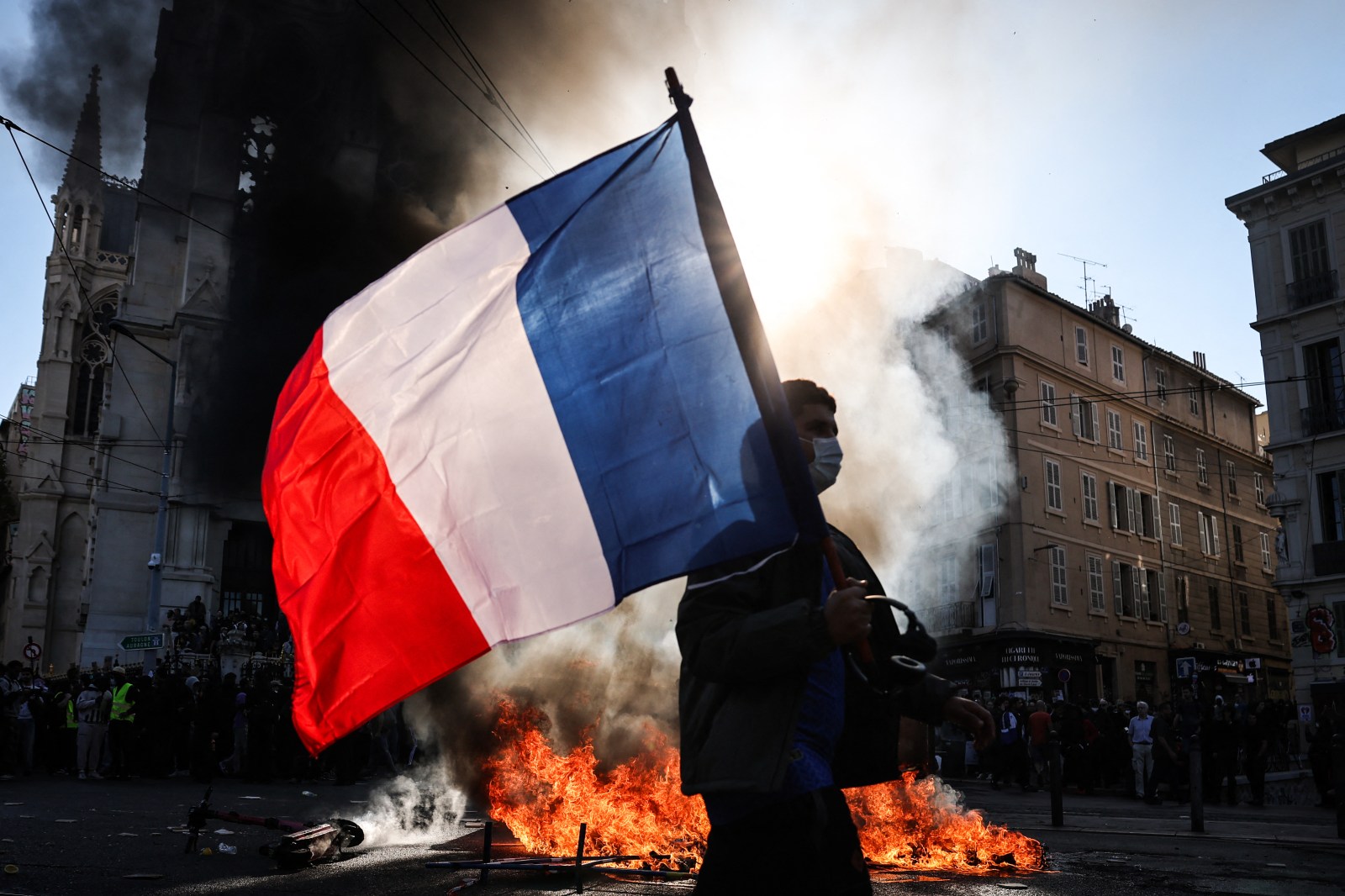
France is grappling with a range of issues affecting its social and fiscal stability. Protests have erupted across the country since September, initially triggered by concerns about school staffing and funding. These demonstrations have expanded, driven by widespread economic dissatisfaction and generational tensions.
Societal Discontent
A growing unease permeates French society, with many feeling that their lives are not improving as expected. According to Antonio Fatás, an economics professor at the INSEAD business school near Paris, this sense of malaise is mounting.
The timing of these protests coincides with significant political events, including upcoming budget debates and the presidential election. What might have been typical youthful protests have instead transformed into significant conflicts involving heavy-handed police and differing visions for France’s future.
Observers have described France as being on the edge or as the ‘economic sick man of the Western world.’ These perceptions echo a question posed in the show Succession: ‘Will France make it?’
Although the current unrest is only slightly more dramatic than past protests, it stands out due to its mix of social, economic, and political factors. Originating in Paris suburbs, the student movement has spread nationwide. Concerns about teacher shortages and packed classrooms have merged with broader issues of social inequality and the rising cost of living.
The existing social agreement in France seems inadequate for some parts of society. Youth unemployment, though reduced to 20.6% in August according to EUROSTAT, remains high compared to Germany (7.4%), the U.S. (9.1%), and the U.K. (14.4%). Participants from the 2018 Yellow Vest movement have joined these protests, linking school issues to regional and class inequalities and President Emmanuel Macron’s policies.
Fiscal Challenges
Amidst these clashes, the core issue is fiscal difficulties. Mujtaba Rahman, from Eurasia Group, has highlighted France’s budget mismanagement, noting the concerning debt-to-GDP ratio and rising borrowing costs. France spends about $100 billion annually on education, with a significant portion allocated to retired teachers’ pensions.
Economist Paul Krugman has labeled France’s fiscal path as unsustainable, criticizing subsidies that favor older populations. The national student demonstrations are not unexpected given this context.
Current budget debates offer few solutions. Prime Minister Sébastien Lecornu’s spending plan, announced on October 1, aims for €54 billion in savings but faces challenges in parliament.
Antonio Fatás notes that providing more resources for education requires budget adjustments. The fiscal environment has become more complex than in previous years.
Financial and social issues are intertwined, affecting bond markets. France has been severely impacted by the global bond sell-off, and protests have intensified these challenges. Zsolt Darvas of Bruegel warns of further market instability if financial impasses persist.
Political Dynamics
Economic and social stimuli have converged at a politically sensitive time. The 2024 election resulted in a fragmented parliament, complicating governance and reform efforts.
Emmanuel Macron’s exit in May will leave a political gap, with the National Rally party, led by Marine Le Pen, leading in polls for the 2027 presidential election.
Zsolt Darvas states that future policy decisions will crucially impact whether France enters a fiscal crisis or stabilizes its finances through a credible program.
Although collaboration is necessary to resolve these issues, the upcoming election makes it challenging. The protests offer a platform for presidential candidates to advance their agendas. National Rally President Jordan Bardella emphasizes the need for political choices to restore order.
Initially centered on school conditions, the unrest has evolved into a national movement involving various discontented groups. Similar frustrations are now evident in other European countries like Spain, Portugal, and Italy.
The ongoing question is whether France can navigate this crisis without lasting political upheaval. Currently, the situation suggests significant changes are afoot.
Leave a Reply