Computer programmer Fei Zhaojun faced a pivotal moment when his boss inquired about the potential of artificial intelligence to replace humans in coding jobs. Soon after, Fei was laid off in Beijing, along with about 160 colleagues. This scenario is becoming more frequent, as AI, bolstered by government support, transforms China’s vast job market.
Economists worry that AI might weaken China’s economic prowess. AI’s rapid expansion across sectors—programming, scriptwriting, and physical tasks—has led to job losses or fear of future displacement.
AI Adoption and Sentiment
China spearheads AI integration due to government encouragement. Shujing He, a senior analyst at Plenum, notes less anti-AI sentiment in China compared to other regions. Many who fear displacement are pursuing AI-powered ventures. Interest in AI is substantial.
Fei previously doubted AI’s programming capabilities, but his views evolved. Mid-level coding jobs are largely substitutable by AI. Fei has pivoted to making short videos featuring ordinary lives during his career break, hoping to connect with audiences.
AI in Translation and Other Sectors
Du Qinchun, a part-time translator, assisted in training an AI translation model, temporarily increasing his workload. Yet, pay in the translation industry has significantly decreased due to AI tools. Consequently, popular college programs in foreign languages are losing ground.
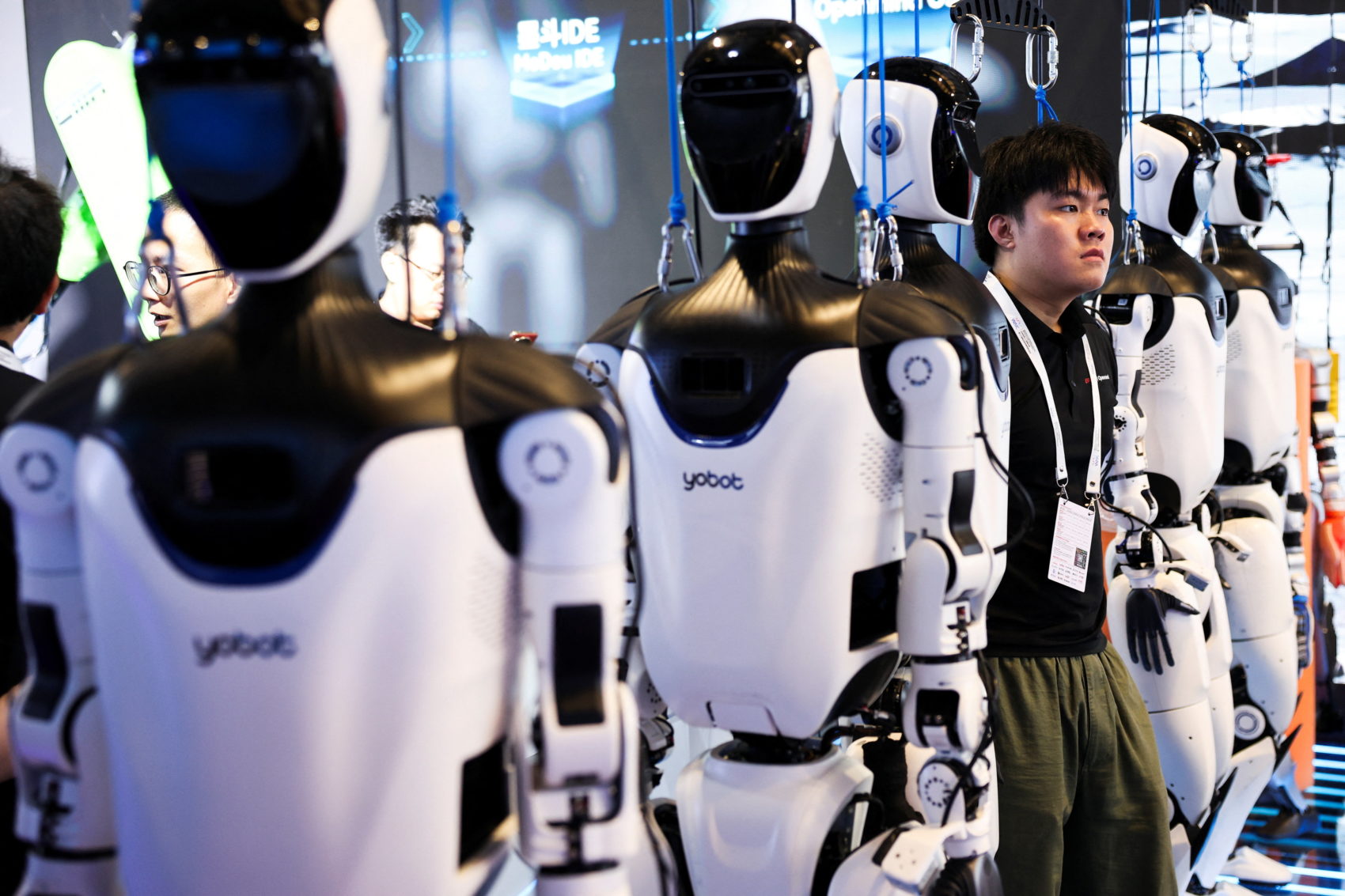
IDC reports demonstrate a surge in industrial enterprises using AI—47.5% last year compared to 9.6% in 2024. IDC’s Yanze Du highlights AI innovation closing gaps between model capabilities and enterprise value. Humanoid robots are sorting parcels and executing human-like tasks such as directing traffic and making coffee. Food delivery robots threaten jobs of delivery workers.
Generative AI is reshaping entertainment with fewer live-action video series as AI tools evolve. Plenum’s He notes the displacement risk for roles heavily reliant on software and multimedia creation.
Gender Disparities and Economic Consequences
The International Labor Organization reports women in roles suitable for automation face greater job loss risks due to AI. China’s push for AI under initiatives like the “AI Plus” plan aims to integrate AI across industries for competitive technological advantage.
Zilan Qian from Oxford China Policy Lab highlights China’s governmental drive for AI proliferation across sectors. Economic growth has decelerated with consumer reluctance to spend, tied to job loss fears and a weakening housing market.
Job Market and Long-term Outlook
Cornell University’s Eswar Prasad emphasizes AI’s productivity benefits but foresees detrimental impacts on employment and social stability. Chinese tech companies are reducing jobs, partly influenced by AI. Urban unemployment remains around 5%, yet the rate for ages 16-24 is thrice that.
Long-term projections suggest potential unemployment decline as China’s aging population grows. Automation may aid in compensating for workforce reduction.
Adapting to AI
Wang Zhicheng, previously a scriptwriter, now independently creates children’s books. He found AI saved time but generated repetitive and odd scripts. Wang views AI as a tool assisting creative decisions.
High school chemistry teacher Yang Zheng believes AI positively aids students, although it occasionally errs. Real-time AI interaction enhances learning.
AP contributors Fu Ting and Wu Jia provided insights for this article.
Leave a Reply