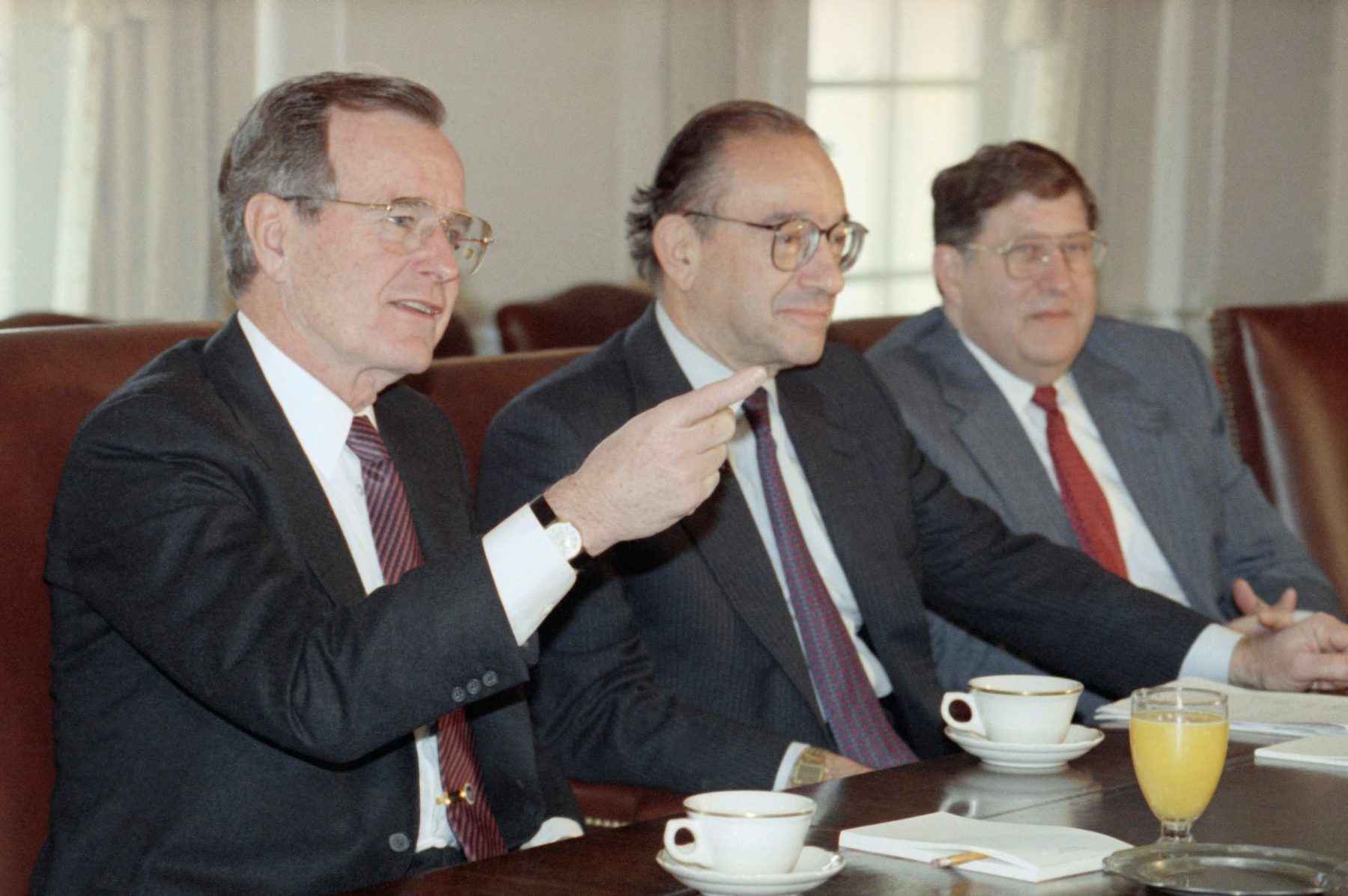
Alan Greenspan, the former Chair of the U.S. Federal Reserve, passed away on Monday due to complications from Parkinson’s disease. He was 100. His wife, Andrea Mitchell, reflected on their life together, expressing both personal and public admiration for him. Greenspan had a passion for baseball, the Washington Commanders, tennis, golf, and jazz music.
Economic Contributions
During his 18 and a half years leading the Federal Reserve, Greenspan oversaw a period of growth for the U.S. economy. Dubbed the ‘Oracle’ and ‘Maestro,’ his tenure began with an economic surge in March 1991. Under his guidance, stock prices soared, contributing to the lengthy economic boom.
The Federal Reserve remarked on Greenspan’s impact, highlighting the price stability and public confidence he established. His analytical rigor significantly bolstered the institution’s credibility.
The Financial Crisis and Its Aftermath
Greenspan’s once-celebrated reputation faced criticism following the 2006 housing market collapse and subsequent global financial crisis. Critics attributed much of this to Greenspan’s policies, which favored less regulation of financial markets.
He later admitted to underestimating the need for regulatory oversight. The American economy suffered from the dropped housing values, leading to widespread home foreclosures and a recession from 2007 to 2009. The effects were felt globally, causing financial turmoil in Europe and leading China to adopt a substantial stimulus plan.
A Lifelong Dedication to Economics
Greenspan had a lifelong passion for economics, much of which was fueled by early personal experiences and education. Born in Manhattan, he excelled at math and initially pursued a career in music before turning to economics. His education at New York University led to his role as an economic consultant. A follower of libertarian philosopher Ayn Rand in the 1950s, Greenspan’s economic thought was deeply influenced by her teachings.
Challenges and Achievements
President Ronald Reagan appointed Greenspan to lead the Federal Reserve in 1987. Early in his tenure, he managed the fallout from ‘Black Monday,’ a significant stock market crash. Again in 1997 and 1998, he tackled an Asian financial crisis by organizing financial assistance for affected nations.
Greenspan’s leadership saw the United States experience its longest economic expansion at that time. Unemployment rates reached remarkable lows, and inflation remained controlled, in part due to technological advancements.
Personal Life and Legacy
Greenspan’s private life included notable relationships, most famously dating Barbara Walters before marrying Andrea Mitchell. Even in retirement, he remained engaged, leading his consulting firm and writing extensively about economics.
Despite controversies, Greenspan continued to defend the Federal Reserve’s political independence, notably criticizing then-President Donald Trump’s maneuvers against the institution.
Greenspan authored several books post-Federal Reserve and voiced insights on risk-taking and market behavior, recognizing that traditional economic forecasting sometimes failed to predict or manage irrational market trends.
His contributions to economic policy continue to impact discussions on financial regulation and market dynamics today.
Leave a Reply