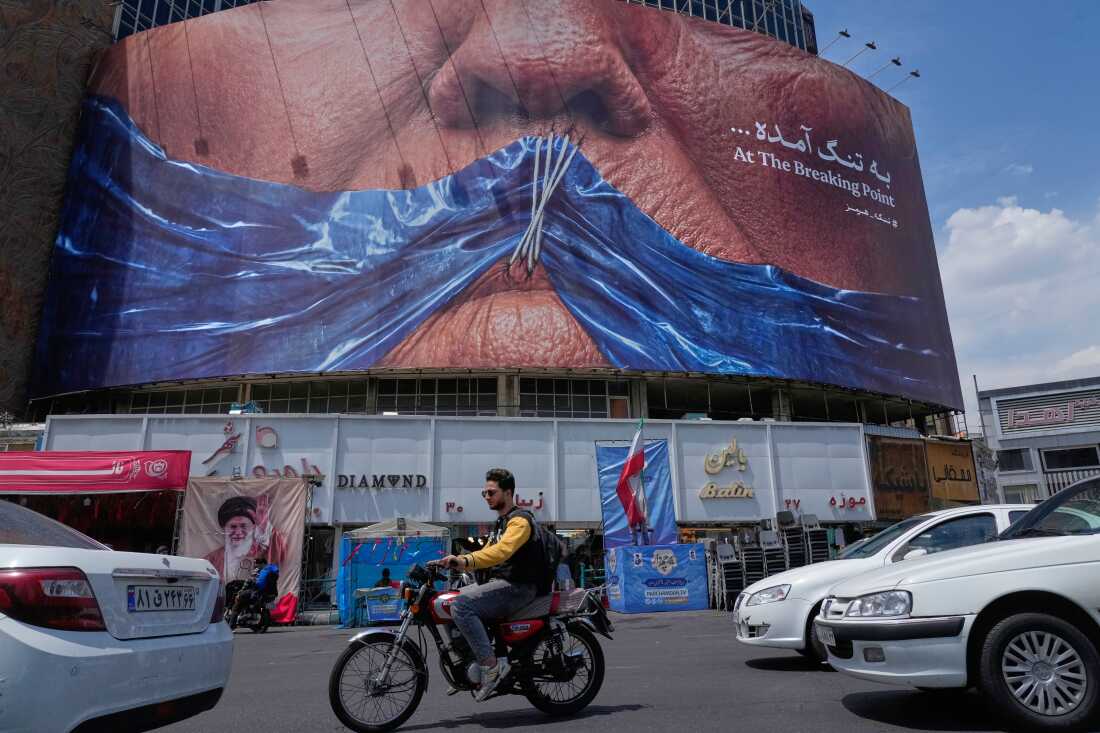
On February, the United States and Israel initiated military action against Iran, prompting President Trump to predict a quick success. The anticipated rapid victory has not materialized. After six months, with a failed ceasefire deadline, the U.S. is embroiled in a prolonged conflict. This war has shaken the global economy, disturbed Gulf allies, and drained U.S. resources.
President Trump’s original focus shifted from limiting Iran’s nuclear ambitions to seeking regime change. His primary aim now is to weaken Iran’s control over the Strait of Hormuz. As part of this strategy, U.S. Treasury Secretary Scott Bessent introduced a new sanctions plan against Iran, intended to isolate the regime economically.
“The sanctions aim to disconnect Iran from its economic lifelines,” Secretary Bessent declared, warning countries continuing business with Iran of potential isolation.
Previous administrations, including Trump’s first term, have employed economic pressure on Iran through sanctions. Despite this, Iran has maintained financial stability through smuggling and other operations, complicating the effectiveness of the sanctions.
Esfandyar Batmanghelidj, from the Bourse & Bazaar Foundation, noted that maximum pressure often leads to strong resistance from Iran. He believes the Trump administration will push Iranian leaders to retaliate regionally, showing defiance against U.S. demands.
Economic Isolation Efforts
Following the initial conflict, the Islamic Revolutionary Guard Corps responded with missile strikes on U.S. Gulf allies. Iran faces consequences for these actions. The United Arab Emirates, a key importer of Iranian goods, halted trade and financial interactions with Iran.
Miad Maleki, formerly of the U.S. Treasury, with the Foundation for Defense of Democracies, stated that regional countries are making it harder for Iran to circumvent sanctions.
Success of the isolation strategy depends on cooperation from countries like China. China has opposed unilateral sanctions, complicating the situation. In 2025, China purchased a significant amount of oil from Iran, comprising nearly half of Iran’s government budget.
The U.S. naval blockade prompted a 40% decrease in Chinese oil imports from Iran, but uncertainty remains about future Chinese decisions and potential U.S. reaction.
Adam Szubin, former Treasury official, observed ongoing negotiations between the U.S. and China regarding economic pressures.
Richard Nephew, a sanctions expert, emphasized that U.S. action against Chinese entities is possible. This could affect trade deals, yet the blockade already damages Iran substantially.
The Iranian Perspective
In Tehran, citizens face economic hardship from the blockade and longstanding sanctions. A woman in Tehran recounted difficulties in accessing medical care for her father, aggravated by equipment shortages. Her bank account was hacked, with funds disappearing, adding to her financial woes.
Majid-Reza Hariri highlighted soaring shipping costs due to the blockade, impacting maritime trade.
Iran’s officials are expressing defiance, with some like Mohsen Rezaei vowing retaliatory measures against countries supporting U.S. sanctions.
Tehran perceives chaos in the region as strategic leverage. Analysts like Foad Izadi insist on Iran’s readiness to exploit its position to ensure regional wealth distribution.
Leave a Reply