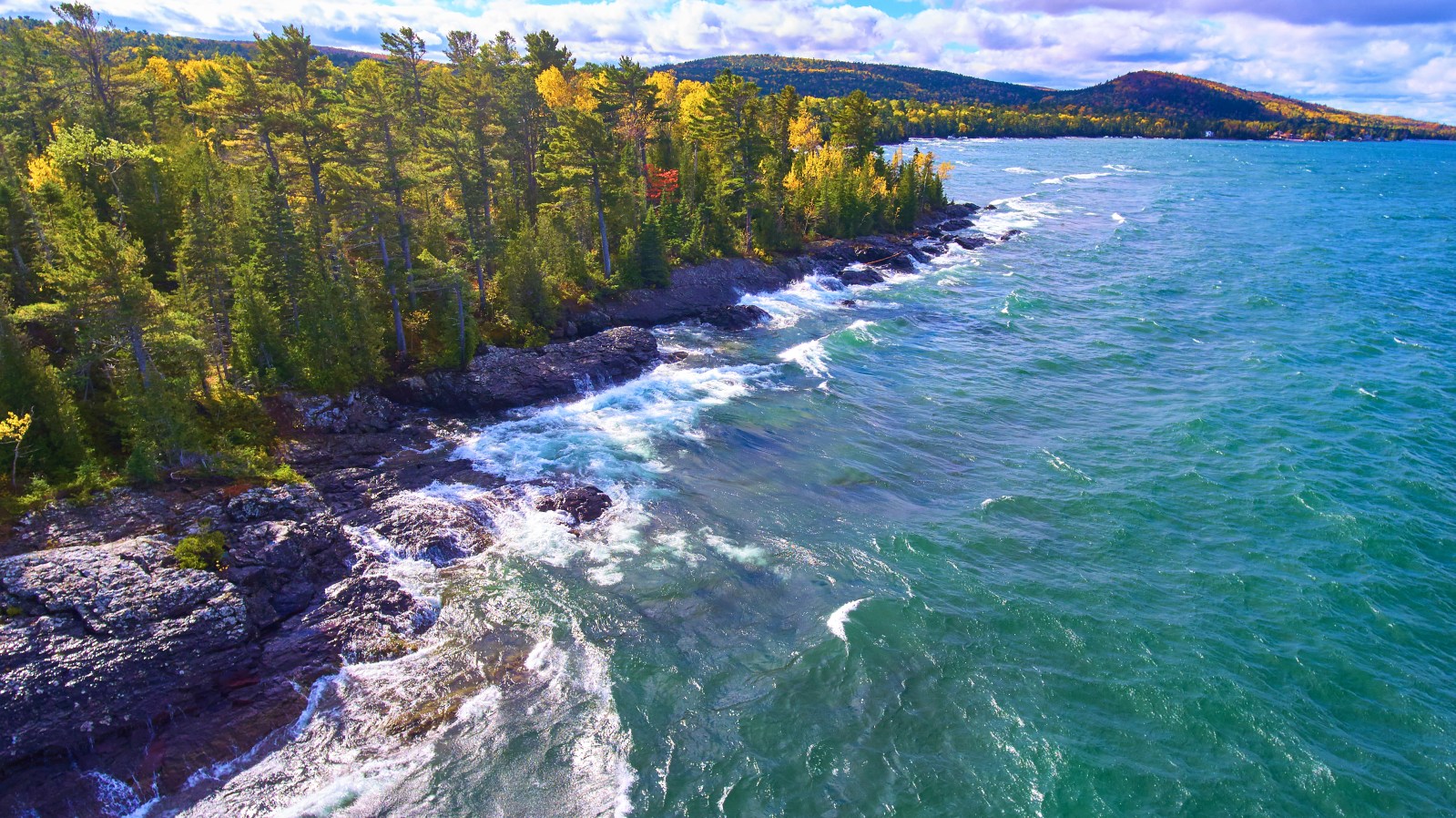
The National Weather Service (NWS) has issued beach hazards statements for all Great Lakes as people flock to beaches before fall arrives. These warnings, unusual in summer, were explained by experts to Newsweek. The alerts follow earlier warnings this month affecting roughly 1 million residents near the lakes—Michigan, Superior, Huron, Erie, and Ontario. This time, warnings impact over 8 million people.
Current Great Lakes Warnings
By 10:30 a.m. Eastern time, parts of Wisconsin, Minnesota, Michigan, Illinois, Indiana, Ohio, Pennsylvania, and New York had received warnings. The statements caution against entering the water due to dangerous waves and currents. Affected areas include Duluth, Minnesota; northwestern Wisconsin; Michigan’s Upper Peninsula; nearly all of Wisconsin’s Lake Michigan coastline; northeastern Illinois; northwestern Indiana; northeastern Michigan; northern Ohio; northwestern Pennsylvania; and most of New York’s Lake Ontario shoreline.
Some alerts will last until Wednesday, while others end sooner. NWS advises staying out of the water. “Life-threatening waves and rip currents are expected,” stated the Duluth NWS. Cleveland added, “Wind and wave action will create currents on the lakeshore. Swimmers should avoid the water.”
Uncommon Simultaneous Beach Hazards
Although not common in summer, widespread beach hazards are issued in this season as cooler air sets in. Meteorologist Bryan Jackson explained to Newsweek that as notable cold fronts emerge, warnings become necessary. A Canadian high-pressure system is heightening these risks. “There’s a strong pressure gradient, and people still want to visit the beach,” Jackson said.
During winter, cold fronts cause lake effect snow, strong winds, and ice buildup. The current hazards result from a persistent wind driven by northern high-pressure systems.
Great Lakes Drownings This Year
Rip currents and waves affect not only ocean beaches but also the Great Lakes. This year, 73 drownings were recorded in these lakes, with 41 at Lake Michigan, according to the Great Lakes Surf Rescue Project (GLSRP). These warnings are crucial post-Labor Day as lifeguards no longer staff the beaches, stated GLSRP executive director Dave Benjamin.
Understanding and Navigating Rip Currents
A rip current flows rapidly away from the shore. People caught in them should remain calm. The current doesn’t pull swimmers underwater but moves them away from shore. To escape, swim parallel to the shore, then return diagonally when free. If tired, float and signal for help.
Future Outlook
Some warnings expire Monday, others persist. Residents and visitors should heed local weather office advice and exercise caution near the water. Bryan Jackson noted that the Mid-Atlantic region might see similar concerns due to a strengthening low-pressure system, leading to high tides and beach erosion.
Note: This report involves AI assistance in its creation. For more details, contact Newsweek editors Jason Lemon and Gray R. Thomas.
Leave a Reply