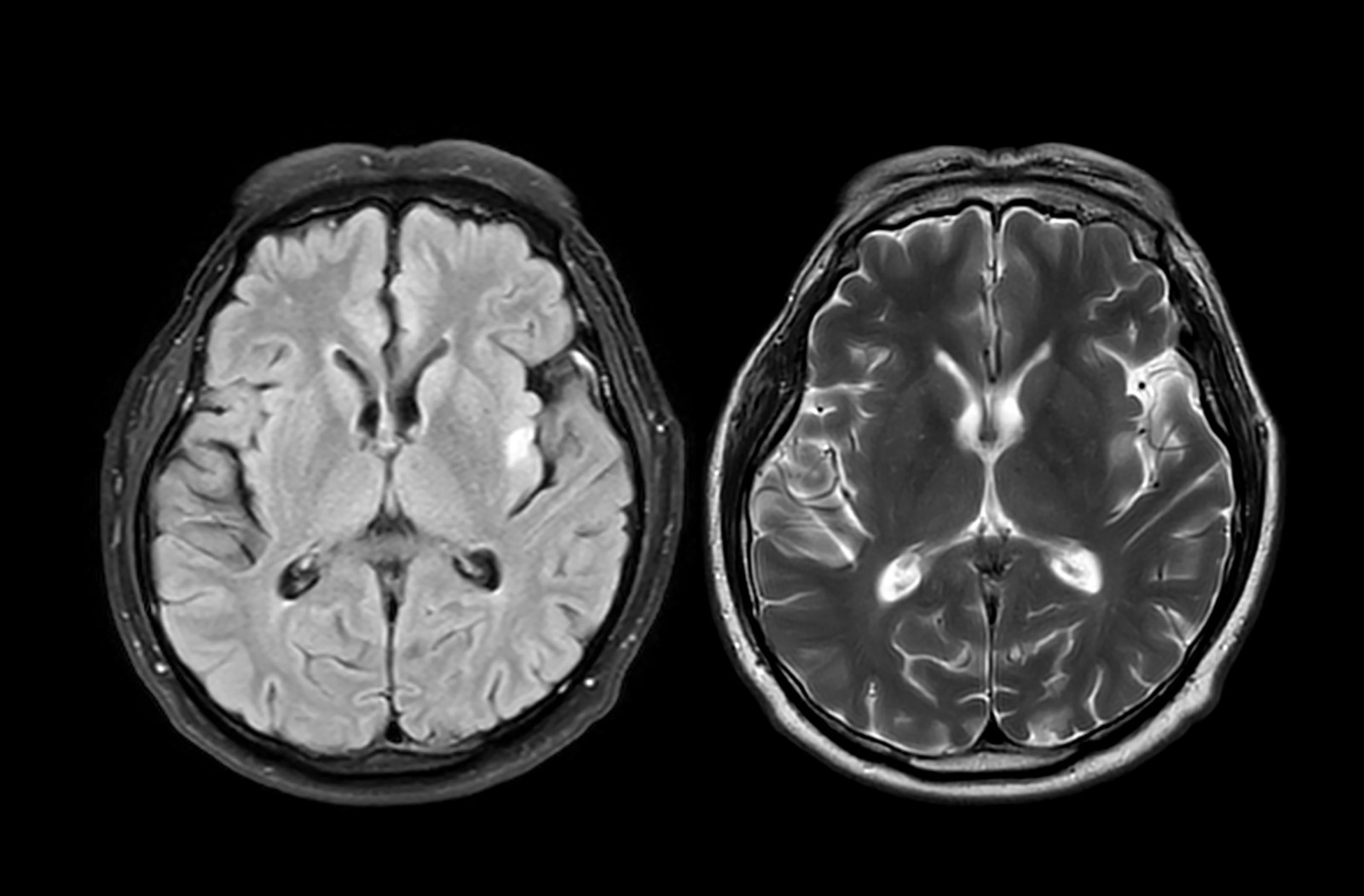
A brain scan tool designed to measure shrinkage in regions linked to thinking and memory may predict the rate at which individuals with early-onset Alzheimer’s progress from mild cognitive impairment (MCI) to dementia. Early-onset Alzheimer’s appears before age 65 and often starts with MCI, where memory and thinking issues are evident but not severe enough for dementia diagnosis.
Researchers aimed to identify if brain shrinkage patterns could predict the progression speed. They developed a tool named the early-onset Alzheimer’s disease signature, which detects atrophy in certain brain areas involved in memory and thinking, such as sections of the parietal and temporal cortex. Using MRI scans, they gauged these areas’ thickness and produced a score indicating brain shrinkage.
The study involved 130 individuals with MCI, all living independently, and 97 healthy individuals for comparison, all aged 40 to 64. Each participant had a baseline MRI scan and returned for at least one annual follow-up over an average of two years. During this time, about 65% of the early-onset Alzheimer’s group shifted from MCI to dementia.
Results showed that greater gray matter shrinkage correlated with faster disease progression. An increase of one standard deviation in shrinkage raised the risk of transitioning from MCI to dementia by 1.24 times. This brain scan biomarker proved more predictive than evaluating initial symptoms. Lead researcher Alexandra Touroutoglou from Harvard Medical School highlighted patients’ common concern regarding loss of independence.
The study points out limited current methods to predict early-onset Alzheimer’s disease progression from MCI to dementia. Findings suggest the biomarker could serve as a tool to help physicians estimate the onset and speed of dementia progression. Dr. Ronald Schwartz of Continuum Health Services at Masonicare pointed out the challenges of early-onset Alzheimer’s due to its variability and the complex nature of predicting its course.
This tool might assist patients and families in preparing for the future and determining the potential timing for joining clinical trials for treatments. Schwartz noted the importance of a forecasting tool for setting expectations, planning care, and aiding families in making work, financial, and support-related decisions. He stressed that prediction tools should enhance conversations, not serve as definitive forecasts.
The biomarker acts as a map of brain regions more prone to shrinkage in early-onset Alzheimer’s compared to those without. Researchers apply this map to MRI scans, assess the shrinkage, and estimate progression speed. Though the tool was developed within a single study group with mostly non-Hispanic White participants, its effectiveness in diverse populations remains uncertain.
Schwartz emphasized the need for additional research to verify the tool’s accuracy across various ages, disease stages, and clinical scenarios. Ensuring these predictions enhance patient and family care is crucial. The findings propose that monitoring gray matter shrinkage via MRI may aid in setting expectations for disease progression, though broader testing of the tool is necessary.
Leave a Reply