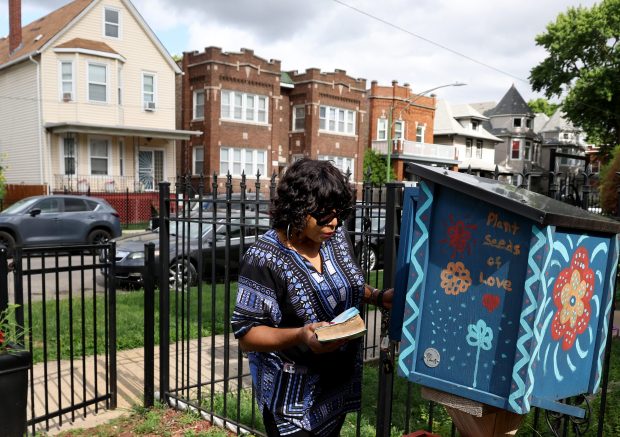
Chicago’s Austin community often faces a narrative shaped by statistics like crime rates and poverty levels. These challenges exist, but another story unfolds within Austin. It tells of neighbors knowing each other, vacant lots becoming community gardens, and youths finding mentors. At the center of this narrative, the Rev. Dollie Sherman has devoted decades to building a community on Chicago’s West Side, one block at a time.
For nearly 50 years, Sherman has called this area home. Her initial efforts like summer cookouts and school supply drives on the 600 block of Lorel Avenue evolved into the Vessels Unto Honor block club. This grassroots organization focuses on beautification, youth engagement, and resident support, turning a block into a community.
The block club has helped turn our block into a community. We’re not just waiting for somebody else to come along; we’re building it ourselves.— Rev. Dollie Sherman
Sherman’s leadership highlights a trend in Chicago where residents and neighborhood groups address challenges unmet by the government. Linda Williams exemplifies this commitment by organizing books in a free library on Lorel Avenue.
This dedication was evident during Memorial Day weekend when dozens gathered for the Center for Poverty Solutions’ first community job fair. Nearly a dozen employers conducted interviews, collected résumés, and offered connections leading to employment paths. This event provided opportunities that residents might not have found elsewhere.
Through their efforts, the block on Lorel Avenue now boasts a reputation for safety, cleanliness, and community engagement, showcasing how block club leadership can change both physical spaces and neighborhood culture.
The job fair’s impact was immediate. More than a dozen participants received job offers, and 50 secured interviews for full-time positions. Such initiatives highlight a crucial message often missing in discussions on poverty and public safety: providing meaningful opportunities enables individuals to thrive, support themselves, and plan for the future.
According to Sherman, involving young people in productive activities decreases crime and vandalism. “If we get our youth busy with something, I think it helps us avoid a lot of crime and vandalism,” Sherman said. “It also helps those youth.”
Employment offers more than just income. It provides stability, purpose, and dignity. Over 97% of full-time employed Chicagoans live above the poverty line, compared to 68% of those without work. Jobs enable parents to support their families, and young people to envision brighter futures, fostering stronger neighborhood bonds that enhance safety and prosperity.
Sherman’s work with young people facing homelessness or unstable housing involves encouraging them towards work as a path forward. “A lot of these youth are homeless. They’re staying with a friend, sleeping on their couch,” Sherman noted. “But they’ll come here, and they’ll go back with something in their pocket after work. They can feel good about themselves.”
While no single job fair can eradicate decades of poverty or eliminate violence, each resident connected to a career opportunity moves closer to self-sufficiency. Every young person choosing employment over the streets represents a victory, significantly reducing the likelihood of turning to crime.
Leaders like Sherman strengthen the foundation for safer communities. Sherman knew well before the Center for Poverty Solutions arrived on Lorel Avenue that solving poverty and improving public safety are interconnected. When communities offer pathways to work and self-sufficiency, they do more than improve economic outcomes — they restore hope.
Eddie Kornegay, Ph.D., serves as executive director of the Center for Poverty Solutions, an initiative of the Illinois Policy Institute.
Leave a Reply