Boston has recently filed a lawsuit against prominent social media companies, including Meta, TikTok, Snapchat, and YouTube. The city’s action forms part of a broader legal challenge involving over 1,500 similar lawsuits from school districts across the United States. These cases are centered in a multidistrict litigation in Northern California, increasing momentum toward upcoming bellwether...
Category: Cybersecurity
Preparing for Quantum Threats: Transitioning to Quantum-Safe Infrastructure
Quantum computing will soon push companies, governments, banks, and digital platforms to enhance their security frameworks protecting finances, identities, communications, and key infrastructure. Transitioning to quantum-safe systems, designed to withstand attacks from highly powerful quantum computers, has shifted from theoretical discussions to practical concerns for all organizations. The scientific community is actively creating new quantum-safe...
Understanding and Avoiding the ‘Hi Mom’ Text Scam
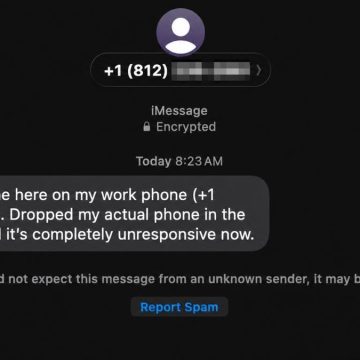
A recent text scam targets parents by pretending to be a child. The message seems innocent at first: Hi mom, text me here on my work phone. Dropped my actual phone in the sink earlier and it’s completely unresponsive now. The number you receive the message from is unknown, and it asks you to reply...
The Increasing Concerns Over Smart Glasses and Public Surveillance
The latest gadget trend is reviving an old fear for many individuals: the potential of being recorded without their knowledge. Smart glasses, a new tech innovation, are causing concern among people who feel these devices blur the line between daily life and surveillance. Public Concerns and Reactions The introduction of smart glasses has led to...
Google General Counsel Discusses Rise of AI-powered Phishing
AI-powered Phishing Scams Halimah Delaine Prado, Google’s General Counsel, has highlighted the growing threat of AI-powered phishing scams originating from what is described as China’s ‘outsider enterprise.’ She details how these scams utilize advanced artificial intelligence to craft convincing fake websites. These sites impersonate well-known brands like T-Mobile, resulting in significant financial losses for American...
Social Media Accountability and Child Safety Efforts Progress
Amy Neville describes Kristin Bride as her “soulmate.” The bond between them formed on June 23, 2020, a day they describe as the most difficult of their lives. Both women tragically lost their teenage sons, who, despite living a thousand miles apart, both suffered harms linked to social media use. When they first met to...
FCC Proposal on Phone Identity Checks Sparks Privacy Concerns
The Federal Communications Commission (FCC) is contemplating stringent ‘know your customer’ rules for voice providers. This proposal would necessitate phone companies to collect more personal data from customers before providing service. Required information could include your name, physical address, government-issued ID number, and an alternate phone number. Reasons Behind the New Proposal The FCC aims...
Strategic Implications of Frontier AI in Cybersecurity
The Five Eyes alliance—comprised of the U.S., Britain, Canada, Australia, and New Zealand—recently issued a rare joint warning about the rapid advances in artificial intelligence (AI). Their concern focuses on frontier AI models poised to dramatically enhance offensive and defensive cyber capabilities within months. Pressing Concerns with AI Models Anthropic’s Mythos models, particularly Mythos 5...
Meredith Whittaker on Privacy, Technology, and Signal’s Commitment
Meredith Whittaker argues that privacy is essential for a free society. As president of the foundation behind Signal, she stands firm against pressures threatening this principle. Governments and tech companies challenge private communication. Whittaker believes data collection and AI can undermine it. She insists Signal will leave any market rather than weaken encryption. Whittaker’s activism...
Minnesota Bans Crypto ATMs to Combat Rising Fraud
Minnesota has decided to ban cryptocurrency ATMs as part of a crackdown on scams that have cost residents nearly $1 million in recent years. These kiosks allow quick conversion of cash into digital currency, making them popular tools for scammers. The ban will take effect on August 1, 2026, with operators required to remove publicly...