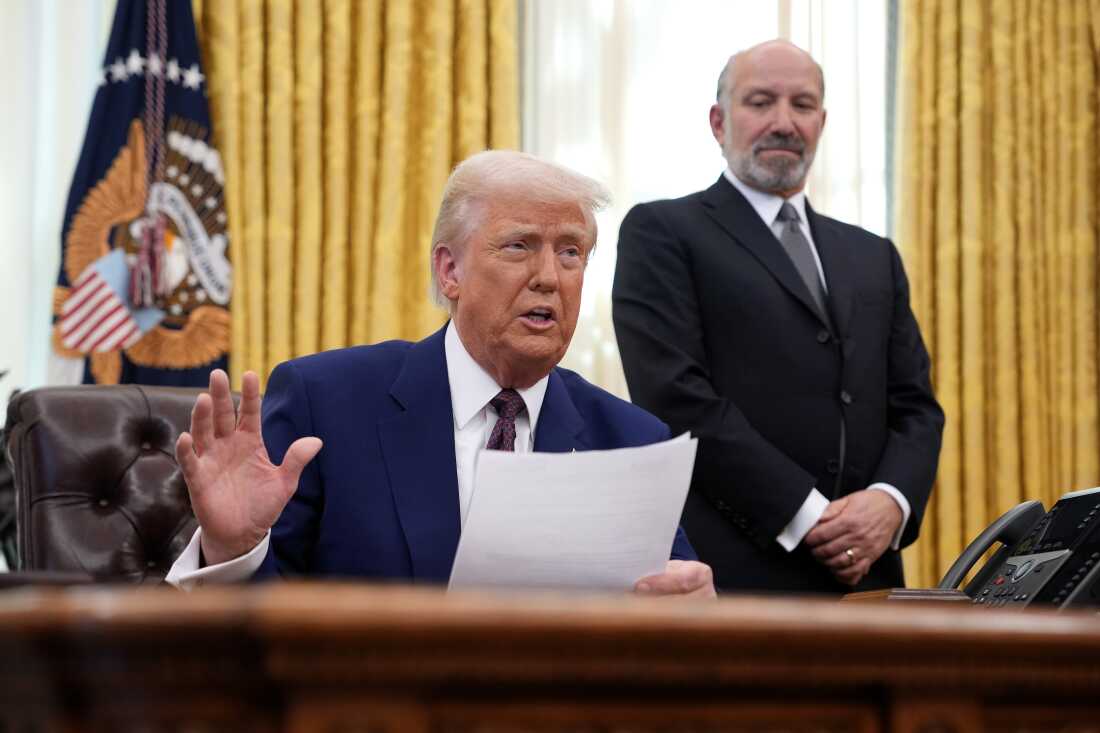
In 2025, President Trump addressed the media in the Oval Office with Commerce Secretary Howard Lutnick, who oversees the Census Bureau. A report from the bureau, said to support Trump’s claims of illegal voting by non-U.S. citizens, has drawn scrutiny. NPR uncovered its connections to a think tank closely linked with Trump.
Trump stated in a social media post that initial analysis of over 128 million voter records by the bureau showed more than 24,000 noncitizens voted illegally in the 2020 election. He anticipated the number would increase after further reviews of additional voter records. This unauthored seven-page document refers to a 2020 commercial voter file and federal records. Experts label the report’s methodology and conclusions as suspect.
Work on the analysis didn’t involve career staff at the bureau; it included members from the America First Policy Institute. NPR, adhering to a confidentiality request, identified a bureau employee who disclosed these affiliations. Neither the bureau, the think tank, nor the White House responded to NPR’s inquiries. On social media, AFPI asserted the importance of transparency for election confidence.
The bureau’s report aligns with Trump’s ongoing narrative questioning the 2020 election’s integrity. Before the midterms, Trump encouraged Republican legislators to enact more stringent voting laws. Yet, previous reviews suggest noncitizen voting is exceptionally rare. Last month, the Department of Homeland Security claimed 250,000 noncitizens were found on voter rolls in various states, though their methodology remains undisclosed. State election officials question these figures’ accuracy.
Experts dismissed the report’s findings. David Becker of the Center for Election Innovation & Research noted the insignificance of 24,000 votes, less than 0.02% of total votes, as unable to impact the election outcome. Michael Morse of the University of Pennsylvania highlighted the difficulties of matching Census data to voter records accurately.
Fears grow over the report damaging the Census Bureau’s nonpartisan reputation. Misty Heggeness, a former economist at the bureau, criticized the report’s lack of author identification, contrasting it with the bureau’s usual rigorous approach. Similarly, Amy O’Hara, a former bureau chief, warned about potential misinterpretation of mismatched voter and citizenship records.
O’Hara expressed surprise at claims of the bureau’s unique role in identifying election fraud. The report surfaces following significant staffing cuts at the bureau during the Trump era, alongside hints at proposed changes for the 2030 census.
Heggeness urged public vigilance regarding the report with its vague methods and lack of citation. She emphasized skepticism towards such documents lacking the usual transparency expected of official statistics. The report indicates that similar analyses may follow, casting doubts on the bureau’s operations during a vital nationwide census.
Reporting by NPR’s Miles Parks with edits by Benjamin Swasey.
Leave a Reply