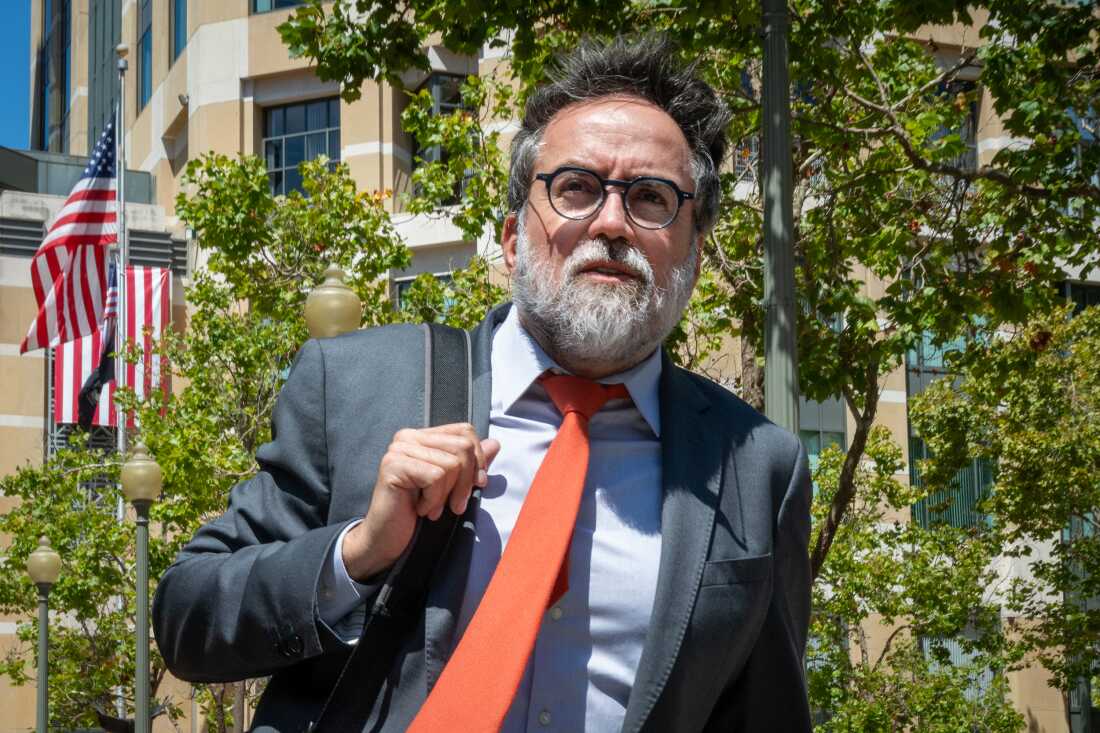
Arturo Béjar, a former Meta engineer, recently left the Ronald V. Dellums Federal Building & United States Courthouse in Oakland, California. He is a key figure in a trial against Meta over social media addiction. On August 19, 2026, Béjar testified in this significant child safety case involving the social media giant.
Béjar claimed that Meta fostered a culture where user growth overshadowed safety concerns. He stated that only CEO Mark Zuckerberg could have changed this culture, but he did not. “The company’s culture, which Mark had established, made it nearly impossible to implement features addressing wellbeing and safety,” Béjar explained.
This trial sees a coalition of states, including California, Colorado, Kentucky, and New Jersey, accusing Meta of violating consumer and child data protection laws. They also allege that Meta misled the public about the dangers of its platforms. Attorneys for the states argue that Meta designed Facebook and Instagram to attract young users, implementing features like infinite scrolling and the “like” button to keep them engaged. Meta denies these accusations.
During the trial, attorney Paul Schmidt argued on Meta’s behalf. He stated that the company recognized risks to teens and attempted to address them without deceiving the public. It remains unclear if Zuckerberg will testify.
Béjar’s testimony in federal court highlighted his experiences with Meta’s safety practices. He worked on safety issues at Meta for eight years, stating he had interacted with Zuckerberg frequently. According to Béjar, Zuckerberg’s claims that Meta did not prioritize profit over safety were false.
Béjar referred to a 2021 Facebook post by Zuckerberg, denying statements made by whistleblower Frances Haugen about the company prioritizing profit over safety. Béjar asserted that his experiences at Meta contradicted Zuckerberg’s public denials.
Meta’s internal studies, which Béjar cited, identified risks to teens on platforms like Facebook and Instagram. The studies revealed that adolescents experienced negative feelings stemming from harmful content. Efforts to address these issues were challenging, Béjar noted, as the company prioritized user growth and revenue.
Béjar first worked at Facebook from 2009 to 2015, focusing on cyberbullying. He returned between 2019 and 2021 as a consultant to work with Instagram’s wellbeing team. One reason for his return was his concern over how his daughter was treated as a teenager on Instagram.
This trial marks another instance where Béjar has voiced concerns about Meta. In 2023, he testified before the Senate, alleging that Meta pushed harmful content to teens. He also spoke to The Wall Street Journal detailing his concerns.
In the U.S. District Court for the Northern District of California, the case examines whether Meta can be held accountable for features designed to encourage compulsive use. The states argue that Meta benefited financially from keeping young users engaged through advertising revenue.
During cross-examination, Meta attorney Brian Stekloff questioned Béjar about the competency of his colleagues at Meta. Béjar acknowledged their skill but noted that none of the risks were resolved. He described features like video autoplay, “like” counters, and infinite scroll as inherently unsafe for teens.
Béjar criticized safety features Meta implemented as “designed to fail,” like Instagram’s “quiet mode” which mutes push notifications. Since these are optional, not defaults, he argued they remain ineffective. “Most people will not turn the setting on,” he remarked.
The trial is anticipated to continue for approximately six weeks. Notably, the Chan Zuckerberg Initiative, founded by Mark Zuckerberg and Dr. Priscilla Chan, supports NPR financially.
Leave a Reply