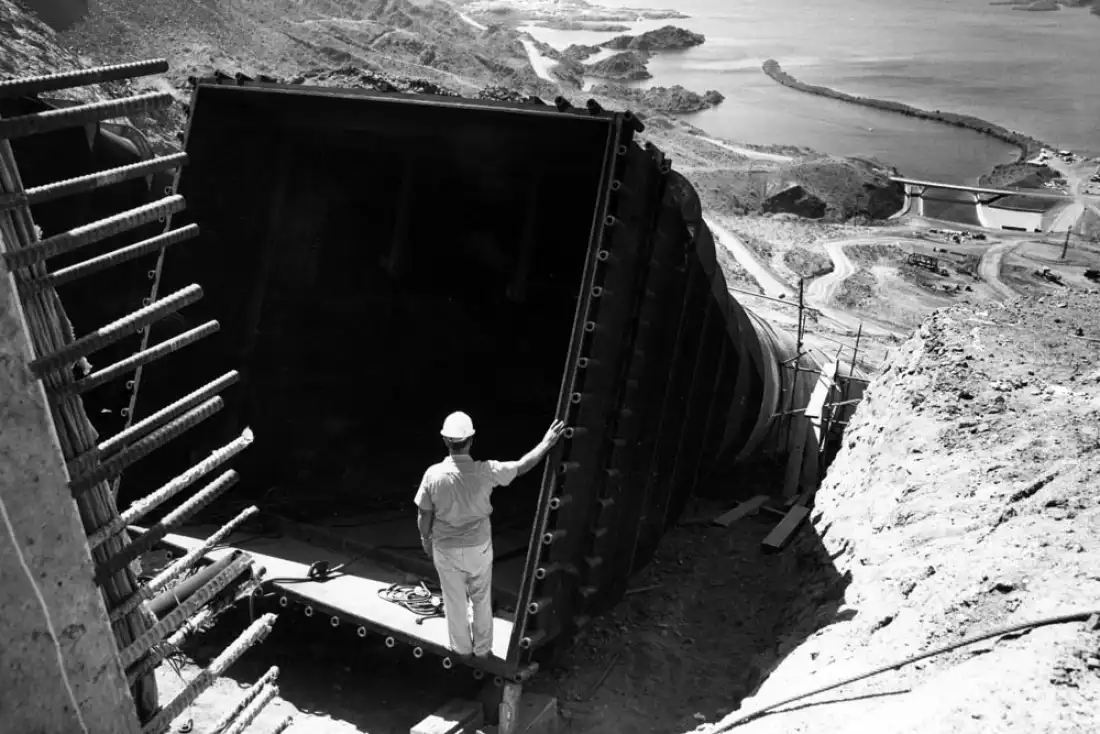
In June 1982, a worker surveyed the construction of the Mark Wilmer pumping plant near Parker, Arizona. This station extracts water from the Colorado River near Lake Havasu, transporting it to Phoenix via the Central Arizona Project (CAP). During the 1960s, architects of the system warned of potential drying out in the 21st century; however, their recommended fixes were overlooked for many years.
The Colorado River is now at a crossroads. The demand surpasses the supply, and there’s no consensus among policymakers on managing the water use. As a result, nearly 40 million users in seven Western states face looming challenges. Major cities, tribes, and economies are experiencing legal tensions amidst low reservoirs and uncertain futures. A recent federal plan to reduce water use has spurred legal challenges from Nevada, Arizona, and the canal system providing water to Phoenix.
How We Got Here
Existing cities like Phoenix and Tucson largely depend on a 336-mile network of canals, pipelines, and pumping plants known as the CAP. Yet, water shortages threaten this improbable system, echoing warnings from the 1960s. Rich Weissinger, who worked long in the organization operating the canal, highlights CAP’s vital role in providing a dependable water source. However, persistent drought conditions in the Colorado River basin have strained this reliability.
Taking More than the River Can Give
Regionwide agreements to manage water demand have failed, lowering water levels in the nation’s largest reservoirs. New proposals could reduce Arizona’s annual allocation from the river by 47%. This crisis did not come without forewarning. The architects anticipated large flow reductions by the 21st century and suggested augmentations like connecting the Colorado River system to the Columbia River or building desalination plants, which did not happen.
A Warning, Largely Forgotten
When the Central Arizona Project was enacted, then-President Lyndon B. Johnson highlighted its potential benefits for cities, industries, and agriculture. Despite optimism, key figures like Floyd Dominy predicted significant future declines in water availability. These forecasts were based on rising upstream use rather than climate-induced drought, which now dominates supply issues.
Kicking the Can Down the Road
Mo Udall and his brother Stewart, both advocates of CAP, emphasized the need for supplementary water supplies. While augmentation was seen as likely, it hasn’t occurred, largely due to political and financial barriers. The assumption lingered that future augmentations could resolve the problems.
The Future of Farms and Desalination
Large-scale augmentation projects were politically convenient, whereas reallocating water from agriculture to urban areas presented complex issues. Policymakers now explore possibilities like coastal desalination, despite financial and legislative challenges. Partnerships with existing facilities, such as California’s desalination operations, may present viable alternatives.
A Fundamental Problem, and a Real Way to Fix It
The original CAP designers accurately identified the core issues of over-demand versus supply. Instead of blaming the past, present efforts focus on reassessing management practices to address the “structural deficit” within the Colorado River’s supply. Future sustainability requires collaborative reductions in water use across all states reliant on the river.
Leave a Reply