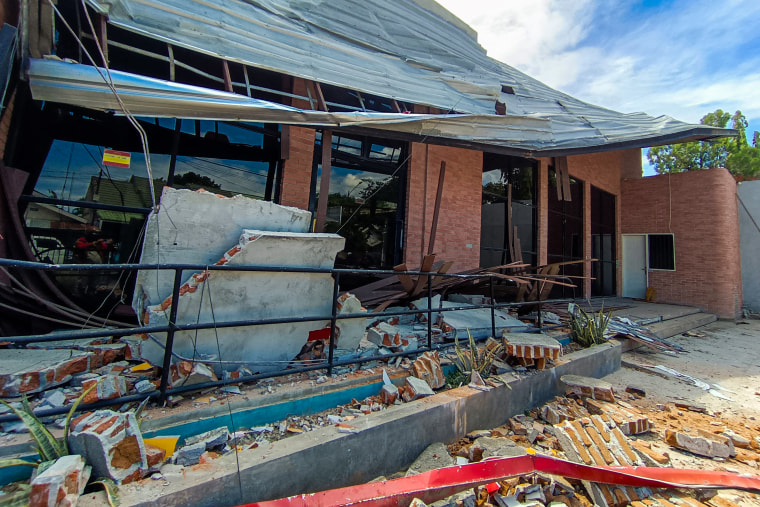
On Tuesday, Central Indonesia’s Sulawesi island experienced a 6.7-magnitude earthquake. The disaster resulted in one fatality, numerous injuries, and significant damage to homes and infrastructure. Residents of Palu, a city previously devastated by a quake and tsunami, were particularly impacted.
The earthquake occurred inland, about 27 miles east-southeast of Palu, at a depth of 6 miles, according to the U.S. Geological Survey. The intense shaking prompted people to seek safety in open spaces around Palu, a city with a population of approximately 400,000.
Hospitals in the area took precautions by evacuating patients, some with IV drips, to outdoor areas. Four regencies near the epicenter—home to over a million individuals—have yet to be completely assessed. Initial reports indicate that 312 people have been displaced.
Abdul Muhari, spokesperson for the National Disaster Management Agency, confirmed one death and reported 38 injuries, including 13 serious cases in Sigi regency, the most affected area. The earthquake also damaged 67 houses, multiple places of worship, public facilities, bridges, government offices, and business sites. A provincial road connecting Palu to nearby regencies was severed.
“The earthquake shaking was extremely strong,” said Muhtar Ahmad, a resident of Palu.
The region experienced at least 71 aftershocks throughout the day, heightening concerns among residents still haunted by the devastating 2018 earthquake and tsunami. Despite no tsunami threat, people moved away from coastal areas as a precaution. Images from Palu revealed heavily damaged buildings with collapsed roofs and walls.
In response to the quake, Effendi Natali, a hotel general manager in Palu, stated, “We have evacuated all guests from the hotel, including several guests who remained in their rooms. Everyone is safe, though the hotel suffered minor damage.”
Past events, such as the magnitude-7.5 earthquake in 2018, still linger in the memories of Sulawesi residents. That disaster led to a tsunami and soil liquefaction, claiming over 4,000 lives. More recently, a magnitude-6.2 earthquake in January 2021 near Mamuju city resulted in 100 deaths and left many sleeping outside due to ongoing aftershock fears.
Indonesia’s position on the Pacific Basin’s “Ring of Fire” makes it susceptible to frequent earthquakes and volcanic activity.
Leave a Reply