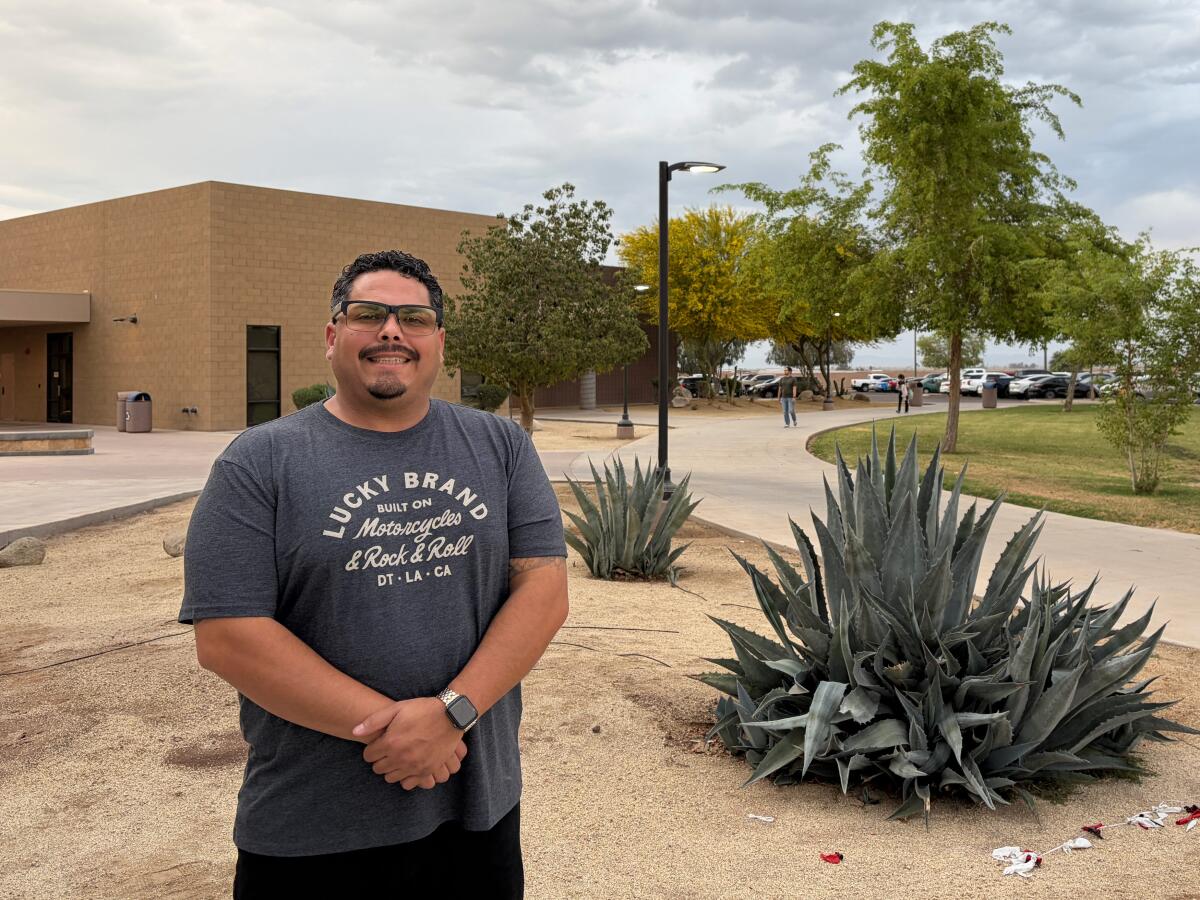
Imperial Valley College initiated a program to train students as plant operators and technicians for the emerging lithium sector. Among the first to enroll was Corban Dillon, who aimed to seize career opportunities in this promising field. Yet, upon completing his certification in spring 2024, Dillon found no lithium-related jobs available. He continued his education in similar programs, but jobs in lithium extraction, a crucial mineral for clean energy batteries, remained scarce.
Dillon stated, “A lot of us already have jobs or have families and are trying to juggle all that and trying to get a certification. And not having actual potential employment as of right now, it’s hard for one person to sit there and say, ‘You know what? Let’s continue with this.’” This situation underscores a common challenge community colleges face when aligning educational programs with emerging local industries.
Community colleges must navigate when to start training students for potential new jobs, especially when local residents seek employment in anticipated industries. Imperial Valley College has scaled back its lithium programs due to the uncertain job market. This scenario illustrates the challenge of preparing students for fields that have not yet fully developed.
Betony Jones, a senior researcher at UC Berkeley Labor Center, commented, “There’s this fine calibration required where employers need the workers for the projects, they can’t start training the workers when they need them. But workers can’t train and then wait around.”
Located in a region with high poverty and unemployment rates, the stakes for Imperial County are significant. In March, the unemployment rate was 16.9%, much higher than neighboring counties. Priscilla Lopez, the county’s director of workforce and economic development, noted, “The mentality that we see today here is: If we want a future, we need to leave the valley. If we want a good job, we need to leave the valley. But wouldn’t it be great to have these opportunities so that your kids can see the opportunities here?”
About a decade ago, three companies considered the region for lithium extraction, sparking talk of new jobs. Dubbed “Lithium Valley,” the area had corporations like Berkshire Hathaway Energy Renewables expressing goals for commercial operations by 2026. However, BHE Renewables has only recently completed a demonstration plant. Jim Turner, president of Controlled Thermal Resources, said they still need more funding, and jobs are at least two years away.
Lithium batteries, pivotal for solar and wind energy storage and electric vehicles, are highly sought after. An estimated 18 million metric tons of lithium carbonate lie beneath the Salton Sea, potent enough to fuel 375 million electric car batteries.
The potential lithium boom led to increased demands for educational opportunities. Imperial Valley College, funded by the U.S. Department of Energy, offers a Lithium Industry Force Training program, which grants certificates as plant operators, chemical lab technicians, and instrumentation technicians. Courses cover chemistry, math, hazmat training, and more.
Despite the promotional efforts and local interest, industry delays persist. Environmental lawsuits in 2024, coupled with political and market dynamics, have postponed expected job openings. Imperial County officials face legal challenges over the environmental impacts of proposed projects. Furthermore, shifts in federal attention to lithium projects in states like Arkansas and Nevada have further complicated the outlook.
In response to the uncertainties, the California Energy Commission warned residents that “the Lithium Valley is not a sure thing.” Meanwhile, San Diego State President Adela de la Torre wrote that students might graduate into a sparse job market unless progress accelerates.
The program at Imperial Valley College, which has already educated many students, has adjusted its enrollment and may pause parts of the program until 2027-28. Meanwhile, some students remain hopeful. George Prieto, one participant, views his certification as applicable to other sectors, while Dillon continues to believe in the region’s lithium potential. Dillon currently works full-time for a mining company outside Imperial County, enjoying good pay, benefits, and a company car.
Leave a Reply