Iconic Buildings and Architectural Criticism
Famous buildings often capture the public’s attention, becoming symbols that define their cities. However, some architects see flaws in these structures, questioning their design choices, context, and functionality. Meanwhile, the architectural focus is shifting from creating new icons to revitalizing older buildings.
Architect Gordon Gill emphasized the importance of ‘refreshing’ existing structures to ensure their longevity and relevance. The trend of restoring and repurposing historic buildings is growing in the United States, where nearly half of the 125 million buildings are over 50 years old, according to the American Institute of Architects. Adaptive reuse is on the rise, with nearly 25,000 apartments created from converted buildings in 2024, marking a 50% increase compared to the previous year, as reported by RentCafe.
This shift in focus prompts a deeper discussion on what defines successful architecture.
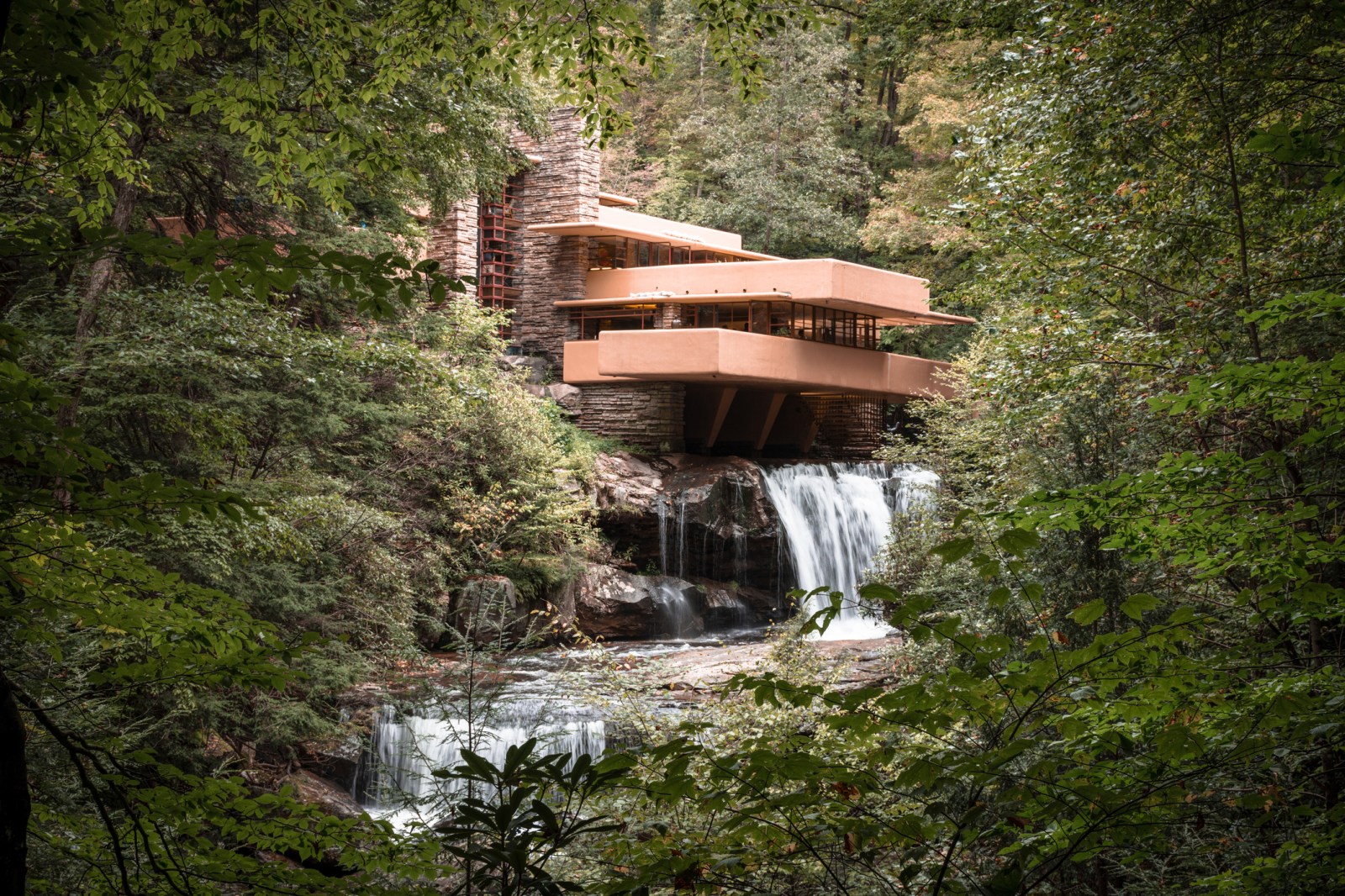
Fallingwater, Pennsylvania
Frank Lloyd Wright’s Fallingwater, a masterpiece built over a waterfall, is a UNESCO-listed site. Though widely acclaimed, it has its critics. Architect Dan D’Agostino expressed disappointment with Wright’s choice of location, arguing the home obscures the waterfall views desired by the homeowners. He also criticized the engineering, noting the lack of additional steel reinforcement in the terrace despite contractor recommendations. D’Agostino described Fallingwater as a “great idea” but a “problematic design.”
Architect Miles Smith shared mixed views. While he found Fallingwater’s form “compelling” and “cool to see,” he referred to the execution as “a travesty.”
The Guggenheim Museum Bilbao, Spain
Frank Gehry’s Guggenheim Museum Bilbao is renowned for its striking design and role in revamping the city. Yet, some critics claim it lacks a firm foundation. According to Smith, Gehry’s recent passing led many architects to acknowledge his influence while softening their critique of his work.
The Glass House, Connecticut
Philip Johnson’s Glass House in New Canaan is celebrated for its minimalist design. However, Smith contends it pales next to Mies van der Rohe’s Farnsworth House. Johnson aimed for transparency but placed structural columns at the corners, forming a visible “box,” unlike Farnsworth House, where columns were set back to maintain openness.
McCormick Place, Illinois
Chicago’s McCormick Place, North America’s largest convention center, impresses as an engineering feat but faces criticism. Architectural design director Brian Turcza described it as disconnected from its environment, lacking human-centered connection. Despite its “awe-inspiring” main hall, Turcza noted a lack of orientation and movement. Environmental issues also arise, with the glass facade causing 40,000 bird deaths. Although retrofits have lowered strikes by 95%, Turcza believed McCormick Place was designed without consideration for its surroundings.
The Shard, United Kingdom
The Shard in London, Western Europe’s tallest building, designed by Renzo Piano, is celebrated for its glass form. However, Zaeem Chaudhary expressed discontent, doubting its contribution to London’s architectural dialogue. While structurally impressive, he found it lacking in urban design, arguing it feels disconnected from its context and surroundings.
Chaudhary stated, “great architecture should enhance its context,” believing the Shard merely tolerates it.
If you have an architecture-related story, you may share it with Newsweek via [email protected] to potentially feature your story.
Leave a Reply