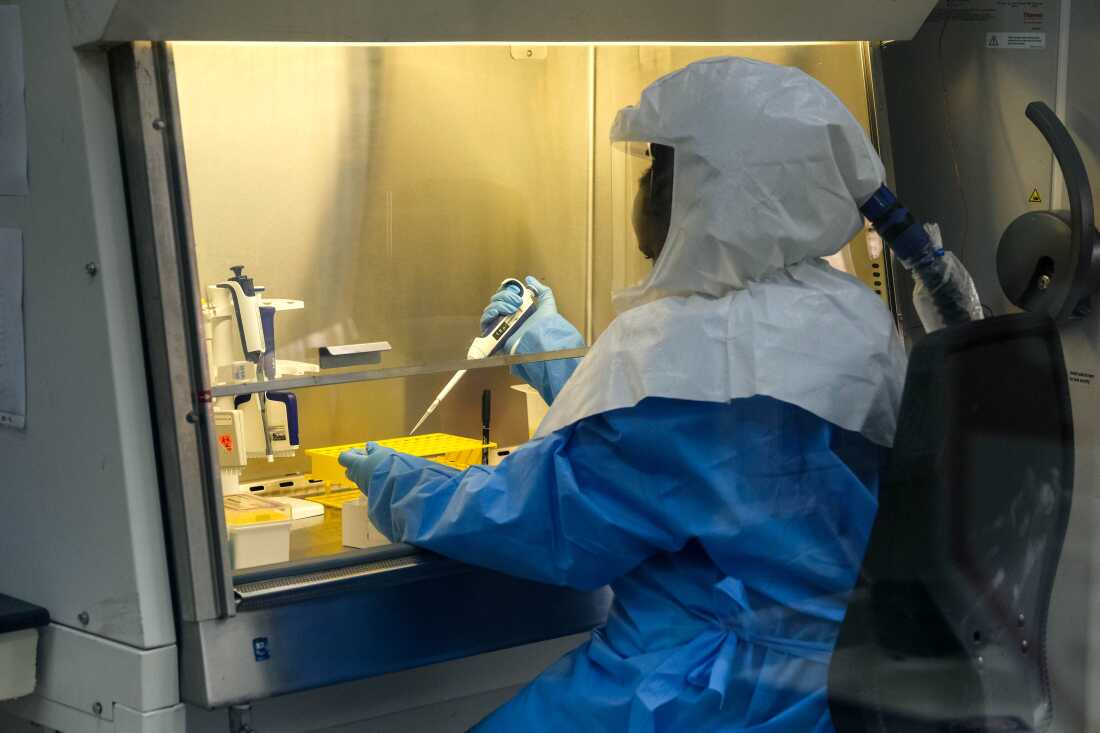
Sophia Mulei, a laboratory technologist, works with a control sample inside the Viral Hemorrhagic Fever Laboratory at the Uganda Virus Research Institute. This lab is a crucial center for testing Ebola samples.
The Democratic Republic of Congo (DRC) faced worries about potential Ebola cases in mid-April. Officials noticed deaths in the northeastern region that might have resulted from the virus, leading to sample collection and testing. Initial testing occurred at the Bunia lab on April 30th, as stated by Jean-Jaques Muyembe, the general director of DRC’s national biomedical research center.
“The first samples tested negative,” said Muyembe. “Despite subsequent testing, the virus remained undetected by the GeneXpert machine used.”
The GeneXpert machine is integral to DRC’s Ebola surveillance. It failed to identify a rare strain of the virus, delaying the declaration of an outbreak until mid-May. This delay contributed to an outbreak that became one of the largest, with suspected cases skyrocketing past 1,100.
Caia Dominicus from the International Pandemic Preparedness Secretariat highlighted the challenge. The lack of timely diagnostics hampered initial responses
, she noted, emphasizing the need for swift isolation of patients.
Improving Diagnostic Capacity
Response efforts improved over time. Abdirahman Mahamud from the World Health Organization reported improvements in diagnostic capacity. Yet, with projections by U.S. Centers for Disease Control and Prevention indicating potential cases reaching 20,000 by August, Mahamud warned that the current testing capacity might be insufficient.
“We need more capacity, especially if transmission expands,” stated Mahamud.
The introduction of RADI-One machines enhanced testing capabilities. These devices are easier to use and require less training, allowing deployment in smaller clinics closer to the outbreak. Seven labs and a mobile unit now process samples in northeastern DRC. A technician shared that current processing speeds have reduced delays significantly.
Africa CDC plans to provide 50 RADI-One machines by the end of June. However, Dominicus pointed out potential shortages and the need to negotiate with manufacturers for additional units.
Testing Challenges and Solutions
Traditional lab testing faces limitations, including transport difficulties due to inaccessible areas and ongoing conflicts, contributing to a complex diagnostic situation. Rapid tests, similar to COVID-19 tests, offer faster results but are less sensitive.
“Rapid detection allows quicker isolation,” said Abraar Karan, a physician at Stanford University.
Rapid tests could identify cases faster, helping control the outbreak. Muyembe emphasized the need for such tests not only for the infected but also for deceased individuals to guide safe burial practices.
Despite the necessity, no rapid tests are authorized specifically for Bundibugyo. Existing tests for other Ebola strains might work according to lab studies, but effectiveness in the field remains uncertain. Developing a Bundibugyo-specific test, says microbiologist Robert Garry, could be feasible within months.
Investments Needed for Effective Testing
Scaling both rapid and lab-based testing requires significant investment, often overshadowed by funding priorities like vaccines. Dominicus underscored the importance of diagnostics in informed decision-making.
“Without diagnostics, we’re guessing,” Dominicus remarked.
While Bundibugyo is uncommon, having diagnostics ready could have mitigated the outbreak’s severity. The delay in diagnostic capabilities hindered timely response efforts.
Leave a Reply