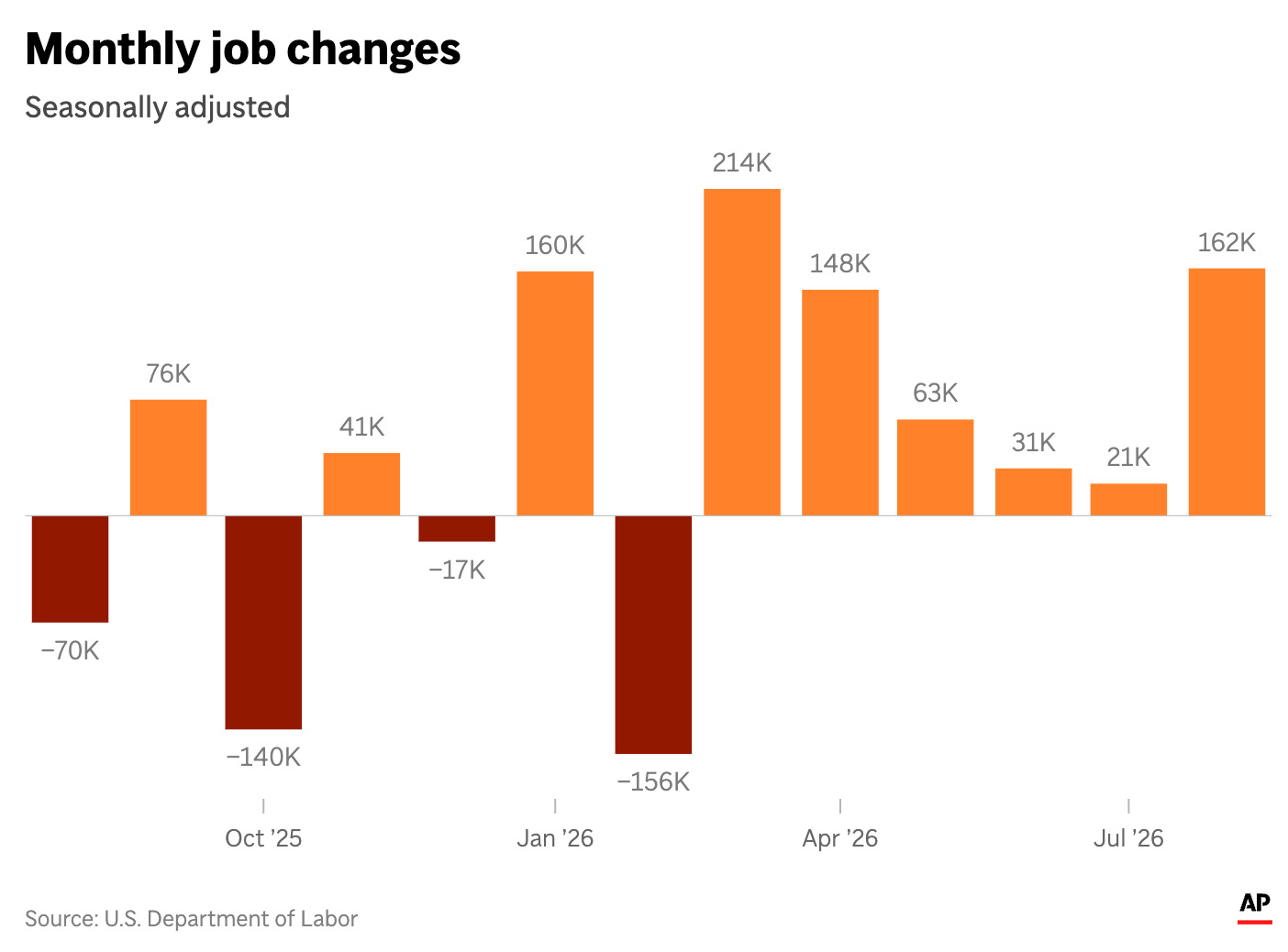
The economic outlook under President Donald Trump has been a topic of much discussion. Despite his optimistic views on upcoming growth, recent economic indicators have stirred mixed responses. In August, a job report showing a gain of 162,000 jobs could have been a positive sign amidst concerns of sluggish hiring and inflation.
From the Oval Office, Trump expressed frustration over the belief that job growth might lead to inflation. He criticized this concept, attributing inflation to poor decision-making rather than economic successes.
During his second term, Trump’s ambitions to ignite rapid growth have faced obstacles such as rising interest rates and inflation pressures. The economy’s growth stands at approximately 2% annually, which is slower than during the Biden administration.
Trump has pointed towards external factors, like elevated interest rates and trade policies, as hindrances. He has suggested ceasing trade with certain foreign entities as a countermeasure. Yet, such strategies may adversely affect economic stability and his administration’s credibility.
Economic experts, like Joe Brusuelas, have observed a discrepancy between Trump’s growth predictions and the reality of economic metrics. They highlight a need for greater alignment between policy expectations and actual economic performance.
Trump has argued for lower benchmark rates, proposing that increased liquidity could fuel significant GDP growth. This claim overlooks inherent inflation risks according to traditional monetary policy thinking.
Public opinion polls reflect concerns about Trump’s economic management, showing low approval ratings. His consideration to halt foreign trade poses further risks, influencing voter perceptions ahead of elections.
Despite challenges, Trump aides remain optimistic about future growth driven by AI, tariffs, and tax cuts. Improved productivity could yield long-term benefits, though fiscal challenges persist.
Christopher Phelan from the White House Council of Economic Advisers sees potential for sustained growth through increased job gains and enhanced productivity. However, the fiscal demands of Social Security and Medicare may limit the capacity to reduce deficits only through growth.
Analysts like Ernie Tedeschi believe aggressive growth won’t suffice to stabilize high debt levels, cautioning against overly optimistic projections without considering past precedents.
Efforts to instill economic confidence have been made by officials like Treasury Secretary Scott Bessent at global forums. Discussions focus on strategic plans to manage debts and deficits.
Reducing budget deficits through spending decreases and tax modifications could lower interest rates but may require difficult political decisions.
The overarching sentiment among economists, including Joe Brusuelas, suggests that a balanced approach to fiscal policy, incorporating both spending cuts and revenue strategies, is essential to address long-term economic challenges.
Leave a Reply