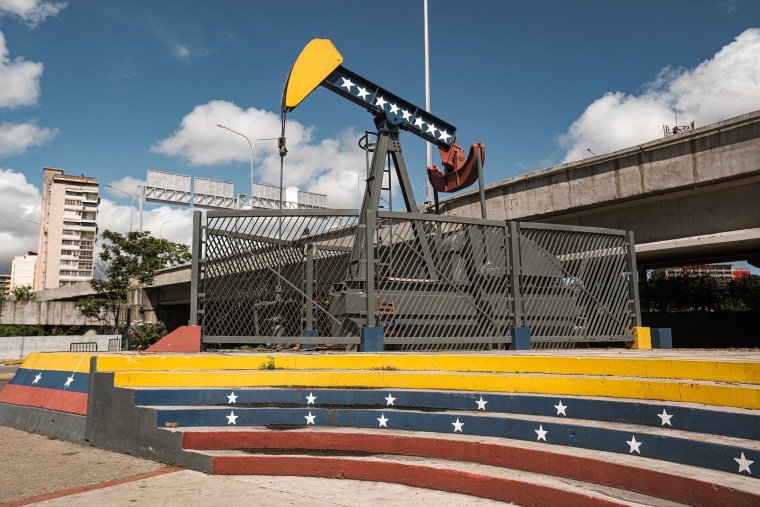
Chevron’s Expansion in Venezuela
Chevron, the sole U.S. oil company with extensive operations in Venezuela, confirmed it will expand its activities after President Donald Trump unveiled a significant agreement. This deal aims to develop Venezuela’s oil reserves while providing the Pentagon with a share of the profits.
On Wednesday, Chevron announced that it received additional acreage in the Orinoco Belt, an area where it is actively operating. Over the next five years, Chevron plans to pour over $7 billion into these operations, targeting a production increase to around 600,000 barrels per day.
Chevron’s history in Venezuela spans more than a century, and our expanded position reflects our confidence in the country’s deep resource potential.
This statement from CEO Mike Wirth underscores the company’s longstanding presence in the nation.
Venezuela’s Oil Reserves
Venezuela boasts the largest proven crude oil reserves globally, over 303 billion barrels, as noted in OPEC’s 2025 Annual Statistical Bulletin. Despite this, its energy infrastructure faces significant degradation, leading to a production of slightly over 1 million barrels daily. Remarkably, Venezuela’s daily output pales compared to Saudi Arabia’s production of 10 to 11 million barrels and the U.S’s output of nearly 14 million barrels daily.
U.S. Involvement and Agreements
Following the U.S. deal with Venezuela, Energy Secretary Chris Wright participated in a ceremony in Caracas where Chevron, alongside Italian company Eni and others, signed agreements with the Venezuelan government. Wright emphasised the mission’s aim for peace and prosperity in Venezuela, foreseeing substantial investment and job creation.
The White House announced a partnership with North American Blue Energy Partners (NABEP) to further Trump’s initiative but faced criticism over the feasibility of revitalizing Venezuela’s oil sector. Energy experts caution that restoring the industry may take years due to longstanding neglect.
Controversies and Challenges
There is skepticism regarding the authority of Venezuela’s acting president, Delcy Rodríguez, to grant NABEP rights over oil fields, along with concerns about future government actions potentially nullifying the agreement.
Ian Vásquez from the Cato Institute questioned the agreement’s legitimacy, citing Venezuela’s political context and lack of approval from the National Assembly.
Despite criticism, Wright defended the arrangement, highlighting its potential to unlock underground resources for bettering the lives of Venezuelans and improving energy supply.
Past Challenges Faced by U.S. Oil Majors
The complex history of U.S. oil majors in Venezuela includes previous nationalizations of the oil industry, initially in 1976 and later in 2007 under President Hugo Chávez. This move pushed foreign companies into state-controlled ventures, and while Chevron agreed to a joint venture, other majors like Exxon Mobil and ConocoPhillips did not, resulting in asset seizures.
Trump expects the new deal to lower U.S gasoline prices, yet analysts emphasize the significant work required to restore Venezuela’s oil infrastructure before tangible results can emerge.
Gasoline Price Fluctuations
Currently, gasoline prices in the U.S are experiencing spikes, with the national average price reaching $4.12 per gallon, marking a 93-cent increase compared to the previous year as reported by AAA.
Leave a Reply