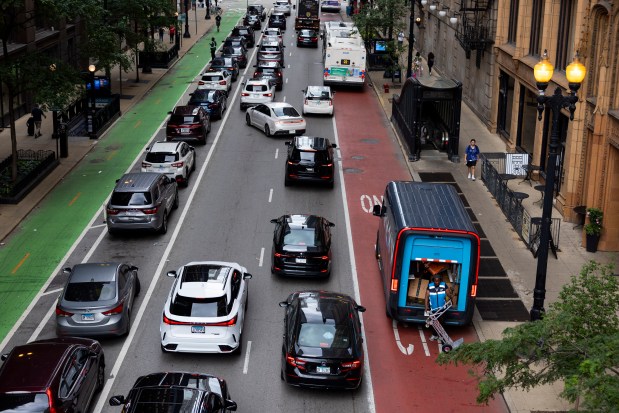
Chicago’s Smart Streets ticketing program aims to increase safety for cyclists and pedestrians by targeting vehicles blocking bike and bus lanes. This initiative has identified package delivery services as frequent offenders, which isn’t surprising for locals used to seeing trucks idling in busy areas like the Loop.
The city has implemented a pilot program that uses cameras on city vehicles and Chicago Transit Authority (CTA) buses to capture these violations. The city’s Department of Finance then issues tickets. Since its inception, the program has generated over $2.6 million in fines, excluding late fees.
Between November 2024 and early May, Amazon Logistics, FedEx, and UPS vehicles received fines totaling $460,000 for blocking bus stops and lanes, along with bike lanes. Additional fines also affected smaller companies partnering with these giants.
The Smart Streets program, started in late 2024, aims to reduce crashes and increase efficiency for buses. The program is expanding after a significant increase in bike lane fines, following the death of Lily Grace Shambrook in 2022, which highlighted the dangers of blocked bike lanes.
While Amazon noted that the fines were related to its third-party contractors, FedEx and UPS acknowledged the challenges of operating in congested urban areas. They reiterated their commitment to safe and compliant operations.
Enterprise Mobility, a vehicle rental company, stated that they either provide the city with renter information or pay the fines and recover costs from the renter.
Chicago officials emphasize that the goal is to deter hazardous behavior rather than collecting revenue. The program appears effective, given the reduction in repeat offenses from 15.6% to 7.6% among violators.
The city issued 16,802 tickets as part of this initiative. Violations for bus and bike lanes are specific, with tickets escalating significantly for repeat or unpaid offenses. There are financial and legal repercussions for companies with outstanding fines.
Amazon and FedEx stated they had taken steps to address these fines. The city’s Law Department is actively pursuing collections from major offenders. The law is enforced equally.
Costs for violating bus lanes or stops are $90 or $100 respectively, while bike lane violations are $250. The pilot, authorized in 2023, started downtown and has since expanded significantly. It covers a large area including numerous bus stops and miles of bus and bike lanes.
Currently, CTA uses Smart Streets buses equipped with cameras and plans to increase this capability, funded with $1 million from a state transit funding bill.
With the pilot ending in December, officials aim to extend and continue its benefits, which include boosting bus speeds and ensuring accessibility for passengers with disabilities. The program helps prevent critical safety hazards and maintains civil rights for all city residents.
Obstructing bike lanes poses dangers, forcing cyclists into traffic. Bike Lane Uprising highlights this risk, pointing out often-seen violations occurring near memorials for cyclists tragically killed in crashes.
Leave a Reply